

48m³ 7-Compartment Aluminum Alloy Bulk Feed Trailer Service Essentials for Reliable Performance
2026-11-16
Keeping a 48m³ 7-compartment aluminum alloy bulk feed trailer road-ready takes more than routine greasing. Each divider, hatch seal, and air line can quietly eat into payload reliability when service gets skipped. In this post, KANGMU TRUCK walks through the practical checks that keep discharge smooth, contamination out, and unplanned stops off the schedule.
How a Seven-Compartment Alloy Trailer Hides Feed Residue in Plain Sight
The real magic of this seven-compartment alloy trailer isn't just that it splits feed into tidy sections—it's how the seams, floor ribs, and corner joints do the quiet work of trapping residue where your eye never lingers. A thin dusting of fines settles along the lower rail, blending with the brushed aluminum grain so naturally that even after a full discharge, the compartments look swept. You'd need to run a finger along the bottom lip to notice the fine meal still caught in the groove.
Each divider wall has a slight undercut near the discharge gate. That small shadow line catches the last trickle of pellets when the trailer tilts, holding them just out of direct view. Because the alloy surface doesn't show rust streaks or discoloration, those leftover bits don't read as "dirty"—they read as part of the metal's texture. A dark steel bin would advertise every missed kernel; the bright alloy forgives it.
Even the top loading hatches play along. During travel, vibration sifts fines toward the hatch lip, where they lodge in the rubber seal's inner edge. Open the lid and the seal looks uniformly dark, not caked. It's not concealment by clever engineering so much as by honest material choice: light metal, tight tolerances, and a finish that makes small residue invisible to anyone not actively looking for it.
Aluminum Skin and Frame Checks That Catch Fatigue Before the Road Does
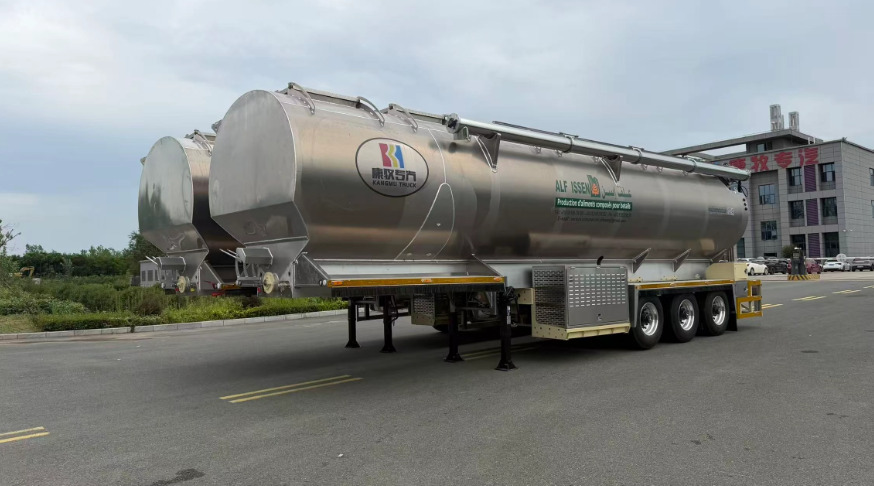
A dull line of popped rivets along the lower skirt is often the first honest signal that an aluminum skin has been working harder than the frame beneath it. Rather than reaching for a flashlight and moving on, run a bare hand along the lap seams after the trailer has sat overnight. The metal should feel uniformly cool. A warm band near a fastener row usually means friction is still alive in the joint, and that is fatigue announcing itself long before a visible crack appears.
Frame checks get noisy only when they are skipped. Pay attention where the crossmembers meet the main rails, especially around the landing gear and the rear pivot points. Look for a fine white powder at bolted connections, which is oxidized aluminum being ground into dust by micro-movement. If the powder returns within a few days of cleaning, the joint is no longer clamping the way it should. That is a repair issue, not a cosmetic one.
Sight down the sidewall in the early morning or late afternoon when low light throws shadows across the panels. Fatigue in aluminum rarely begins as a dramatic split. It starts as a soft shadow, a slight pillowing between rivets, or a paint line that no longer runs straight. Park the trailer on level ground, release the brakes, and watch the skin as the load shifts. Any panel that oil-cans with a soft pop is telling you the stretch has already settled in.
The Quiet Cost of Worn Discharge Gate Seals on Bulk Hauls
A worn discharge gate seal rarely announces itself. A driver might notice a faint dusting along the trailer frame or a thin trail of product on the tarmac near the hopper. Since the leak looks minor, it gets written up as something to watch and then slips off the priority list. But on long bulk hauls, that slow escape continues mile after mile. For materials sold by weight, the gap between loaded and delivered mass becomes a recurring shrinkage line that never points back to one obvious failure.
The expense hides in places that never show up on a single repair ticket. Lost product is only the beginning. Cleanup labor at the receiving bay, rejected loads from moisture or debris working into the cargo, and the extra time spent sweeping around discharge points all add up quietly. A seal that no longer closes tight also lets fine material blow out during transit, leaving a dust trail that other motorists notice even when the dispatch office does not.
Replacing seals on a set schedule can feel like spending money before it is necessary, but the alternative is a slow bleed. A simple visual check for flattening, cracking, or a lip edge that no longer springs back is often enough to catch the problem early. Compared with covering repeated small losses, cleaning fees, and the occasional rejected delivery, a new seal is cheap. The leak you can see at the gate is rarely the whole story; the bigger cost is the tonnage lost across months of hauls.
Grease Fittings, Auger Bearings, and Other Neglect Magnets
Most machines fail at the points nobody bothers to check. Grease fittings hide under shields or behind belt guards, collecting a crust of old lubricant and dirt until they seize. A quick wipe and a couple pumps from a grease gun can take seconds, yet skipped month after month, those same fittings turn a minor friction point into a scored shaft or a cracked housing. It rarely announces itself with a bang—just a slow grind that gets written off as normal wear until the assembly needs to be pressed apart and replaced.
Auger bearings live in a world of dust, chaff, and moisture. The seals fail quietly, letting abrasive grit work its way into the rollers. By the time you hear the rumble or feel the wobble, the inner race is usually pitted beyond saving. What makes these bearings such reliable neglect magnets is that they sit inside tubes or behind access panels that require removing several bolts to inspect. The extra effort means the inspection gets postponed, and the replacement bill climbs accordingly.
Other culprits follow the same pattern: slip clutches that rust into a solid lump, chains that run dry under guards, and pivot points that never see a drop of oil. None of them demand expensive tools or specialized knowledge. They just need someone to walk the machine with a rag, a grease gun, and a few minutes of attention at regular intervals.
Air System Pre-Load Checks for a Full 48-Cubic-Meter Load
Before the blower even hums, walk the entire loop from compressor to the last drop. On a fully packed 48-cubic-meter vessel, the air system isn't just about pressure — it's about where that pressure can hide. Start at the moisture trap and crack the drain valve manually. You'd be surprised how often a half-open drain from the last discharge gets forgotten, and then you spend the first hour fighting wet oil at the furthest corner. After the trap, trace the main header for any kinked flex lines or loose clamps that may have shifted during loading. A full cube means the cargo is close to the piping; a slight sag in a rubber hose can pinch against a pallet edge and quietly starve a whole branch.
Next, compare the unloaded pressure reading against the number stamped on the tank's data plate — not the one on the dashboard gauge, which can drift. With a full 48-cubic-meter load, the system needs to hold at least 15 psi above the highest setpoint of any air-operated valve on board. If the compressor cycles more than twice in ten minutes with no load running, you have a leak somewhere that's too small to hear but big enough to tax the dryer. Use a spray bottle of soapy water on every threaded joint from the regulator to the quick-connect ports; bubbles form faster than you'd expect at the top of a packed vessel, where vibration from the road has been working on fittings for hours.
Finally, run a short blowdown test with the engine at high idle and the tank isolated. Time how long it takes to drop from 110 psi to 90 psi. On a full load, that window should be longer than you think — if it collapses in under thirty seconds, the air beam suspension or the brake relay valve may be seeing more demand than your supply line can handle. Don't forget the gladhands at the rear: open them one at a time and listen for that clean, sharp release. A soft, wheezy puff tells you the trailer's protection valve is sticking, and with a full 48 cubes behind you, that's not a corner you want to cut.
Matching Unloading Order to Feed Type Without Plugging the Lines
Feed types rarely behave the same once they leave the bin. A dense pelleted ration moves differently from a high-fat mash or a fibrous mix, and that difference shows up fastest in the elbows and drop legs of an unloading line. Matching the order to the material means recognizing which feeds tend to slide, which ones bridge, and which ones leave a film behind. A load that starts with a slick, free-flowing grain can help sweep the path before a stickier feed follows it.
A practical sequence often moves from low-fat, dry, and uniform feeds toward those with more moisture, oil, or fiber. Whole grains or hard pellets can go first because they create less cling and help break up loose residue. Soybean meal, midds, or high-fat mixes come later, when the line is already moving and pressure remains steady. Reversing that order tends to push sticky material into slower sections first, which is exactly how plugs start.
It also helps to watch the line rather than rely on a fixed schedule. If a particular feed causes pressure dips or takes longer to clear, shift it later in the sequence and follow it with something dry and abrasive enough to scour the walls. Small adjustments at the receiving pit or bin discharge can keep the unloading order matched to the actual feed characteristics instead of a generic list, which keeps product moving without turning every changeover into a shutdown.
FAQ
Look for hairline cracks around welds and rivets, especially near compartment dividers. Road vibration works on those joints, and feed dust can hide early damage. Wash the exterior with mild detergent, not aggressive alkaline cleaners, to avoid dulling the oxide layer.
Check the internal divider seals and discharge gate gaskets before loading a new product. Even a small gap lets fine meals migrate between chambers, which causes costly contamination. Replace compressed or torn rubber before it takes a set.
Most slow unloading comes from worn butterfly valves, leaking sight-glass seals, or dry-rotted air hose connections, not the blower itself. Soapy water around couplings while the system is at low pressure shows leaks quickly. Keep line filters clean and drain moisture from the air tank.
Grease the landing gear, suspension equalizer pins, and intake butterfly shaft every 3,000 to 5,000 miles, but wipe away old grease first. More is not better; overgreasing collects grain dust and turns into paste that accelerates wear.
Sweep and vacuum compartments thoroughly, then use low-pressure water only if the product is completely cleared. Avoid steel wire brushes or high-pressure jets on the aluminum sheet and weld areas; they can strip the protective layer and invite pitting.
Run a quick hub temperature check by hand at every stop. One side running noticeably hotter signals a brake drag or bearing issue. Keep tire pressures matched across each axle, and inspect the inner dual sidewalls where bulges often hide.
Yes, particularly the rear lighting harness where it passes near the blower and discharge chutes. Feed dust and road spray corrode connectors, causing intermittent tail lamps. Dielectric grease inside plugs and replacing cracked loom sections before they chafe helps a lot.
Start with the blower oil sight level and the relief valve setting, then cycle each compartment gate from full open to closed while watching the indicator. If a gate cable feels stiff or the indicator lags, adjust it at the shop instead of forcing it in the field.
Conclusion
A 48m³ seven-compartment aluminum bulk feed trailer may look clean after unloading, but fines and cracked pellets gather where compartment walls meet the hopper slope, behind stiffeners, and around the top hatch lips. Left alone, those residues attract moisture, corrode the alloy, and contaminate the next load with moldy material. Rather than relying on a quick visual sweep, run a gloved hand along seams and frame crossmembers every few trips; uneven powder buildup or hairline cracks in the aluminum skin usually show up there first. Pay the same attention to the discharge gate seals. When the rubber edges harden or tear, feed dribbles during transport, which creates weight loss claims, lane debris, and cross-contamination between compartments. Replacing seals early costs far less than sorting a mixed load at the farm.
Grease fittings on auger bearings, gate rollers, and pivot points are easy to skip because they hide under guards and behind hoses. Build a short service loop that hits every zerk, wipes away old grease, and checks bearing play by rocking the auger shaft. Before loading a full 48 cubic meters, also drain the air tanks and confirm the suspension dump, gate controls, and blower relief settings respond at normal working pressure; a slow gate or weak air supply turns a routine unload into a plugged line. Finally, order the compartments to match the feed type. Start with light, dusty loads when lines are dry and empty, then move to pellets or heavier rations that generate more friction. Swapping that sequence based on moisture content or pellet hardness keeps product moving without hammering the blower or opening clean-out ports mid-delivery.
Contact Us
Contact Person: Shen Zhikang
Email: [email protected]
Tel/WhatsApp: 8613908668969
Website: https://www.kangmutruck.com/