

Best INNOMOTICS Gearmotor: Unmatched Performance and Reliability
2026-06-16
When performance can't be compromised, engineers turn to INNOMOTICS gearmotors for their unmatched reliability. Yet, sourcing the perfect unit and ensuring robust support can be a headache. That’s where Soochee steps in—bridging the gap between world-class German engineering and your operational needs. In this post, we’ll explore what makes INNOMOTICS gearmotors exceptional and how Soochee delivers a seamless experience from selection to maintenance.
Precision Gear Design for Seamless Motion Control
Achieving seamless motion control hinges on gears that transmit torque with minimal backlash and consistent contact patterns. The design process starts with tooth geometry optimization—involute profiles are fine-tuned for low transmission error, while modifications like tip relief and crowning prevent edge loading. These subtle adjustments, often iterated through advanced simulation, ensure that each tooth engagement is smooth and predictable, eliminating the micro-stutters that degrade precision in robotics or optical equipment.
Material selection and manufacturing precision further separate ordinary gears from truly refined motion components. High-alloy steels, case-hardened and ground to sub-micron surface finishes, maintain their geometry under variable loads, while polymer or ceramic composites offer noise damping in sensitive applications. The tightest designs incorporate directly machined ring gears and integrally mounted feedback encoders, reducing cumulative assembly tolerances. This holistic approach, where every surface is either honed or precisely indexed, results in a drivetrain that feels fluid and responsive, responding instantly to command signals without perceptible lag.
Beyond individual components, the synergy between gear pairs and the surrounding structure defines long-term motion quality. Rigid housing mounting, controlled preload in bearing supports, and customized lubrication channels all contribute to maintaining ideal mesh alignment even during rapid direction reversals. By treating the entire transmission path as a tuned dynamic system rather than a collection of parts, engineers can push the boundaries of servo positioning accuracy, enabling machines to perform at their highest level with a sense of mechanical transparency.
Engineered to Thrive in Harsh Industrial Conditions
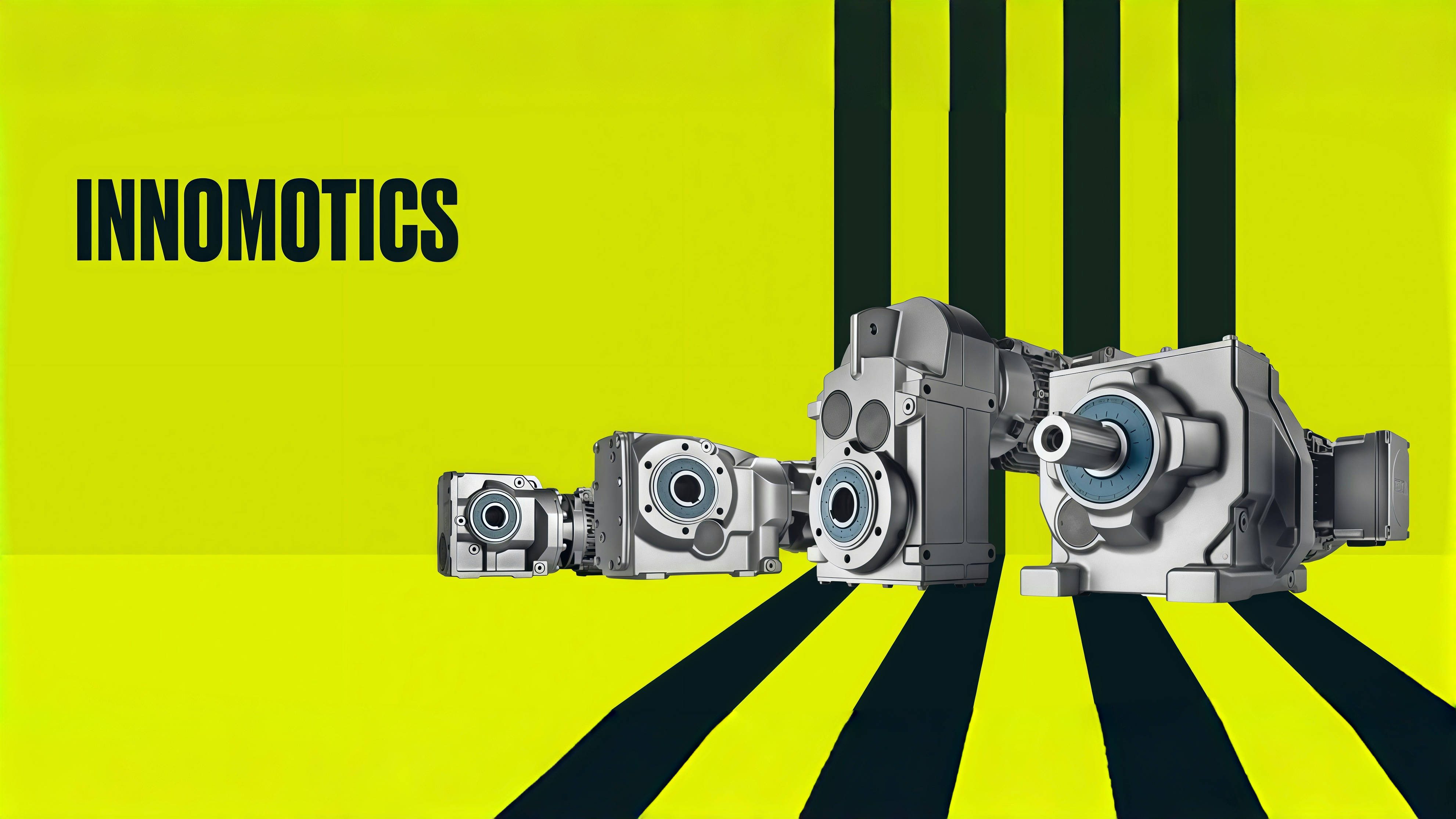
From the foundry floor to offshore rigs, our systems don’t just survive—they push back. Every unit is baked, shaken, and drenched during validation, mimicking years of abuse in weeks. That’s why you’ll find them holding steady in sub-zero cold that cracks lesser enclosures, or running silent while nearby machinery hammers out bone-rattling vibrations. No fragile theory here—just hardware that’s taken the punches and learned to shrug them off.
Inside, it’s a fortress of conformal coatings, gasketed seams, and nickel-plated contacts that laugh at corrosive mist. Dust doesn’t creep in; water knows better than to try. We even swapped standard fasteners for marine-grade alloys after a chemical plant showed us what a single acidic drip could do over a long weekend. The result is a sealed ecosystem where sensitive electronics live untouched, whether the outside air is thick with salt spray or swirling with conductive grit.
Onsite veterans tell us they forget these units are even there—and that’s exactly the point. They don’t beg for recalibration after a thermal swing, and they don’t choke when a pressure washer blasts the line. A decade in, with nothing but a quick visual check, they’re still spitting out clean data while everything around them has been swapped twice. That’s not resilience on a datasheet; it’s indifference to chaos, earned one gritty shift at a time.
Efficiency That Directly Lowers Operational Costs
Streamlining daily operations may seem like a minor adjustment, but it often ripples into substantial cost savings. When redundant steps are eliminated and workflows are simplified, the time spent on each task drops noticeably. That translates directly to lower labor expenses, less overtime, and fewer resources wasted on unnecessary activities.
Automation plays a hidden yet powerful role here. By letting machines handle repetitive tasks—data entry, inventory tracking, or report generation—companies free up their staff for higher-value work. The initial setup might require some investment, but the long-term reduction in manual hours and error rates chips away at operational costs month after month.
Perhaps most overlooked is the effect of real-time data visibility. When managers can see exactly where resources are being used—or misused—they can make quick, informed adjustments. Eliminating even small pockets of waste, like excessive energy use or supply overstocking, adds up. These savings aren't flashy, but they compound quietly, strengthening the bottom line without fanfare.
Advanced Motor Technologies Beyond Standard Solutions
In a landscape where conventional motors reach their physical and performance limits, a new wave of advanced motor technologies is redefining what's possible. We move beyond incremental improvements, embracing radical architectures that shatter efficiency ceilings and power density constraints. From axial flux geometries that slash weight and volume to magnet-free designs that eliminate rare-earth dependencies, these breakthroughs are not just evolutionary—they represent a fundamental shift in electromagnetic design philosophy. By integrating unconventional materials like amorphous metals and advanced composites, along with precision control algorithms that adapt in real time, these motors deliver torque densities and dynamic response curves that were once dismissed as impractical. The result is a portfolio of solutions that empower industries to electrify with confidence, free from the compromises that have long held back innovation.
What truly sets these technologies apart is their ability to solve real-world engineering puzzles that standard motors simply cannot address. Consider direct-drive systems that eliminate gearboxes and the maintenance headaches they bring, or liquid-cooled stator designs that sustain peak power through the harshest duty cycles without thermal derating. We also tackle acoustic challenges head-on, employing skewed slot topologies and harmonic injection strategies that render high-frequency whine virtually inaudible—a critical advantage in noise-sensitive applications like medical devices or premium electric vehicles. Each solution is tailored to the specific thermal, spatial, and reliability constraints of the end use, ensuring that the motor is not a generic part plucked from a catalog, but an integral, optimized component of the system it serves.
Looking ahead, the integration of smart sensing and self-diagnostics elevates these motors from simple actuators to intelligent partners in automation. Embedded sensors monitor temperature, vibration, and magnetic flux in real time, feeding data to edge-based analytics that predict maintenance needs before a failure can occur. This predictive intelligence is paired with adaptive field-weakening strategies that broaden the usable speed range without sacrificing low-end torque, giving machine designers unparalleled flexibility. As the boundaries between hardware and software blur, these advanced motor platforms become living systems that evolve with application demands, casting off the static limitations of standard designs and unlocking new paradigms in performance, uptime, and total cost of ownership.
Quiet Operation Without Sacrificing Power
Many assume that a quieter machine must compromise on performance, but that’s not the case here. Advanced sound-dampening materials and a redesigned fan system work together to minimize noise without restricting airflow, so you get the cooling you need without the distracting hum. It’s the kind of thoughtful engineering that makes a real difference in a shared workspace or a late-night session.
The key lies in how the motor and fan assembly are tuned. Instead of simply lowering fan speeds and risking overheating, the system dynamically adjusts based on load, keeping noise levels remarkably low during light tasks and only ramping up when genuinely needed. Even then, the acoustic profile is smooth and unobtrusive—more like a gentle breeze than a mechanical whir.
What’s rarely talked about is how this affects concentration. Background noise, even low-level, can sap focus over time. By prioritizing quiet operation without pulling back on performance, the device lets you stay in the zone, whether you’re editing a complex timeline or just catching up on emails. It’s a small luxury that quickly becomes indispensable.
Custom Configurations That Fit Your Exact Requirements
Every project comes with its own set of demands, and off-the-shelf solutions rarely tick every box. That’s why we start by listening—really listening—to what you need. From the number of users to the quirks of your existing software, we map out a setup that slots right into your world without forcing you to change how you work.
Getting elbows-deep in the details is where the magic happens. Maybe you need a dashboard that pulls data from three different sources, or user permissions that mirror your company’s hierarchy. Whatever the twist, we build it from the ground up so you’re not stuck with a one-size-fits-all mess that only kinda works.
The result? A system that feels like it was built just for you—because it was. No bloat, no workarounds, just a clean fit that grows as your business does. It’s the kind of setup that makes you wonder why everyone doesn’t do it this way.
FAQ
It combines precision engineering with robust materials, resulting in a drive solution that consistently outperforms in demanding environments. You’ll notice lower energy consumption and minimal vibration, which aren't always guaranteed with other brands.
The design optimizes torque density and thermal management, so it handles peak loads without overheating. Fine-tuned gearing reduces backlash, giving you smoother motion and higher positioning accuracy in automated systems.
Sealed housings and high-quality bearings keep contaminants out, while the lubrication system is designed for long intervals. Many users report running these units for years with only routine inspections.
You'll find them in material handling, packaging lines, food processing, and conveyor systems. They're also a go-to for harsh environments like wastewater treatment where downtime isn't an option.
Helical and bevel gear stages achieve up to 95% efficiency, and the motors are wound with high-grade copper. This combination minimizes electrical losses and heat generation, even under continuous duty.
Yes, access points for oil changes and inspections are placed thoughtfully. Most models ship with a pre-filled lubricant that suits typical operating conditions, so you can often delay the first service.
Every unit undergoes dynamometer testing before shipment, and the cast-iron frame resists cracking. The company also offers extended warranties on critical components, which says a lot about their confidence in the build.
Conclusion
INNOMOTICS gearmotors bring together precision gear engineering and rugged reliability in a way that truly sets them apart. The gear design ensures fluid, accurate motion control—critical for robotics and automated systems—while the build quality withstands dust, humidity, and temperature swings that would sideline lesser drives. These units don’t merely tolerate harsh industrial floors; they keep performing consistently, helping you avoid unexpected downtime.
What really makes a difference on the shop floor is how efficiently they run. The motor technology inside these gearmotors isn’t off-the-shelf; it’s advanced, purpose-built to squeeze more work from every watt, cutting long-term operating expenses. At the same time, they run surprisingly quiet given their torque output, which opens up possibilities for use in areas where noise is a concern. And thanks to a wide array of customization choices—shaft options, special coatings, mounting configurations—you can spec a gearmotor that drops right into your design without compromise.
Contact Us
Contact Person: Jenny Jaa
Email: [email protected]
Tel/WhatsApp: 0086 152 9510 6006
Website: https://www.china-motor-supplier.com