

Best Water Jet Sewer Machine Supplier from China for Reliable High Pressure Drain Cleaning
2026-11-18
Few jobs turn ugly faster than a sewer line that refuses to clear. The right high-pressure water jet can cut through grease, roots, and years of buildup, but only if the machine itself holds up under real job-site conditions. That is where AMJET has earned attention as a water jet sewer machine supplier from China focused on reliable drain cleaning performance. Before you compare specs or shipping terms, it helps to know what separates equipment that performs on day one from equipment that keeps performing after hundreds of hours.
Why a High Pressure Rinse Doesn't Always Fix a Blocked Sewer
A jet of water moving at 3,000 psi can clear loose grease and soft sludge in seconds, yet plenty of blockages survive the rinse. The issue often comes down to what is actually stuck. Tree roots, collapsed pipe sections, or a solid mass of hardened scale do not behave like ordinary debris. The water simply carves a narrow channel through or around the obstruction, restoring a weak flow for a day or two before the gap closes again.
The pressure itself can also mislead. If the pipe is already cracked or the joints have shifted, a high pressure nozzle can force water into the surrounding soil, making the surface look fine while the real problem stays hidden underground. In older clay or concrete lines, the force may even worsen the damage by opening small cracks wider or dislodging loose sections that were still holding together.
There is also a mismatch between the tool and the blockage. High pressure rinsing works well on grease, mud, and soft blockages that respond to being broken apart. But when a hard object, a belly in the line, or intruding roots are involved, the water simply takes the path of least resistance. A camera inspection after a failed rinse usually reveals what the pressure missed, and that is often the point where a proper mechanical or repair-based fix becomes necessary.
The Components That Separate Reliable Jetters from Short-Lived Equipment
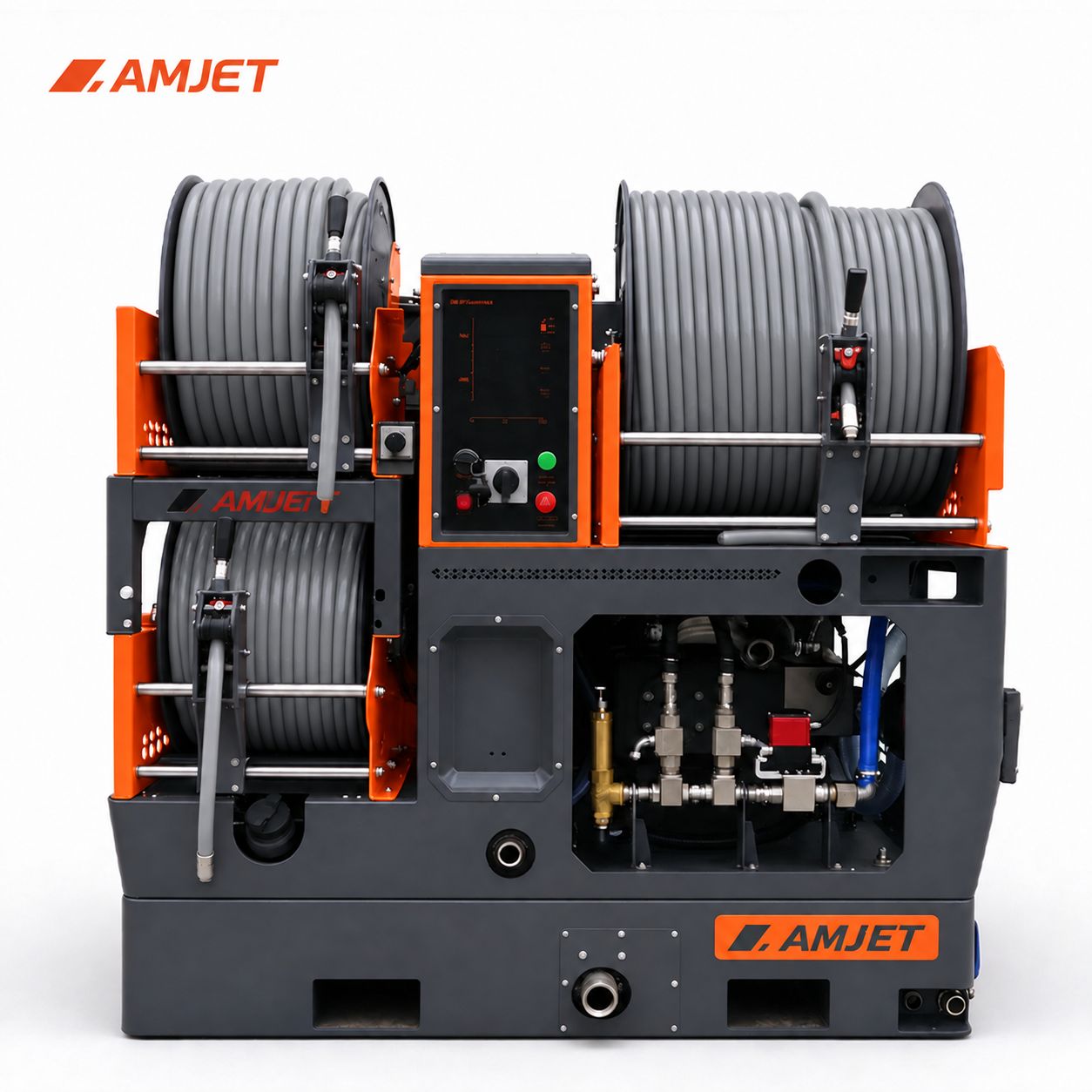
The first place where longevity is won or lost is the pump head. Cheaper units often use thin castings and soft seals that wear quickly under heat and vibration, while dependable machines move fluid through hardened stainless-steel or ceramic plungers with tighter tolerances. That single difference changes how the jetter behaves after a few hundred hours: the pressure stays steadier, the pump runs cooler, and the owner is not constantly chasing leaks.
Further downstream, the hose and nozzle tell a similar story. A reliable jetter uses hose with a smooth inner wall and proper burst rating, paired with nozzles made from hardened materials, so flow restriction stays predictable. On short-lived equipment, the hose tends to kink near the reel or swell at the fittings, and nozzle wear quickly turns a focused jet into a scattered spray that forces the pump to work harder.
The frame and plumbing layout matter just as much as the parts themselves. Bolted connections, vibration isolators, and accessible drain points make routine maintenance simple, which is why well-built machines survive years of rough handling. Flimsy frames flex, crack welds, and let small issues become terminal failures, often starting at the same stress points every time.
What to Verify Before Choosing a Supplier in China
Before you send a deposit, ask for the business license and compare the legal name with the company on the invoice, contract, and bank account. Check the unified social credit code in the National Enterprise Credit Information Publicity System for penalties, ownership changes, or a registered scope that does not match what the salesperson claims. A factory audit is not just about clean floors; request a live video walk-through with a timestamp, not pre-recorded clips, and ask to see current production orders for other buyers. If they hesitate or only offer polished photos, treat that as a signal.
Then verify whether the supplier actually controls the production process. Many export companies are trading agents that outsource to smaller workshops. Ask for the lease or ownership documents for the production site, the number of workers per shift, and which processes are done in-house. Product-specific certifications can be valid on paper but expire or cover a different factory address, so check the certificate number against the issuing body and confirm the factory name matches exactly.
Finally, look at how the supplier handles problems rather than how they present success. Request contact with two or three past clients outside the ones they volunteer, and ask about delays, defect rates, and whether rework costs were shared fairly. Review their bank reference and payment terms flexibility, but pay attention to whether they push for a large deposit while offering vague after-sales commitments. A supplier that is transparent about past failures is usually safer than one that claims a perfect record.
Matching PSI, Flow Rate, and Nozzle Type to the Pipe
Getting the pressure, volume, and nozzle geometry to agree with the pipe diameter takes a bit of trial and error, but the payoff is immediate once you hear the water move cleanly through the line. Start by checking the actual PSI at the point of use, not the rating stamped on the pump or the municipal supply. A gauge fitted near the inlet often reveals a lower number than expected, especially after elbows, valves, and long vertical runs have eaten into the pressure. From there, pick a flow rate that the pipe can carry without turning into a noisy, vibrating mess. As a rough rule, half-inch pipe behaves well up to about four or five gallons per minute, while three-quarter and one-inch lines allow more room before turbulence becomes a problem.
The nozzle plays an equally stubborn role. A wide-fan tip may demand more flow than a narrow jet at the same PSI, and switching between them without adjusting the pipe size or pressure can leave you with poor coverage or a fluttering spray. Try matching the nozzle's rated flow to the pipe's comfortable range first, then fine-tune the pressure at the pump or regulator. Keep a few spare tips of different orifice sizes on hand, because a small change in the opening shifts the balance between pressure and volume more than most charts suggest.
If the setup still feels off after basic matching, measure the actual output with a bucket and stopwatch rather than trusting the label. Fill a five-gallon container, note the time, and compare that number to what the pipe and nozzle should handle together. Often the fix is not a bigger pump but a larger feed hose, a less restrictive fitting, or a nozzle one size smaller. The goal is a stable stream that holds its pattern without surging, and that only happens when the three variables line up with the pipe's real-world limits.
Quiet Red Flags That Expose an Untested Sewer Jetter
A machine can look impressive on a spec sheet and still fold the moment it meets a real blockage. The first thing worth noticing is how the pressure holds when the trigger is released. On a unit that hasn’t been properly run in, the gauge will dip erratically and the pump will chatter during bypass. That lag isn’t just a nuisance — it means the unloader valve and seals haven’t learned to work together under heat. Often the hose reel will also fight you on retraction, binding at the same spot every time because the swivel hasn’t been broken in under full flow. These small hesitations are easy to dismiss as “new machine quirks,” but they’re usually the earliest signs that the jetter was assembled and shipped without ever being pushed hard enough to reveal its weaknesses.
Another tell is the sound the engine makes when the water finally clears the nozzle. A tested machine settles into a steady, flat note under load. An untested one will surge and hunt, with the RPMs climbing for a split second before the governor catches up. That inconsistency often points to air still trapped in the high-pressure side or a relief valve that was never cycled against a deadhead. You’ll also spot it in the way the nozzle pulses at full trigger — rather than a clean, drilling stream, you get a fluttering spray that loses its bite at the far end of the line. Combined with a pump head that gets too hot to touch after only ten minutes of bypass, this pattern says the jetter left the factory floor before anyone bothered to let it work through its own imperfections.
Finally, pay attention to how the controls feel during the first hour of actual use. A sewer jetter that’s been genuinely tested has smooth, predictable levers and a hose that coils without kinking because it’s already been run out and reeled in under pressure dozens of times. On an untested unit, the quick-connects will be stiff, the pressure adjustment knob will feel vague, and the hose will have a memory of its shipping coil that pulls the reel backwards. None of these are deal-breakers on their own, but together they tell a story: no one spent the time to make the machine prove itself before it reached your hands. A good jetter doesn’t just work — it works the same way on its first job as it does on its hundredth.
Everyday Upkeep That Keeps Drain Cleaning Performance Steady
Most slow drains start small: a little grease rinsed off a pan, a few coffee grounds tapped into the sink, strands of hair slipping past the stopper. Once those materials cool and combine with soap film, they form a coating that narrows the pipe. Pouring a kettle of very hot water down the drain once a week—ideally with a small squirt of dish soap—loosens that layer before it hardens. It works especially well after cooking or washing dishes.
Keep a fine-mesh strainer in every sink and shower drain, and empty it after each use instead of waiting until water pools. Wipe greasy pans with a paper towel before rinsing, and never assume a garbage disposal can handle fibrous scraps like celery or onion skins. Once a month, an enzymatic cleaner left in the drain overnight can break down organic buildup without the harsh bite of chemical openers.
Watch for changes in how the water leaves: a slight hesitation, a gurgle after the sink empties, or a musty smell that returns soon after cleaning. These are often earlier clues than a full backup. Clearing a minor slowdown with a drain snake or a wet-dry vacuum is less disruptive than dealing with standing water later. Small, consistent habits do more for steady flow than occasional aggressive fixes.
FAQ
Focus on whether the manufacturer builds the pump and frame in-house, offers tested pressure and flow combinations, and can provide video proof of machines running before shipment. Also ask about hose reel quality, nozzle kits, and whether spare parts are easy to source later.
For typical residential drain lines, 2,000 to 3,000 PSI at 4 GPM is often enough. Municipal or commercial lines may need 4,000 PSI and 8 to 10 GPM to move heavy sludge and roots. Let the pipe diameter and blockage type guide the choice rather than choosing the highest number.
A dependable supplier usually has its own workshop, can show custom frames or pump configurations, and handles technical questions directly. Middlemen tend to give vague answers about pump brands, lead times, or compatibility and often delay after-sales support.
Look for a triplex plunger pump with a pressure gauge, thermal relief valve, adjustable pressure unloader, heavy-duty hose reel, and a frame that can be mounted on a trailer or van floor. These details affect uptime more than cosmetic design.
Yes, many Chinese manufacturers can fit engines with cold-start kits, use frost-resistant seals, or adjust pump specs for lower air density. You need to specify the working environment clearly so the machine is configured before assembly.
Expect direct contact with an engineer, not only a salesperson, plus clear troubleshooting videos, a spare parts list with part numbers, and fast dispatch of wear parts like seals, valves, and nozzles. A supplier that can walk you through repairs over a video call is far more useful than one offering vague warranties.
Most suppliers ship the unit in a reinforced plywood crate by sea, often with the engine drained of fuel and oil. On your side, arrange customs clearance, check local emissions rules for the engine, and have a forklift or loading dock ready because even compact units weigh several hundred kilograms.
Yes. A supplier with in-house fabrication can adjust the reel position, add toolboxes, mount a hose guide, or build a full trailer package. Send rough dimensions and photos of the vehicle or work site, and ask for a CAD layout or frame drawing before production.
Conclusion
A clogged drain often returns shortly after a rinse because water alone follows the path of least resistance, leaving compacted grease, root mass, or scale stuck to the pipe wall. Reliable equipment earns its place in the small details—triplex plunger pumps with forged manifolds, heat-treated valve seats, and hose reels that do not kink under working pressure. Before committing to a supplier in China, ask for tear-down photos of the pump, the grade of the frame steel, and actual test videos at rated pressure rather than polished brochures. A machine that holds consistent PSI at the nozzle tells you more than a peak number on a spec sheet.
Matching output to the line matters far more than chasing the highest pressure. A 2-inch lateral usually responds better to 4 GPM at 4000 PSI with a forward-and-back jetting nozzle, while a long 6-inch main may need 8 GPM and a penetration nozzle to move debris downstream instead of packing it tighter. Watch for quiet warnings such as painted-over weld splatter, unmarked relief valves, or missing thermal protection—these hint at shortcuts hidden under fresh powder coat. Once the unit arrives, steady performance comes from flushing the pump after hard water use, exercising the unloader valve, and storing the hose off the reel under low tension. The right supplier rarely needs loud claims because their components, test records, and support spare parts do the explaining.
Contact Us
Contact Person: Mike
Email: [email protected]
Tel/WhatsApp: +86 19545555505
Website: https://www.amjeting.com/