

Bulk Heavy Duty Caster Wheels Company Selection Guide for Industrial Facilities
2026-11-16
A caster that fails under load rarely gives a warning—it gives a gouged floor, a stalled cart, and a line that isn't moving. In heavy industrial facilities, bulk caster wheel selection is often treated as an afterthought until one of those failures lands in maintenance. This guide is built for plant engineers, purchasing teams, and facility managers who need to specify bulk heavy duty caster wheels that survive real floor conditions, shock loads, debris, and constant movement. Instead of another generic catalog walk, we'll look at the material, mounting, and load-rating decisions that separate wheels that last from wheels that just look right on a spreadsheet. At CMCL, heavy-duty caster selection starts with the floor, the load, and the work—not the part number. Here's how to make that approach work for your facility.
Matching Wheel Materials to Floor Conditions and Load Cycles
Choosing the right wheel material starts with a close look at what the floor actually goes through. A polished concrete aisle in a quiet retail space has little in common with a rough warehouse floor covered in debris, yet both are often treated with the same generic wheel selection. Harder materials like forged steel or ductile iron hold up well under extreme loads and abrasive conditions, but they transfer more vibration and can mark softer floors. Softer treads like polyurethane or rubber reduce noise and protect surfaces, but they wear faster when the floor has cracks, metal shavings, or uneven expansion joints.
Load cycles add another layer to the decision. A cart that moves once per shift with a moderate load can tolerate a wheel that prioritizes floor protection over long-term wear. The same wheel on a towline cart running hundreds of cycles per day will fail quickly, forcing early replacement and creating downtime. In high-cycle environments, the material's compression set and heat buildup matter as much as its hardness. A wheel that looks fine during a short test may soften, chunk, or develop flat spots after repeated starts and stops under full load.
The practical approach is to match the failure mode you can afford with the one you cannot. If replacing wheels is cheap and floor repair is costly, choose a softer tread that sacrifices wheel life. If downtime is the biggest expense, lean toward a harder wheel with a replaceable tread or a design that spreads the load across a wider contact patch. Reading the floor conditions and counting real load cycles before selecting a wheel often reveals that the default catalog choice is not the best fit, and a small change in material can remove a recurring maintenance headache.
Reading Between the Lines of Load Ratings and Safety Factors
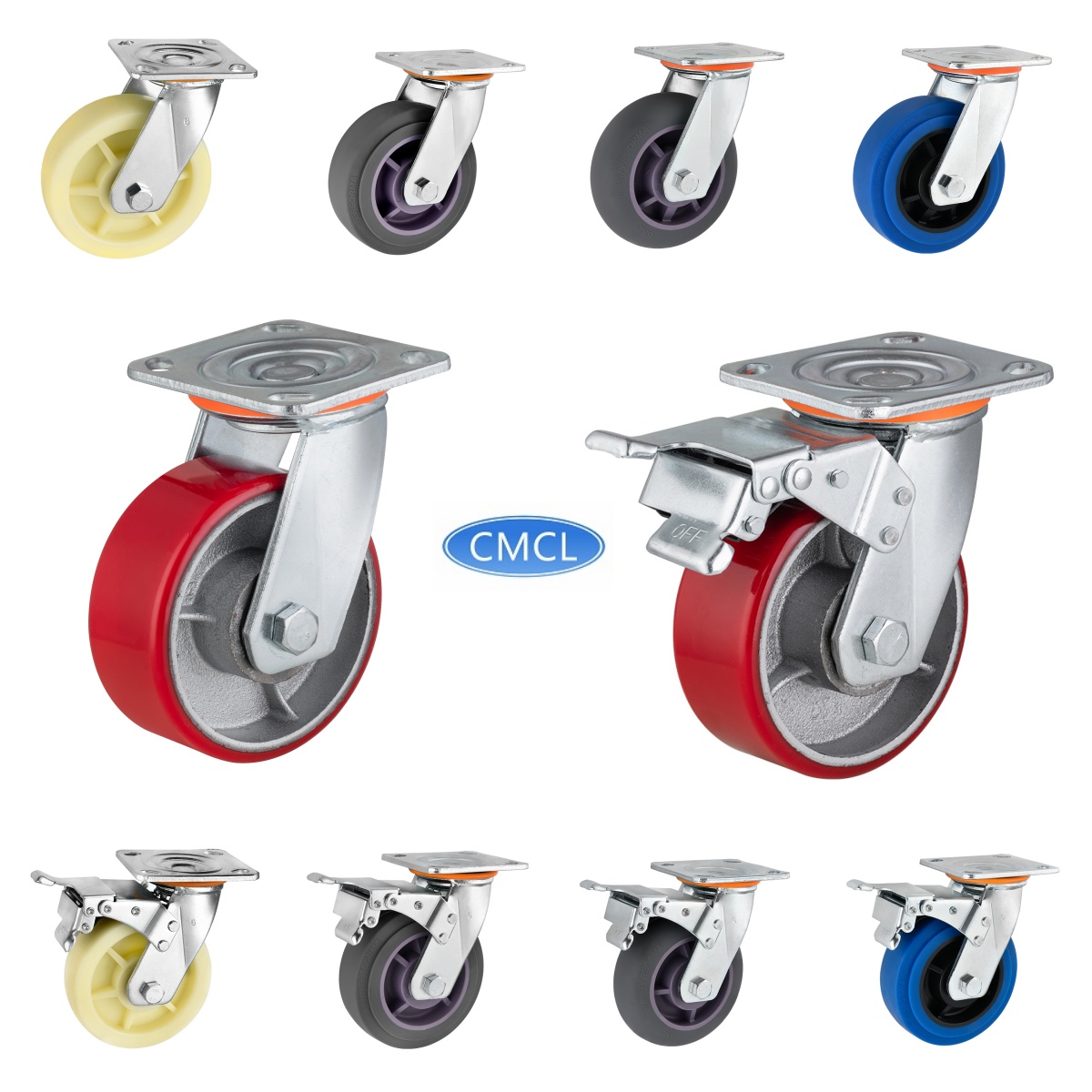
A stamped working load limit rarely tells you what the part will actually hold. It tells you what the manufacturer is willing to stand behind under a narrow set of assumptions: straight-line pull, new hardware, room-temperature conditions, and a defined safety factor buried in the fine print. That number is already a compromise. If the hardware is old, angled, shock-loaded, or used in a corrosive environment, the real-world margin shrinks before you have added a single extra pound.
The safety factor itself is not spare capacity. A 5:1 ratio on a lifting eye, for example, does not mean you can treat the rated load as a gentle suggestion and occasionally go heavier. It exists because loads are rarely static, because welds contain hidden discontinuities, and because fatigue accumulates in ways that a simple tensile test never captures. When operators assume the factor is headroom, they are quietly consuming the buffer meant for the unknown.
Worth checking is whether the rating references breaking strength, yield, or proof load. Two components marked with the same working load limit can sit at very different points on their failure curves. If the documentation doesn't state the basis, the stamp alone is just a marketing number wearing a technical costume.
Supplier Claims Worth Testing Before You Commit to a Bulk Order
A supplier's brochure can make every material sound military-grade and every lead time look effortless. Before you wire a deposit for a bulk order, run a small batch through the same finishing, tolerances, and packaging steps the factory promises at scale. The gaps usually show up in edge finishing, dimensional drift on the third shift, or packaging that protects samples but not a pallet.
Pay attention to claims around certifications, material composition, and capacity. Ask for the actual mill certificates, not a summary sheet. If they say they can hit a certain hardness or tensile range, send a few units to an independent lab. A surprising number of suppliers will pass a visual inspection but fail a spectro check or a simple hardness test once production speeds increase.
Delivery promises deserve the same skepticism. A quoted thirty-day lead time may be based on a clean production schedule, not on the reality of raw material delays, subcontractor bottlenecks, or holiday shutdowns. Place a trial order that includes a firm ex-works date and a penalty for late shipment, then watch what happens when things slip. That test tells you more than any factory audit checklist.
Hidden Costs That Appear After Installation and During Maintenance
The invoice you signed before installation rarely tells the whole story. Once the new system is bolted into place or the software goes live, a second wave of expenses tends to surface. Some are small enough to ignore at first, like recalibrating sensors or reworking a few custom integrations. Others arrive as urgent line items: an unsupported legacy machine that suddenly needs a middleware license, a backup process that quietly doubles cloud storage usage, or the discovery that the promised plug-and-play compatibility assumes you already own newer controller versions.
Maintenance contracts add another layer that many buyers undervalue during the sales cycle. The base agreement usually covers routine inspections, but after-hours callouts, firmware updates, and access to vendor diagnostics often sit in a premium tier. Over a few years, those recurring charges can outpace the original hardware discount. Equipment that looked inexpensive upfront may also demand proprietary consumables or specialized labor, making every minor repair more expensive than expected.
There is also the operational cost that never appears on any warranty document. Staff members spend time relearning workflows, labeling workarounds, and double-checking outputs after each update. When something drifts out of tolerance, production slows while someone waits on hold with technical support. Those lost hours rarely get calculated, but they are real money leaving the business long after the installers have packed up their tools.
Building a Shortlist That Survives a Plant Walkthrough
A plant walkthrough usually rewards the obvious choices: the fullest foliage, the cleanest stems, the most balanced silhouette. But a shortlist built on first impressions tends to fall apart once those same plants are moved into real soil and exposed to wind, uneven moisture, and less-than-ideal light. The varieties worth keeping are the ones that still look credible when you check the lower leaves, pull one gently from its container, and ask whether the root mass has structure rather than just volume. That kind of scrutiny separates plants that were cosmetically prepped for display from those that can handle an actual transition.
It helps to make the walkthrough less about collecting names and more about narrowing conditions. Instead of writing down every unfamiliar cultivar that catches your eye, force each possibility through the same filters: drainage, exposure, mature spread, and maintenance rhythm. A plant that demands constant deadheading or staking might impress during a visit but becomes a liability in a working landscape. Pay attention to how a block of the same species varies from pot to pot; too much uniformity can signal forced growth, while slight, consistent variation often reflects healthier, slower development.
The strongest shortlists also carry a backup lane. For every standout that survives the walkthrough, note one or two alternatives that fill a similar role without the same weaknesses. That way the final decision is guided by field observation rather than catalog romance. If a plant still earns its place after you have questioned its foliage, roots, and long-term habits, it belongs on the list. The rest can stay behind at the nursery where they looked their best.
Why Heavy Duty Means Something Different Across Manufacturers
The phrase "heavy duty" gets tossed around as if it were an engineering standard, but it is really a marketing shorthand wrapped around very different hardware choices. One manufacturer may apply the label to a truck with a reinforced frame, a larger ring gear, and an extra transmission cooler, while another reserves it for models with a fully boxed chassis and a diesel powertrain designed around sustained towing. There is no single test or governing body forcing those uses to line up.
That gap shows up most clearly in axle ratings, brake sizing, and cooling capacity. A half-ton-derived "heavy duty" model might carry a modestly higher gross vehicle weight rating but still run drum brakes out back and a gas engine tuned for occasional loads. Another brand's heavy duty line might start with a detuned commercial engine, a transmission temperature gauge as standard, and suspension mounts meant for slide-in campers or fifth-wheel pin weight. Neither approach is wrong, but they are not interchangeable.
For anyone comparing trucks, the label matters less than the underlying numbers and how the vehicle behaves once a real load is attached. Look at the gross combined weight rating, payload sticker, axle ratios, and the cooling and braking hardware rather than relying on the badge. A test drive with weight in the bed or a trailer behind reveals more about whether the truck feels composed than any brochure language ever will.
FAQ
Ask for dynamic load ratings backed by a recognized test standard, not just a static number. Then run a small pilot order through your heaviest route for three or four weeks. Look for tread chunking, flat spots, and any change in swivel effort. A supplier that trusts its product will usually help set up that pilot instead of dodging it.
Yes, it changes both the tread material and the core. Bare concrete can handle harder wheels, but epoxy, sealed concrete, or polished floors usually need a softer non-marking polyurethane tread. Using the wrong wheel in a sensitive area leads to scuffing, cracking, or higher rolling resistance that workers feel immediately.
By total cost per move or per cart per year. A low unit price often hides shorter tread life, floor damage, and more frequent replacement labor. Compare the full cycle: purchase price, expected life, floor repair risk, and push force. A wheel that costs twice as much but lasts four times longer is usually the cheaper option.
Ask for batch-level test data on tread hardness, bearing fit, and swivel torque. Also ask whether any components come from multiple sub-suppliers and how they control that variation. A perfect sample is not enough when batch three or batch ten needs to perform exactly like the first one.
They matter more than most people expect. A plate that is slightly warped or a kingpin that is off center causes uneven wheel wear, wobble, and early bearing failure. Ask for dimensional tolerance records and inspect random samples from a pilot batch. If the supplier cannot provide that data, treat it as a risk.
Vague load ratings with no reference to a test standard, no replacement parts inventory, slow or unclear answers about custom compounds, and prices that seem too good for the stated capacity. A capable industrial supplier will normally explain exactly what changes between load classes and why that matters.
Look at whether they stock common replacement parts like treads, bearings, and axles, and ask about typical lead times. Also check if they offer re-coring or rebuilding services for worn wheels instead of forcing you to buy complete new units. A company that only sells new casters often costs more over the long run.
Conclusion
Choosing heavy duty casters in bulk for an industrial plant rarely comes down to a single catalog number. Floor conditions, load cycles, and how the wheels actually behave under uneven surfaces matter more than the heavy duty label on a spec sheet. Some facilities run polyurethane on smooth concrete without issue, while the same wheel set may chunk or flat-spot on rough expansion joints. Reading load ratings requires looking past the bold number: ask whether it reflects a static bench test or repeated impact loads, and whether the stated safety factor assumes perfect floors. Before committing to a large order, have suppliers run a pilot set through your actual aisles, dock plates, and washdown areas, because claims about abrasion resistance and noise often weaken after a few hundred cycles. Hidden costs show up later in bearing replacements, floor marking damage, or extra labor when wheels bind with debris.
A shortlist should survive a plant walkthrough, not just a spreadsheet review. Check how each caster performs at thresholds, expansion joints, and in cold storage or heat wash zones, since heavy duty is not a standardized term across manufacturers. One brand may mean a thicker top plate, another a heat-treated raceway. Ask for tear-down samples to compare kingpin design, swivel bearing quality, and thread locking. Maintenance costs after installation often decide the real price: a caster that needs frequent lubrication or collects metal shavings will quietly add labor hours. The final selection should balance wheel material, load rating honesty, and demonstrated durability in your specific environment. A supplier that welcomes a plant walkthrough and provides test data under your load cycle tends to be a safer bulk order partner than one offering only a lower unit price.
Contact Us
Contact Person: Ruby
Email: [email protected]
Tel/WhatsApp: +86 13360379367
Website: https://www.cmcl-casters.com