

Car Mats Supplier: Elevate Your Vehicle's Interior with Premium Quality Floor Protection
2026-11-16
Your car’s interior deserves more than just a quick shake of the mats. Every drive kicks up dirt, spills, and wear that cheap floor protection simply can’t handle. That’s where FANDEWEI steps in—a car mats supplier focused on premium materials and precise fits that actually stay in place. In this post, we’ll explore how upgrading to high-quality floor liners changes the way you experience your vehicle, from daily commutes to weekend adventures. Stay tuned for a closer look at what sets the right protection apart.
The Secret to a Spotless Cabin Starts Beneath Your Feet
Most cabin cleaning routines obsess over countertops and upholstery, but the real grime story gets tracked in on the soles of shoes. Think about it—every step through a parking lot, along a dusty trail, or across a wet sidewalk leaves a fresh deposit right at your doorstep. That invisible layer of dirt, pine needles, and road salt quickly spreads across floors, then hitches a ride onto furniture and fabrics whenever air kicks up. A high-traction entrance mat that traps debris before it scatters is your first line of defense, not just a decorative afterthought. Shake it out often, and keep a stiff brush or handheld vacuum by the door for a ten-second sweep before the mess migrates.
Once you\u2019ve stopped the traffic at the source, the key is how you\u2019re cleaning the floors themselves. Forget soaking the surface; moisture pushes fine particles deeper into cracks and crevices, especially around cabinet bases and slide-out hardware. Instead, use a nearly wrung-dry microfiber mop with a dedicated floor cleaner that lifts rather than just smears. Pay extra attention to the lip beneath the refrigerator and the narrow gaps between built-ins—these are the collection points most people skip. When you treat floor care as preventative housekeeping rather than a chore to mask smells, the rest of the cabin suddenly requires half the effort to keep sparkling.
Why Ordinary Floor Liners Are Quietly Ruining Your Drive
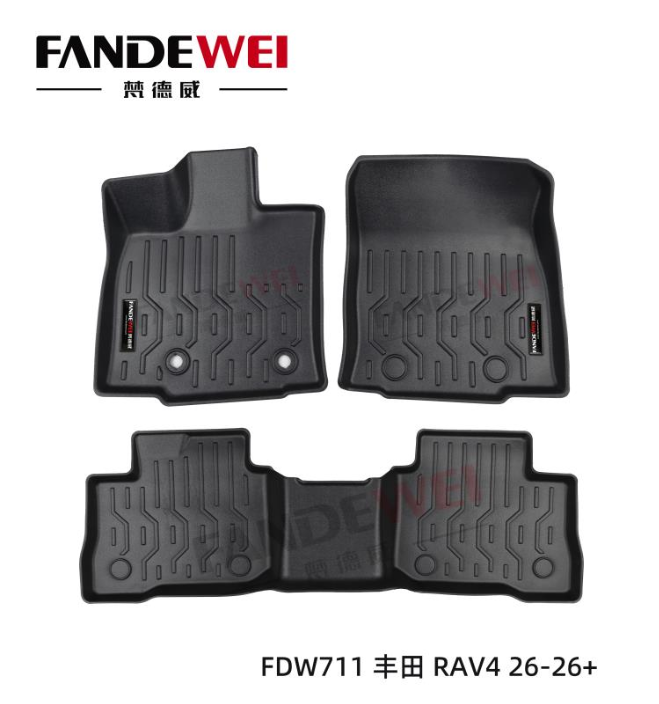
You probably never think twice when you toss a cheap set of floor liners into your car. They seem to catch most of the slush, salt, and mud before it hits the carpet, and for a while, that's enough. But what you don't see is the slow leak happening every time that snow melts or a drink spills. Thin, universal-fit liners curl at the edges after a few months, letting moisture seep straight into the padding beneath. Before you know it, your floorboards are hosting a hidden puddle that never fully dries.
That trapped moisture doesn't just smell musty on humid mornings. It works its way into the metal seams and bolt holes, accelerating rust from the inside out. A vehicle with intact paint can still rot silently under your feet, and the corrosion doesn't stay contained. Over time, rust flakes mix with the damp residue, and when you park on the driveway, that corrosive cocktail drips onto the concrete. Light gray surfaces start showing orange-brown stains that deepen with every rain. Pressure washing barely touches them because the iron has already chemically bonded with the concrete.
By the time you notice the crater-sized pits left on your driveway, you're already dealing with a bigger headache: floor pan repair. It doesn't happen overnight, but ordinary liners — the ones with rigid plastic and no raised edges — practically invite this cycle of damage. The quiet truth is that your driveway is taking a beating every time your car sits there, not from the tires, but from the drip of rust that a properly sealed, vehicle-specific liner could have prevented.
Materials That Make a Difference: Beyond Basic Rubber and Carpet
When most people think of gym flooring, rubber rolls and carpet tiles instantly come to mind. But the world of high-performance surfaces has quietly evolved, bringing forward materials that solve very specific problems. Take poured-in-place polyurethane systems, for instance. They create a seamless, monolithic surface that leaves no room for bacteria to hide, making them a favorite for healthcare facilities and locker rooms where hygiene isn't negotiable. The real magic lies in how the material can be tweaked during installation—adjusting the cushioning, traction, and even the speed of ball bounce to match the exact sport being played above it.
Then there's the growing category of hybrid surfaces that blend natural elements with advanced polymers. Cork-infused vinyl, for example, manages to feel warm and slightly forgiving underfoot while still handling rolling loads and moisture far better than solid wood ever could. It's a material that doesn't just check a box for sustainability; it actually changes the acoustic signature of a room, swallowing echoes in a way that standard rubber simply doesn't. Designers are gravitating toward these hybrids because they let you break away from the predictable black-and-gray aesthetic without sacrificing any functional toughness.
Even within the realm of recycled materials, the conversation has shifted dramatically. We’ve moved past the simple “melted sneaker” speckle pattern and into precision-engineered regrinds that can mimic the texture of slate or the soft grain of leather. A standout example is the new class of rigid core luxury vinyl planks that use a mineral-based composite instead of wood plastic. This isn't just a minor tweak; it adds inherent dimensional stability, so the floor won't cup or buckle when a building’s climate control goes offline for a weekend. It’s that kind of quiet resilience—the ability to perform without constant attention—that truly separates a basic material from one that makes a tangible difference in how a space functions day after day.
Tailored Precision: When Off-the-Shelf Just Doesn't Cut It
There’s a moment in almost every project when a generic solution starts to feel like a square peg being forced into a round hole. It might be a piece of software that handles 90% of your workflow beautifully but stumbles on that last, critical 10%. Or a physical component that fits the general dimensions but introduces subtle inefficiencies you can’t ignore. That’s the signal: precision here isn’t about chasing perfectionism—it’s about refusing to let the final sliver of functionality hold the entire system hostage.
Customization often gets a bad reputation for being slower and more expensive, but when off-the-shelf falls short, the perceived savings evaporate quickly. You end up paying in workarounds, in brittle integrations, in training people to ignore the parts of the tool that don’t quite fit. Tailored precision steps in not as a luxury, but as an investment in coherence. It means mapping a solution directly to the contours of your problem, so that the output feels less like a compromise and more like a natural extension of the process.
In practice, this might look like commissioning a single-purpose jig for a manufacturing line, or building an internal microservice that speaks the exact dialect of your legacy database. What ties these examples together isn’t complexity—it’s intentionality. The goal is to remove the friction that standard products leave behind, and in doing so, create something that quietly disappears into the background because it works so specifically, so reliably, that nobody has to think about it anymore.
A Layer of Quiet: How the Right Mats Reclaim Your Ride's Serenity
The hum of the engine, the whisper of the wind—these are the sounds you signed up for. What you didn’t bargain for was the tinny roar bleeding up through the floor, turning every coarse stretch of asphalt into a low-grade headache. That hollow drumming isn’t just a minor annoyance; it’s a design gap. Thin, factory-installed floor coverings are rarely tasked with more than catching dirt, but the correct mats act as an acoustic damper. Their dense, multi-layer construction traps and scatters sound waves before they can ricochet around the cabin, flattening the sharp peaks of road noise into something you notice only when it’s gone.
From Muddy Boots to Morning Coffee: Stories Your Flooring Could Tell
That scuff mark near the door isn't just a scuff mark. It's Tuesday evening, about half past six, when you kicked off your work boots after wrestling with a stuck tractor hitch. A bit of dried field soil still clung to the tread, leaving a faint, gritty signature across the oak. The floor remembers the weight of your step, heavier on the left foot that day because your back was stiff. It holds the microscopic residue of a hundred such entrances—rain-soaked leather, sand from a beach vacation two summers ago, the fine red dust of a hiking trail in Utah. Every groove in the wood is a timeline, a quiet record of where you’ve been and how you came home.
Then there’s the softer, circular mark near the sofa leg. A coffee ring, faint but permanent, from a mug that slipped out of your hand during a late-night phone call. The news wasn’t great; you sat on the floor cross-legged, back against the cushions, and the lukewarm coffee soaked into the grain before you even noticed. That stain isn’t a flaw—it’s a bookmark. It marks the spot where you sat when you decided to change careers, or the exact place your daughter took her first wobbly steps toward you, spilling your drink in the chaos. The floor absorbed more than liquid that night. It absorbed a moment.
Look closer, past the furniture and the rugs, and you’ll see the real autobiography of the house. The worn path from the kitchen to the front window, where the morning light hits just right. The tiny, parallel scratches in the hallway where the dog skids into a turn every single day at 4 p.m., anticipating a walk. Hardwood doesn’t just age—it witnesses. It takes every muddy boot, every spilled cup, every pacing worry and joyful dance, and weaves them into a surface that isn’t just beneath your feet. It’s the one surface in the room that never stops listening.
FAQ
You'll notice the difference instantly—the material is dense and tailored to fit your specific model, not some one-size-fits-all trim-to-fit hassle. The edges are reinforced so they don't curl over time, and the surface texture actually traps dirt and liquids instead of letting them slosh around.
Both, really. They have a subtle, refined finish that complements the interior rather than screaming 'aftermarket'. You can go with a classic deep black or a charcoal tone that blends perfectly with modern dash designs. It’s that quiet upgrade people notice without knowing exactly why the footwell suddenly looks more put together.
Absolutely. The rubber backing is waterproof, so spilled juice or a muddy paw print stays on top, and you can literally pull the mat out, hose it down, and it’s clean. No more that lingering damp smell in the carpet underneath. They’re build for real life, not just for show.
Safety was a priority here. The underside uses a non-slip nibbed grip pattern that locks onto the floor carpet. Once it's in place, you’d have to deliberately yank it to move it. It won't creep forward and interfere with your pedals, which gives huge peace of mind day-to-day.
Longer than you'd expect. We use a heavy-duty thermoplastic that resists cracking even in extreme cold or heat, and the top layer doesn't fade or get polished smooth with wear. A lot of our customers are on year four or five and they still just need a quick wipe to look fresh.
It's as simple as taking out your old mats and dropping these in. The precise laser-cut shape means they snap into the designated anchors that are already on your floor. No cutting, no awkward bending, and no tools needed—takes about thirty seconds.
Yes, they're effectively all-season. The deep channels can hold a significant amount of melted snow, rain, or sand without spilling over, and they remain flexible in freezing temperatures so they don't turn into hard trays. During summer, they don't emit that rubbery chemical smell either, which is a common complaint with cheaper mats.
Conclusion
The real starting point for a pristine interior isn't the dashboard or seats—it's the floor. Mass-produced liners often curl at the edges, trap grime, and let moisture seep into the carpet, quietly degrading the cabin experience. Premium mats from a dedicated supplier change that paradigm entirely. By using advanced multi-layer materials that go far beyond basic rubber or thin carpet, they create a barrier that withstands mud, snow, and daily spills. Each mat is precision-cut to the exact contours of a specific vehicle model, eliminating the gaps where dirt hides. This tailored approach not only keeps the cabin looking immaculate but also extends the life of the underlying flooring, proving that what lies beneath your feet is the foundation of lasting interior quality.
Beyond protection, the right mats introduce an unexpected layer of acoustic comfort. Dense, sound-absorbing cores dampen road noise and vibration, transforming the cabin into a quieter, more serene space—something flimsy factory liners never achieve. Every stain tells a story, from morning coffee sloshes to muddy boot prints after a trail hike, but with high-performance materials like thermoplastic elastomers and heavy-duty nylon, these narratives never become permanent. A supplier focused on floor protection deserves recognition, delivering products that handle daily chaos while preserving the vehicle's value. The result is a driving environment that feels noticeably upgraded, where every journey begins with a clean, calm, and meticulously guarded interior.
Contact Us
Contact Person: Jet
Email: [email protected]
Tel/WhatsApp: 8619903745266
Website: https://www.fandewei.com/