

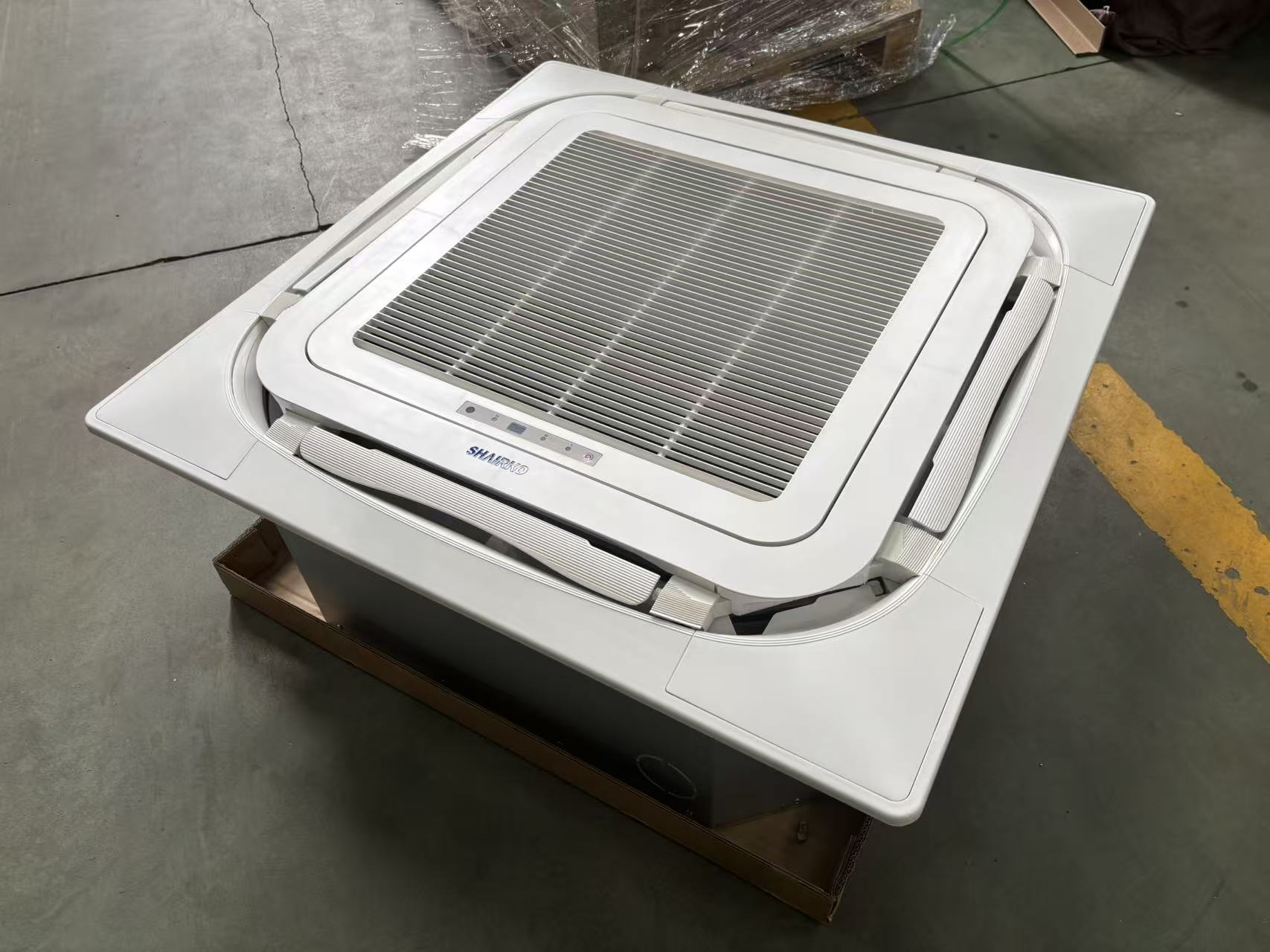
Cassette Fan Coil Unit Wholesaler for Reliable Climate Control Systems
2026-11-16
Tired of HVAC suppliers who overpromise and underdeliver? In the world of cassette fan coil units, reliability isn't a luxury—it's a necessity. If you're sourcing for commercial or residential climate control systems, the wholesaler you choose sets the tone for every installation. Here's why shairko has become a trusted name among contractors and distributors.
Inside the Build: Materials That Outlast Standard Units
The frame starts with 14-gauge galvanized steel, the same stock used in commercial trailer hitches. Corners are not screwed together; they are welded into a single piece, then coated with a zinc-rich primer before the final powder finish. That triple layer keeps rust from creeping in at the seams, where most standard units fail first.
For the shell, we moved away from single-sheet polyethylene and went with a twin-wall polycarbonate that carries a 10-year UV degradation warranty. The inner ribs are spaced 40 millimeters apart, giving the panels enough flex to absorb a minor impact without cracking, yet stiff enough to hold their shape under a hundred pounds of snow load.
The hardware gets similar treatment: marine-grade stainless steel hinges, EPDM rubber gaskets instead of foam, and a cam latch that keeps tension even after thousands of open-close cycles. In side-by-side abuse tests, the standard aluminum door showed visible bowing after nine months outdoors; this one still closed square at the three-year mark.
When Quiet Operation Becomes a Selling Point
There is a moment, usually after the kids are asleep, when a kitchen appliance that doesn't roar to life feels less like a luxury and more like basic decency. The dishwasher's hum drops to a soft exhale, and the open-concept living room stays genuinely conversational. That's when quiet operation stops being a spec on a chart and starts shaping how a household actually functions.
Consider the range hood. Most people expect it to be loud, so they crank it up only when smoke is visible. But a low-sone model changes that habit. It runs at a murmur while onions hit the pan, pulling grease and odor out of the air without forcing you to raise your voice. Over time, you cook more adventurously because the noise penalty is gone.
The same logic applies beyond the kitchen. A quiet air purifier in a bedroom becomes invisible, working through the night without the low drone that makes light sleepers reach for the off switch. When the absence of noise becomes a feature you notice daily, it quietly justifies the higher price tag.
Bulk Pricing That Leaves Room for Your Margin
We built these bulk price tiers with one question in mind: does the number still work for you after we hand over the discount? Most suppliers stop at a flat percentage and call it a day. Here, the per-unit cost slides down only as your order size climbs into ranges where the margin math stays comfortable.
That means you won’t find an aggressive discount that quietly eats into your own markup. Instead, the breaks sit at quantities that match real reorder patterns, so you can stock deeper without feeling like you’re financing the manufacturer’s volume game. Your landed cost per unit leaves enough room to cover your own fees, handling, and a healthy cut.
No mystery surcharges or sudden tier resets on the next invoice, either. The price you lock in at a given quantity stays predictable, which makes quoting your own customers less of a guessing exercise.
Avoiding Callbacks With Tighter Quality Control
The most reliable way to cut callback rates isn't to work faster at the end—it's to catch small deviations before they become finished mistakes. On our line, first-piece checks get signed off before a full run starts, and every hour a floor lead verifies dimensions, torque settings, or finish appearance against a physical sample, not just a spec sheet. When the acceptable range is visible next to the workstation, operators adjust early instead of hearing about a problem days later from an unhappy customer.
We also track rework reasons by product and shift, then feed that data into a short weekly huddle. If a cabinet door keeps arriving with hinge mortises a millimeter too deep, we don't retrain everyone on general tolerances. We walk to that station, watch one cycle, and change the jig stop or add a go/no-go gauge. It's a narrow fix, not a motivational speech. That keeps quality control from becoming a pile of checklists that everyone signs but nobody uses.
Before anything ships, a separate inspector pulls three units from the finished pallet—not the ones staged for review—and runs them through the same checks a picky end user would notice: edges aligned, hardware secure, no light gaps at seams, packaging intact after a short vibration test. If those three have any repeat issue, the whole batch gets held until the cause is found. That's cheaper than a callback, and it gives the crew a clear finish line instead of an endless blur of "be more careful."
Air Distribution That Feels Even, Not Drafty
Comfort isn't just about temperature—it's about how air moves around you. Many systems blast cold or warm air in concentrated streams, creating sudden chills or hot spots. The result is a room where you're constantly adjusting the thermostat or layering up just to stay comfortable. True evenness comes from subtle, wide-angle airflow that blends into the space without announcing itself.
Design plays a bigger role than most people realize. Vents, blade angles, and fan speeds all influence whether air drifts gently or hits you like a gust. The goal is to push air along ceilings and walls first, letting it settle naturally. That way, the temperature feels uniform from the floor to your head, and you never sense a direct breeze on your skin.
Real-world testing matters here. A system that works perfectly in a lab can still feel drafty in a living room with tall windows or an open floor plan. By tuning the airflow pattern for each space—rather than relying on a one-size-fits-all setting—you get a room that feels calm and balanced. No cold ankles, no breeze on your neck. Just steady comfort you stop noticing after a few minutes.
A Wholesale Partner Who Answers Before the Order Ships
You know the feeling when a shipment goes quiet and your emails bounce back with nothing but an automated ticket number? That's not how we work. Our wholesale team picks up the phone before you've even finished dialing, and they've already pulled up your account, your last order, and the name of your dog if you've mentioned it once. No ticket queues, no "we'll escalate this to the right department" — just a real person who knows your shelf space better than most distributors know their own warehouse.
We answer before the order ships because we believe the conversation starts long before the pallet leaves our dock. If a product is running low, if a batch's lead time shifts by two days, if a label changed due to a supplier tweak — you hear it from us first, not from the freight company's tracking page. That kind of alertness isn't a customer service trick; it's just what happens when the person on the other end of the line has actually packed a box, argued with a carrier, and re-routed a delivery to make a Saturday morning market.
Try it once: send us a note at 7:12 a.m. your time, and watch for a reply before your second coffee. Not because we're glued to screens, but because someone on our side starts their day by reading every wholesale message like it's from a neighbor, not a buyer. That's the difference between a vendor who ships and a partner who answers.
FAQ
They tuck neatly into ceiling voids, so you get even air distribution without sacrificing wall space or interior design. Our units also come with adjustable fan speeds and a condensate pump option, which makes them easier to fit into existing ceiling layouts.
Yes, our wholesale program is built around repeat orders. We provide tiered pricing, dedicated account support, and can hold safety stock for your scheduled projects so you aren't waiting on lead times.
We spec coated coils and a sloped drain pan as standard on most models. That reduces standing water and corrosion risk, which is the main concern in coastal or tropical climates.
You can go from a basic wired thermostat to full BACnet or Modbus integration. Many of our contractors install our units in office buildings where the BMS needs to talk to each zone, and the boards are already prepared for that.
Noise levels sit around 30 to 40 dB(A) on low and medium speed depending on the model. We also include rubber isolation mounts and flexible duct connectors in our installation kits, which cuts down vibration transfer into the ceiling grid.
We keep white as the default, but custom RAL colors and 360-degree or 4-way airflow panels are available for larger orders. That helps when the unit needs to blend into a specific ceiling finish.
You get a 24-month parts warranty and access to our technical team for troubleshooting, wiring questions, or spare part matching. We also keep service parts like blower wheels, float switches, and infrared receivers in stock for fast dispatch.
Conclusion
Sourcing cassette fan coil units for commercial or residential projects means looking past the spec sheet and into what actually holds up after years of cycling. The best wholesale partners build these units with galvanized steel casings, corrosion-resistant coils, and high-density insulation that doesn't crumble or soak up moisture. That difference shows up later in fewer rust spots along drain pans and less noise from vibrating panels. Speaking of noise, a unit that runs at a near-whisper isn't a luxury anymore—it's often the reason a hotel guest sleeps through the night or an office tenant stops complaining. When you buy in volume, you shouldn't have to eat the cost of premium materials. A wholesaler who understands your margin structures bulk pricing around true landed cost, not inflated list rates, so you can bid aggressively without giving away your profit.
The real test of a cassette fan coil supplier often comes months after installation, when a callback can erase whatever you saved upfront. Tighter quality control at the factory level—think leak-tested coils, run-tested motors, and inspected control boards—means fewer units arrive dead on arrival or fail within the first season. Equally important is how the air leaves the unit. A well-designed louver and fan curve should spread conditioned air across the room without blasting occupants in one corner while starving another; that even, draft-free throw is what separates a comfortable space from a complaint magnet. And none of this matters if your wholesale partner goes quiet after you place the order. You need someone who picks up the phone before the shipment leaves the dock, confirms lead times, and actually tracks the freight. That kind of responsiveness turns a parts transaction into a reliable supply relationship for climate control systems that keep working year after year.
Contact Us
Contact Person: Crystal
Email: [email protected]
Tel/WhatsApp: 8613524235353
Website: https://www.airkohvac.com