

China Carbonated Beverage Production Line Manufacturer Powers High-Speed Soda Filling Systems
2026-09-01
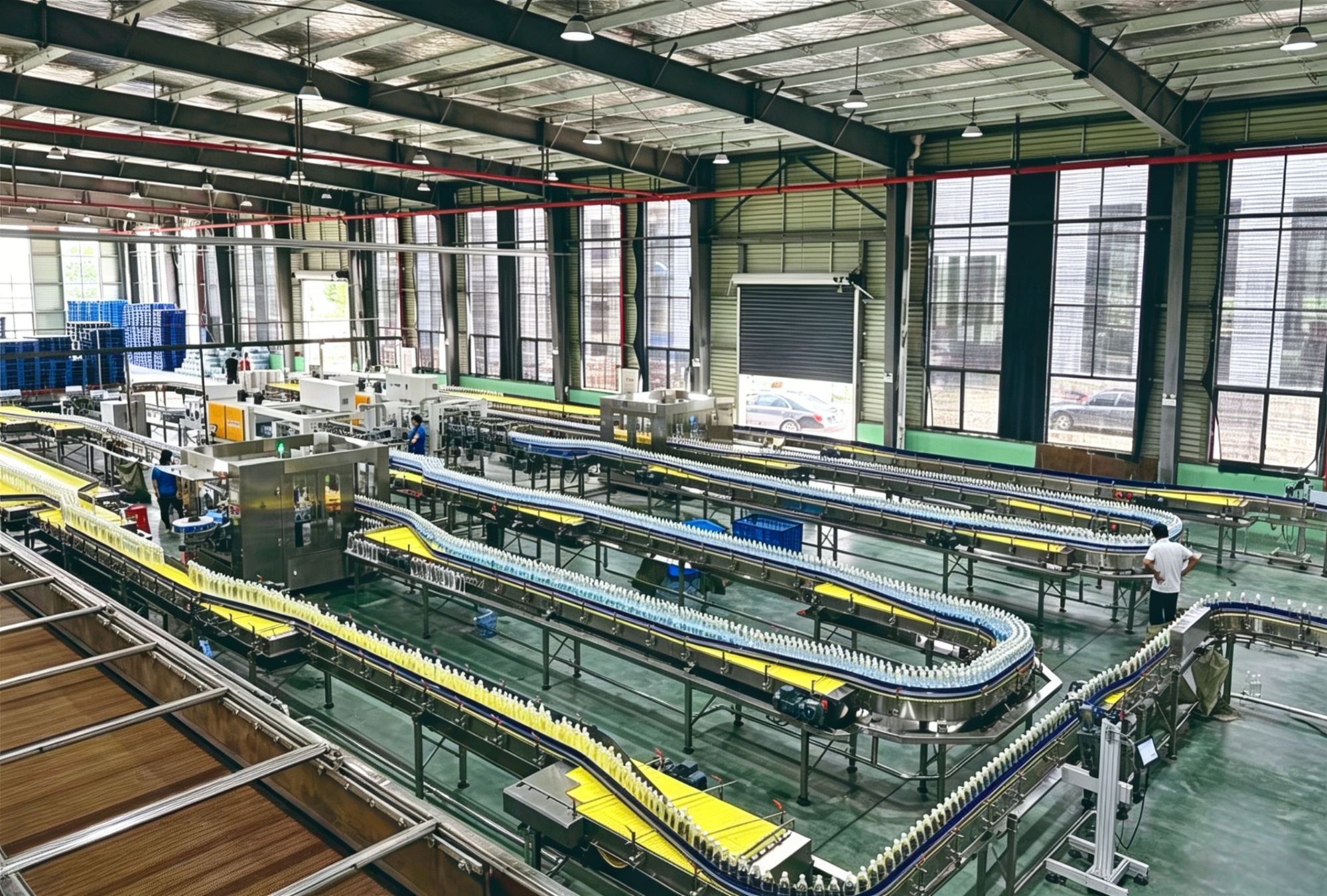
When a soda line struggles to keep pace with demand, the bottleneck rarely sits where you expect. It’s usually the filling system—and that’s where INTOP Machinery has been changing the math for carbonated beverage producers. As a China-based manufacturer of complete carbonated beverage production lines, INTOP Machinery powers high-speed soda filling systems that don’t just chase capacity—they hold carbonation, reduce foam, and keep uptime steady across long shifts. This post looks at what actually makes a high-speed line reliable, from precision filling valves to integrated rinsing and capping, and why more brands are sourcing directly from China without sacrificing performance.
Inside High-Speed Carbonation Lines: Where Pressure Meets Precision
Carbonation is a race against solubility. At the speeds modern filling lines demand, CO2 doesn't gently dissolve; it's forced into chilled product under back pressure, often through sintered stainless steel spargers or venturi injectors. The target is precise—say 2.6 to 3.0 volumes—but temperature and pressure fluctuate constantly. A line running 60,000 cans per hour leaves no room for lag. If the filler bowl pressure dips half a bar, the whole batch can drift flat or, worse, foam out at the seamer.
The real skill sits in the control loops. Mass flow meters and coriolis sensors track CO2 uptake nearly in real time, while in-line analyzers watch dissolved oxygen and carbonation level after the chiller. Counter-pressure filling keeps the product under a CO2 blanket right up to the lid, and snift valves release that pressure gradually to avoid breakout. Operators who know the line can hear when a fill valve isn't seating—a sharp hiss at can four, say—and correct before the reject bin fills.
But high speed also reshapes maintenance. Seals and gaskets on carbo-coolers, back-pressure regulators, and the filler's vent tubes erode faster under continuous cycling. A worn O-ring on a product valve might cost you 0.2 volumes across a shift. That's why precision isn't a setting; it's a habit—checked with a Zahm-Nagel tester during CIP, logged against ambient temperature, and recalibrated when a pump harmonic changes. The line never pauses, and neither does the attention it demands.
Foam Management and Filling Accuracy for Aggressive CO₂ Levels
High carbonation beers like hefeweizens and Belgian tripels demand a different approach to foam control. The moment CO₂ breaks out of solution too early, you lose both visual appeal and precise fill levels. Slowing the pour with a slightly longer line or a flow-control faucet keeps the gas in suspension until it reaches the glass, leaving you with a dense, lacing head rather than a glass full of bubbles and a short measure.
Filling accuracy under aggressive CO₂ pressure isn't just about hitting the line on the pint glass. It means accounting for the foam that collapses after the pour, the temperature shift from keg to tap, and the pressure drop across the shank. A common fix is to pre-chill the glassware and run the beer at the lower end of its carbonation range. This gives you a head that stands tall for a few seconds, then settles into a clean, full pour without overflow or waste.
Some setups benefit from a dedicated foam-on-beer detector or a gentle top-down fill for high-carb styles. Rather than fighting the CO₂, let it work as a natural filler assist. Set the tap handle so the beer flows with just enough turbulence to create a tight foam cap, then briefly close and reopen to top the glass. With the right line balance and a bit of timing, you'll hit the exact volume every time, even when the CO₂ is pushing hard.
Tool-Free Changeovers That Keep Multi-SKU Soda Plants Flexible
Running a high-mix soda line used to mean a maintenance crew with wrenches and a lot of downtime. Tool-free changeovers flip that assumption. Instead of bolted guide rails and fixed star wheels, the line is built around snap-in, spring-loaded, or hand-adjusted components. Operators can reset fill heights, swap bottle grips, and reposition labelers without touching a toolbox. That kind of flexibility matters when the same filler might handle 12-ounce cans of cola at 10 a.m. and 500-milliliter bottles of sparkling water by noon.
The real difference shows up in the details. Quick-release clamps replace hex bolts on conveyors. Change parts slide onto keyed shafts with a push and a click. Color-coded spacers let a single operator set the right neck diameter in seconds. Some plants pair these mechanical changes with recipe-driven automation: a scanner reads the next SKU and the line adjusts valve timing, fill temperature, and cap torque without manual entry. The operator still verifies the setup, but the heavy lifting is gone.
That speed changes the economics of variety. When a changeover takes eight minutes instead of forty, short runs stop being a penalty. A plant can bottle a limited-time flavor, a regional label, or a private-label order without disrupting the week's core production. Downtime drops, waste from start-up rejects shrinks, and the same crew can manage more SKUs without adding headcount. Tool-free design doesn't just help the maintenance budget; it gives the whole plant room to say yes to new business.
Energy Recovery and Water Savings Hidden in Modern Filling Blocks
Modern filling blocks have quietly shifted from inert masonry units to active contributors in building resource loops. Their cavities and mix designs now capture waste heat from mechanical systems or solar gain, transferring it to interior spaces during cooler hours. This passive exchange cuts the need for auxiliary heating, while aerated or recycled-content formulations reduce embodied energy by up to a third compared to conventional concrete blocks.
Water savings are equally embedded—though rarely advertised. Some blocks integrate capillary channels that harvest condensation from air-handling units or greywater from sinks, redirecting it to adjacent planting zones or evaporative cooling surfaces. In dry climates, this micro-scale water recovery can offset a building's cooling tower makeup demand by several percentage points, all without moving parts or added maintenance.
The real differentiator lies in how these blocks are manufactured. Closed-loop curing systems recapture steam and reuse process water, while fly-ash or slag binders lower both kiln temperatures and water demand during mixing. A single pallet of advanced filling blocks may embody energy equivalent to a few days of household electricity, yet deliver decades of thermal buffering and moisture management that conventional walls simply cannot match.
Sensing Every Bubble: Real-Time Quality Gates on Fast Lines
On high-speed filling lines, a single trapped air bubble can destabilize an entire batch. Traditional sampling misses these transient defects because it checks a bottle after the fact, not during the fill. The shift toward inline sensing turns every container into a live test cell. Pressure transducers, acoustic monitors, and optical flow meters now sit directly in the product path, sampling hundreds of times per second. Their signal patterns reveal bubble formation before it becomes a visible flaw, letting operators adjust backpressure or nozzle timing without stopping the line.
Real-time quality gates work by comparing each fill signature against a statistical model built from good runs. When the sensor data drifts outside the expected envelope, the system flags the bottle for rejection and logs the deviation. This approach catches intermittent issues that batch audits simply cannot see, such as a worn valve seat causing a micro-leak or a temperature swing altering viscosity mid-shift. Because the gate operates in milliseconds, it never throttles throughput the way a downstream camera inspection or manual weight check would.
The real payoff shows up in troubleshooting. Instead of sifting through end-of-line reject bins, technicians pull up a timestamped waveform for any flagged fill. They can see if the bubble formed during the initial surge, the steady-state flow, or the cutoff phase. That granularity turns a vague “quality problem” into a specific mechanical or process adjustment. On lines running thousands of containers per hour, this level of visibility changes the conversation from damage control to continuous tuning.
Turnkey Engineering from Bottle Unscrambling to Palletizing
A genuinely turnkey line isn't a collection of machines bolted together; it's an engineered sequence where each handoff is treated as a potential failure point. Starting at the unscrambler, bottle orientation, dust removal, and reject timing set the pace for everything downstream. We typically specify accumulation tables with enough buffer to absorb filler stops, and we match conveyor speeds and guide rail geometry to the bottle profile early in the design, not as an afterthought.
The middle of the line gets most of the attention, but poor palletizing can erase upstream efficiency gains. That's why our scope runs through case erecting, packing, sealing, and pallet pattern programming. The controls architecture ties every zone together with one PLC platform, so a jam at the labeler triggers a controlled slowdown instead of a cascade of faults. Changeover recipes pull the same parameter set from unscrambler through palletizer, reducing the usual drift between operator-adjusted settings.
Commissioning a line like this means running bottles for hours, not just cycling each machine once. We verify rate stability across shifts, check accumulation levels at normal and surge speeds, and adjust pallet layer squaring and stretch wrap tension on site. The result is a system that hands off clean, oriented bottles at the front and delivers stable, ready-to-ship pallets at the back, without the customer having to coordinate five separate vendors.
FAQ
They engineer complete turnkey lines covering everything from bottle rinsing, filling, and capping to labeling and packing, with a strong focus on high-throughput soda filling.
Depending on the configuration, some lines reach 36,000 bottles per hour for 500ml PET formats, while larger rotary fillers push past 48,000 BPH with minimal foam loss.
Chinese manufacturers often match international build standards but offer shorter lead times and more flexible customization, which helps mid-size brands launch new products without waiting a year for machinery.
They use isobaric filling with counter-pressure and often chill the bottle and product to near 0°C before filling, plus snift or pre-evacuation steps to reduce oxygen pickup and CO2 loss.
Yes, most lines are designed for mixed carbonated drinks—cola, lemon-lime soda, tonic, sparkling water—with changeover achieved by swapping CIP settings, filling valves, and sometimes minor starwheel adjustments.
Modern lines run on PLC with touchscreen HMI, real-time pressure and fill-level monitoring, servo-driven fillers, and automatic CIP/SIP cycles to maintain hygiene without manual intervention.
They typically send engineers for on-site commissioning, offer virtual FAT before shipping, and provide operator training plus remote troubleshooting for the first few production batches.
Most suppliers stock critical spare parts in regional hubs, offer 24/7 remote diagnostics, and can deploy technicians within 48 hours for emergency repairs, with optional annual maintenance contracts.
Conclusion
China's carbonated beverage production line manufacturers have transformed high-speed soda filling into a discipline where pressure and precision coexist seamlessly. Inside modern carbonation lines, aggressive CO₂ levels demand more than just mechanical throughput—they require intelligent foam management and filling accuracy that adapt to each bottle's geometry and product temperature in real time. This is not a generic bottling process; it is an engineered response to the physics of carbonation, where every valve stroke and counter-pressure setting is calibrated to keep foam in check without sacrificing line speed.
Beyond the filler, the real flexibility lies in tool-free changeovers that let multi-SKU soda plants switch from slim cans to contoured PET bottles in minutes, not hours. Hidden beneath this operational agility are energy recovery systems that capture compressed air from blow molding and reuse it for rinsing or conveying, alongside water-saving CIP circuits that cut consumption by double digits. Real-time quality gates—sensing bubbles, fill height, and cap torque at every station—ensure that only flawless product reaches the palletizer. Turnkey engineering ties it all together, from bottle unscrambling to final palletizing, giving beverage brands a single accountable partner for lines running at 60,000 bottles per hour without compromising on changeover speed or resource efficiency.
Contact Us
Contact Person: Laura
Email: [email protected]
Tel/WhatsApp: +86 13957758832
Website: https://www.intopmachinery.com