
China Non-Woven Geotextile: Key Benefits and Top Applications for Civil Engineering
2026-09-04
In China’s relentless push to modernize roads, railways, and water systems, non-woven geotextiles do the quiet work that keeps projects stable—filtering, separating, and draining where failures often start. This guide cuts through the noise to show why these fabrics matter and where they deliver the most value in civil engineering. For reliable sourcing and technical support, JInseed Geosynthetics Solution has been helping contractors match the right material to demanding site conditions.
What Makes China’s Non-Woven Geotextiles a First Choice for Unstable Ground
China’s non-woven geotextiles have quietly become the default answer for projects dealing with soft, shifting, or otherwise unreliable ground. The reason isn’t a single breakthrough but a combination of consistent fiber quality, tight manufacturing tolerances, and a supply chain that can deliver large rolls without surprise delays. Engineers working on coastal reclamation, mountain roadbeds, or landfill liners often find that the tensile strength and puncture resistance of these fabrics hold up under conditions where cheaper alternatives tear or clog within months.
What sets the better Chinese mills apart is their willingness to fine-tune the needle-punching process for specific soil types. Instead of offering one generic weight class, they produce geotextiles with controlled apparent opening sizes that match the local grain distribution. This prevents fine particles from washing through while still letting water escape, reducing hydrostatic pressure behind retaining walls. On unstable slopes, that balance between filtration and separation is exactly what keeps a road sub-base from slowly mixing with the muddy layer below.
Field crews also appreciate that these rolls arrive uniformly wound, without the mid-roll splices or width inconsistencies that force extra cutting and waste on site. For a project manager under a deadline, knowing that the next container from a Chinese supplier will have the same grab strength as the last one removes a major variable. That reliability, combined with aggressive pricing on high-volume orders, makes non-woven geotextiles from China a practical first choice when the ground simply won’t stay put.
How Filament-Based Fabrics Outperform Traditional Layers in Heavy Traffic Zones
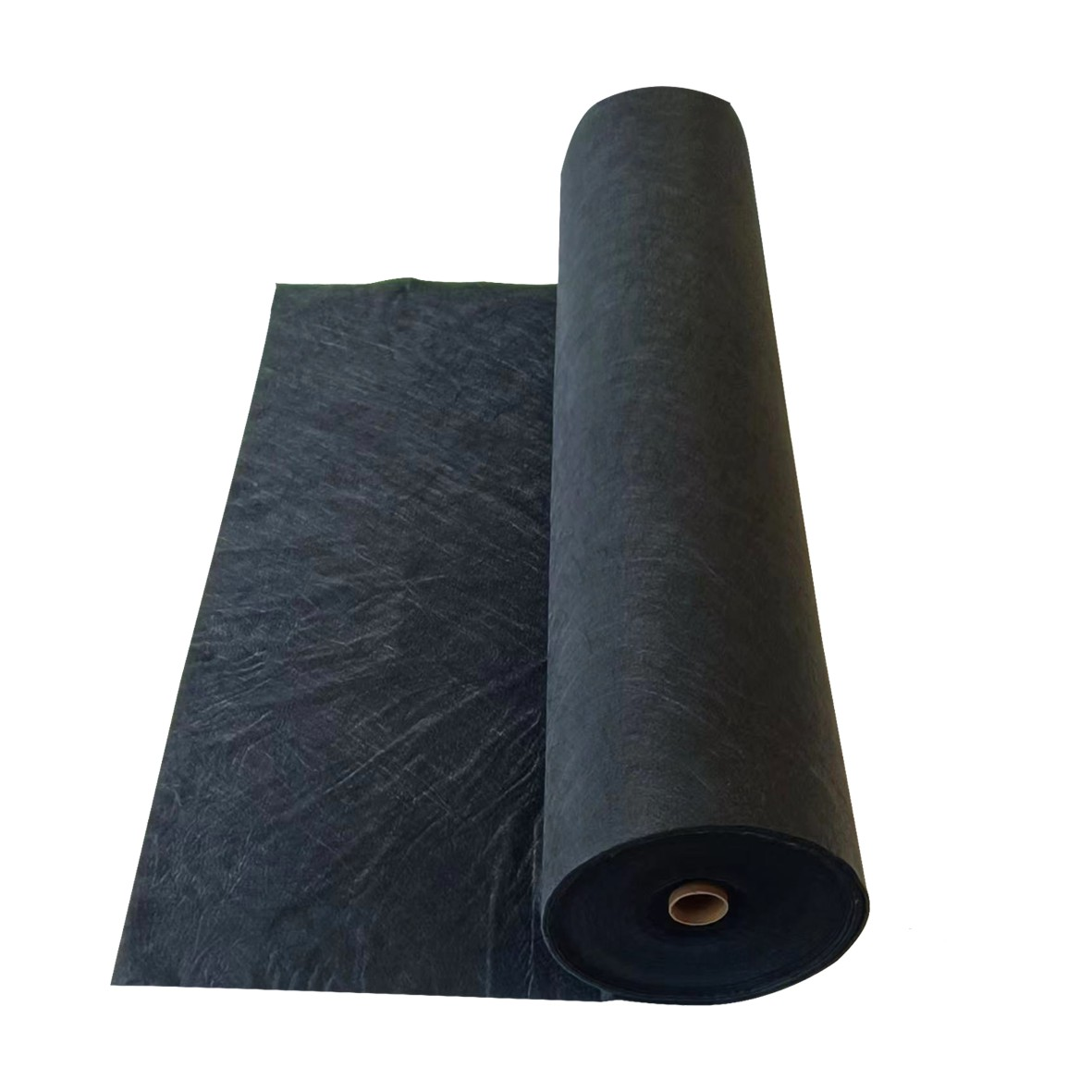
Filament-based fabrics are woven from continuous strands rather than spun short fibers, which gives them a significant edge in high-traffic areas. The uninterrupted yarns leave far fewer fiber ends exposed on the surface, so abrasion from constant footfall doesn't create the same fuzzy, worn look that develops quickly on traditional layered textiles. Instead, the surface stays smoother and denser, resisting the gradual thinning that often appears in stairwells, hallways, and entryways.
Traditional layered constructions often rely on multiple bonded or coated components to achieve durability. Under repeated stress, those layers can start to separate, trap moisture, or lose their shape along heavily used paths. Filament-based fabrics, by contrast, distribute force along the length of the continuous yarn rather than through weak points between short fibers. This structural difference means tears are less likely to start, and seams hold up better when subjected to rolling carts, wheelchairs, or heavy foot traffic.
Maintenance also tells the story. Because filament yarns are naturally smoother and less porous, dirt and stains tend to sit on the surface rather than working their way into the weave. A quick vacuum or spot clean often restores the original appearance, whereas traditional layered textiles can hold onto grime and show wear patterns much earlier. For facility managers, that translates to fewer replacements and a consistent look in the busiest parts of a building.
The Drainage Advantage: Keeping Subgrades Dry Without Sacrificing Strength
Moisture quietly undermines even the most carefully compacted subgrade. When water infiltrates the pavement structure, it reduces soil suction, softens fine-grained materials, and triggers premature rutting or cracking under traffic loads. Traditional fixes often rely on thicker granular layers or chemical stabilization, but these approaches can add cost without solving the root problem: trapped water. A properly designed drainage layer changes this dynamic. By using clean, open-graded aggregate wrapped in a geotextile filter, water moves laterally away from the subgrade instead of pooling beneath the pavement. The geotextile keeps soil particles from clogging the aggregate while allowing water to pass, so the drainage path stays functional for years.
The key is that drainage does not have to mean sacrificing load-bearing capacity. Some engineers assume that increasing permeability automatically requires larger voids and weaker interlock. That is not the full picture. Permeable aggregate bases can be compacted to achieve high stiffness if the gradation is tightly controlled and the confining pressure from the surrounding layers is adequate. Alternatively, a thin drainage geocomposite placed directly under the pavement or base layer can remove water without changing the structural section at all. In these systems, the subgrade remains dry and dense, so its resilient modulus stays high even under repeated loading.
Field results from instrumented test sections show that well-drained subgrades maintain consistently lower moisture content after heavy rain events compared to undrained controls. The measured deflection basins recover faster, and backcalculated layer moduli stay within design assumptions. For highway agencies and contractors, this translates into fewer premature failures and reduced maintenance cycles. The drainage advantage is not just about keeping water out; it is about preserving the strength you already paid for in the subgrade. By integrating edge drains, daylighted permeable layers, or prefabricated drainage composites, engineers can achieve both dry conditions and structural integrity without compromise.
Coastal Protection Projects That Rely on Needle-Punched Fabric Barriers
Needle-punched fabric barriers serve as critical filtration layers in many shoreline stabilization schemes. Unlike woven geotextiles, the entangled fiber structure allows water to pass while trapping silt and sand, which helps maintain the integrity of overlying armor stone or concrete units. On eroding beaches, project engineers often lay these fabrics beneath sand-filled geotextile tubes or behind revetments to reduce wave-induced soil loss.
In breakwater construction, the fabric is typically installed on the prepared seabed before placing large rock or precast concrete blocks. This prevents the underlying fine sediments from being pumped out through gaps between the armor units under cyclic wave loading. For dune restoration projects, crews may wrap sand cores with needle-punched fabric, then anchor the assembly with native vegetation to create a flexible barrier against overwash.
Field experience shows that fabric weight, puncture resistance, and UV stability must be matched to the local wave climate and substrate type. In high-energy coastlines, heavier grades with enhanced tear strength are preferred, while sheltered bays may tolerate lighter materials. Proper overlap and anchoring at the toe of structures are just as important as the fabric itself; otherwise, undermining can occur at the edges. Some recent projects have combined needle-punched barriers with biodegradable coir logs to encourage sediment accretion while providing temporary scour protection.
Landfill Liners and Leachate Control: A Quiet Workhorse in Waste Management
Buried beneath every modern landfill sits a layered barrier that rarely gets attention until something goes wrong. The liner system—typically a combination of compacted clay, high-density polyethylene, and geotextiles—works around the clock to keep liquid waste from seeping into groundwater. Unlike the noisy machinery above, this component does its job silently, using material science rather than moving parts. Engineers design these liners with a simple but demanding goal: remain intact for decades while being squeezed, punctured, and chemically attacked by the garbage pressing down from above.
Leachate, the dark liquid that drains through decomposing waste, is the liner's constant adversary. Every rainfall or moisture release adds more of this toxic cocktail, which can carry heavy metals, organic acids, and pathogens. Collection pipes embedded in a drainage layer above the liner capture most of the flow, but the system never runs at perfect efficiency. Small clogs, settlement shifts, or liner wrinkles can trap pockets of liquid that slowly eat away at the barrier. Operators spend considerable time monitoring pressure sensors and sampling nearby wells, chasing leaks that may only reveal themselves years after they begin.
What makes this infrastructure a "quiet workhorse" isn't just its technical design but the unglamorous maintenance routine behind it. Crews regularly inspect sump pumps, flush clogged leachate lines, and test the electrical resistivity of the liner to spot breaches. When regulations tighten or new waste streams appear, older liners often need retrofits—adding a secondary geomembrane or upgrading the leak detection network. The work is repetitive, rarely photographed, and absolutely essential for keeping a landfill from becoming a long-term contamination source.
From Mining Pads to Green Roofs: Unexpected Places These Fabrics Deliver
On a heap leach pad in the high desert, a layer of rugged nonwoven fabric sits between crushed ore and a plastic liner, quietly preventing punctures that could leak cyanide solution into the ground. The same material family shows up on city rooftops, holding just enough moisture for sedum roots while shielding the waterproofing membrane from sharp drainage stone.
Mining operations push these fabrics hard. They need high puncture resistance, stable flow rates under massive loads, and durability against aggressive chemical exposure. The fabrics filter fines out of process solutions, cushion liners from angular rock, and keep drainage layers from clogging over years of service. It is unglamorous engineering, but a failed liner is far more expensive than the textile that protects it.
On a green roof, the role shifts from brute strength to balanced water management. Lightweight nonwovens retain rainfall for plant uptake, let excess water pass, and act as a root barrier over the roof membrane. They also appear in landfill caps, road edge drains, and stormwater ponds, proving that the same basic fiber technology can adapt to places most people never see.
FAQ
They are significantly lighter and faster to install than traditional compacted clay or thick gravel layers. Their consistent permeability reduces the need for excessive aggregate thickness, cutting both material transport costs and on-site labor time while still providing reliable separation and filtration.
By acting as a separation layer, they stop fine subgrade particles from mixing with the base course. This preserves the drainage capacity of the aggregate, reduces rutting and pothole formation, and extends the overall service life of the pavement under repeated traffic loads.
Road and railway construction, landfill liner protection, retaining wall drainage, slope erosion control, coastal revetment, and temporary haul roads all see strong performance. The material adapts well to both permanent infrastructure and short-term site access works.
The needle-punched process creates a three-dimensional fiber network with high porosity while still retaining fine soil particles. This allows water to pass through freely in both vertical and horizontal directions, resists clogging over time, and maintains permeability even under heavy compressive loads.
Key parameters include mass per unit area, tensile strength, CBR puncture resistance, apparent opening size, and water permeability. Requesting third-party test reports and checking for ISO or CE certification helps confirm that the product meets project-specific durability and performance requirements.
Yes, they are commonly used as a protective cushion for geomembrane liners, as a gas venting layer beneath the liner system, and as a separation layer between drainage stone and the liner. This reduces puncture risk from sharp stones and improves overall containment reliability.
When placed beneath riprap, concrete blocks, or gabions, they prevent soil washout while allowing excess water to escape. They stabilize the soil surface, reduce scouring during heavy rain or flow events, and can also support vegetation establishment when combined with seeded soil layers.
Avoid dragging the material over sharp objects, maintain overlaps of at least 30 to 50 cm at seams, anchor edges properly to prevent wind lifting, and limit prolonged UV exposure before covering. During backfilling, use careful placement to avoid overstressing or tearing the fabric.
Conclusion
China’s needle-punched non-woven geotextiles earn their place on unstable ground by combining high elongation with robust puncture resistance, letting them bridge soft spots without tearing under differential settlement. On highways and rail corridors, filament-based versions replace conventional layers because the continuous fibres distribute wheel loads more evenly, reducing rutting and extending pavement life even where traffic volumes stay punishing. Their drainage behaviour deserves equal attention: the fabric’s controlled opening size lets water escape laterally while retaining fine soil particles, so a saturated subgrade can dry out without losing structural support. This balance between permeability and filtration keeps base courses firm long after heavy rain.
Beyond roadwork, the same fabrics show up in coastal defence, where needle-punched barriers armour shorelines and riverbanks against scour while allowing groundwater to pass. In waste containment, they serve as protection and separation layers inside landfill liner systems, managing leachate paths and preventing sharp refuse from puncturing geomembranes. Less obvious applications include mining pads, where the geotextile cushions geomembranes against coarse rock, and green roofs, where it doubles as a root barrier and drainage mat. Across these varied sites, the common thread is predictable performance: China’s non-woven geotextiles deliver strength, filtration, and durability without adding unnecessary weight or cost.
Contact Us
Contact Person: Jerry Qiu
Email: [email protected]
Tel/WhatsApp: +65 84265294
Website: https://www.jinseed-geo.com