

China Slate Flexible Stone Veneer Brings Natural Texture to Any Space
2026-11-25
Some materials ask you to choose between character and practicality. China slate flexible stone veneer quietly removes that choice. It has the layered, natural texture of slate, but arrives in a form that bends around curves, installs faster than traditional masonry, and works across accent walls, facades, and unexpected corners. The result is a space that feels grounded rather than decorated. Among the names pushing this material forward is Magic Stone, whose flexible slate veneer has become a go-to for designers tired of stone's weight and cost. This post breaks down what makes it different, where it performs best, and how to use it without overdoing it.
Why Flexible Slate Veneer Feels More Like Leather Than Tile
Run a hand across a traditional tile and it feels dense, cold, and unyielding. Flexible slate veneer has a completely different temperament. It gives slightly under pressure, warms to the touch within seconds, and carries a fine, matte grain that reads more like a finished hide than a kiln-fired surface. There is no brittle clink, no slick glaze, just a low-sheen texture that invites closer contact.
The comparison shows up again during handling. Instead of forcing you to work with wet saws, rigid backer board, and unforgiving corners, this material can be cut with a simple blade and wrapped around soft curves. It behaves less like a sheet of stone and more like thick leather, bending and rolling without cracking or fighting the substrate. That pliability changes how it feels during installation and how it settles into a space.
Even in place, the illusion holds. Edges stay quiet rather than sharp, small surface marks tend to blend in instead of chipping, and a knock against the surface returns a dull, low sound rather than a hard ceramic ring. With tight seams or gentle overlaps, it reads as a continuous skin, giving walls and cabinetry the kind of warm, tactile presence usually reserved for leather panels.
Reading the Surface: How Chinese Slate Grades Affect Color and Grip
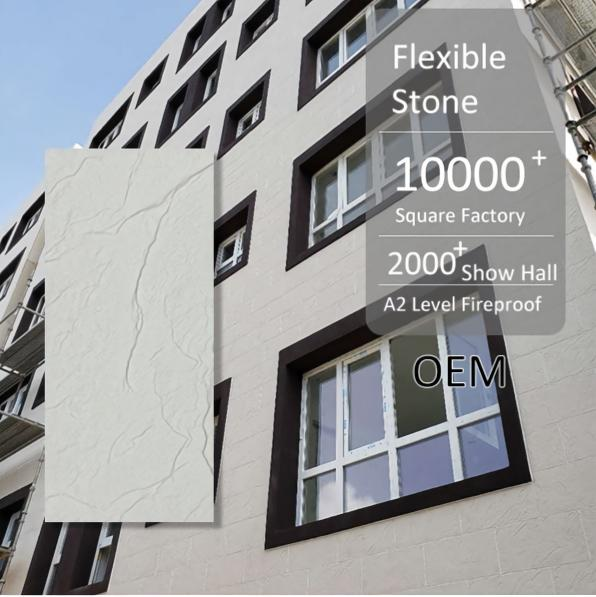
Slate is never as uniform as spec sheets suggest. In Chinese quarries, visual grading often starts with how the cleft face reads under natural light: higher grades tend toward dense, cool charcoal tones with only faint mineral banding, while lower grades carry more rust bloom, grey-green patches, and uneven veining. Those shifts are not cosmetic. They point to differences in iron content, mica distribution, and how the stone separates along its natural bedding planes.
Grip follows a similar logic. A tightly stratified, low-porosity slate leaves behind a fine, almost sandpaper-like cleaved surface that holds traction even when wet. Softer or more layered grades can show smooth flaking edges and polished wear spots after traffic, which reduces friction long before the color fades. Reading the surface means checking not just the shade but whether the texture feels consistent across the full face.
For installers, that makes dry-laying essential. Move pieces into different light, mix boxes from the same batch, and run a hand over the cleft before fixing anything. Small variations in tone can be managed, but a patch of slick, flaky stone in a hallway or around a pool is harder to correct once it is down. Chinese slate offers strong material when the grade is read carefully; the surface usually tells you what the label leaves out.
Accent Walls That Look Quarried, Not Manufactured
The difference usually comes down to repetition. Manufactured panels tend to repeat a handful of shapes every few feet, and once you notice that, the illusion collapses. For a quarried look, mix boxes from different batches or use panels with a deeper, more irregular mold profile. Stagger the pieces and avoid lining up horizontal joints the way you would with tile. Let the gaps wander slightly, because real stone rarely sits in perfect rows.
Color is where most accent walls give themselves away. Flat, uniform pigment reads as factory work almost immediately. Layering a thin mineral wash or knocking back the high points with a damp sponge after installation can break up that sameness. Aim for the kind of uneven staining you would see on a rock face that has been exposed to weather: darker streaks near the bottom, pale patches where the surface catches light, and a few gritty deposits left in the crevices.
Think about how the wall ends, too. A crisp metal trim or a perfectly square corner will pull the whole thing back toward manufactured territory. Instead, run the material to the edge and let the broken profile speak for itself, or fade it into plaster so the transition feels like an old building detail rather than a showroom sample. Rake light from the side will do more for the texture than any amount of pattern matching.
Using Slate Veneer in Bathrooms Without Inviting Mold
Slate veneer can absolutely work in a bathroom, but only if you treat the installation as a moisture-management project rather than a simple wall covering. The stone itself is dense and non-porous enough to resist surface mold, yet the real vulnerability sits in the seams, corners, and any place where water lingers behind the panels. Before the first tile goes up, the substrate needs a waterproof membrane or a cement board system that extends past the wet zone. Skip that step and even the most beautiful slate will start trapping humidity in the wall cavity, eventually feeding mold growth you cannot see.
Choosing the right sealer makes a bigger difference than most people expect. A penetrating, vapor-permeable sealer lets the stone shed liquid water from the shower spray while still allowing any trapped moisture to escape slowly. Film-forming sealers, on the other hand, create a plastic-like barrier that can actually hold condensation against the veneer. For a bathroom, apply the sealer to the face and all cut edges before grouting, then again after the grout has cured. This double pass fills the micro-fissures that would otherwise act as tiny reservoirs for soap scum and mildew.
Ventilation is the quiet hero here. Even a properly sealed slate wall will invite mold if the room never dries out. Pair the veneer with an exhaust fan that runs on a humidity sensor, leave a gap behind any floating vanity or mirror mounted over the stone, and avoid letting shampoo bottles or towels sit directly against the surface for days. If you can see condensation beading on the slate an hour after a shower, the bathroom needs more air movement, not more sealant. Get that balance right and the veneer becomes a low-maintenance focal point instead of a hidden mold farm.
Mixing Slate with Oak, Brass, and Linen for a Lived-In Look
Slate reads as cold only when you let it. Pair a honed slate floor or a rough-hewn side table with oak that still shows some grain, and the room immediately drops its guard. The oak doesn’t need to be pale or perfect—mid-tone with a bit of patina works harder here. Where the two meet, avoid anything shiny. A matte brass lamp base or a dull-finished drawer pull gives the pairing a kind of quiet tension without turning it into a showroom.
Linen is the piece that keeps the whole arrangement from feeling staged. A washed linen sofa cover or even just a stack of flax-toned cushions next to a slate-topped bench softens the hard edges. The trick is to let the linen stay slightly rumpled, not crisp. Brass should appear only in small, functional doses—a reading light, a tray edge, maybe a coat hook—never a full run of cabinet hardware. That restraint is what makes the mix feel collected over time rather than assembled in one afternoon.
For a lived-in look, lean into the unevenness. A slate hearth that’s been scuffed, an oak table with a watermark from a glass, a linen throw that’s been washed a dozen times—these aren’t flaws in this combination, they’re the point. Brass will tarnish unevenly, and that’s fine. The goal is a room that seems to have absorbed years of small habits, not one that’s waiting for a magazine shoot. Keep the palette narrow and let the materials do the talking.
What Installers Wish You Knew Before Ordering Sample Kits
The first thing most installers want you to understand is that sample kits are not just smaller boxes of the full product. They exist so you can test how a material behaves in real conditions—how it cuts, how it adheres, how it feels under heat or moisture. If you order a kit and only look at the color under your office lights, you have missed the point. Take the samples into the actual space where they will be installed. Scratch them. Bend them. Leave one in direct sun for a few days. That is the only way to know if the product will survive the job.
Another thing installers quietly hope you know is that sample kits cost time and money on their end. A request for five different finishes might seem harmless, but someone has to pull those pieces, pack them carefully, and ship them. If you are just collecting ideas and have no intention of ordering within a reasonable window, it slows everything down for everyone else. A better approach is to narrow your choices to two or three realistic options first, then ask for samples. Your installer will notice the difference and will likely be more invested in helping you make the final call.
Finally, be honest about your level of experience. If you have never installed a particular type of flooring, wall panel, or trim before, say so before ordering the kit. An installer can often tell from the questions you ask whether the sample will lead to a real project or just an experiment. When you share your timeline, substrate conditions, and the tools you have on hand, the samples you receive can be paired with practical advice instead of just a swatch in a mailer. That small amount of transparency turns a generic sample order into a much more useful conversation.
FAQ
It will follow a fairly tight radius without cracking. Many installers use it on curved reception desks, rounded columns, and barrel ceilings. For very sharp corners, you still want to score the back or heat the surface lightly so it relaxes into the bend.
The face is sealed at the factory and does not wick water the way cleft slate can. That makes it practical for backsplashes, feature walls in bathrooms, and shower surrounds when you use a moisture-rated adhesive and keep movement joints where the substrate changes.
A full sheet usually weighs a fraction of a stone tile of the same visual area, often in the range of 3 to 6 kilograms per square meter. That lower weight is why it gets specified for upper floors, RVs, and renovation work where the existing wall cannot carry heavy cladding.
Most general contractors pick it up quickly because it cuts with a blade or heavy shears and goes up with a polymer-modified adhesive. The main learning curve is working with large sheets without creasing them and planning seams so the stone pattern repeats naturally.
Clean drywall, cement board, plywood, MDF, and existing tile usually work if they are primed and flat. Highly porous or dusty surfaces need a primer first, while smooth painted drywall handles the adhesive well. Glass and bare metal are the exceptions and tend to need a bonding primer or mechanical key.
Yes, it is common on exterior facades in regions with freeze-thaw cycles because the material is not as brittle as rigid stone and the lighter weight reduces stress on the structure. The key is a waterproof adhesive and sealing exposed edges so water never sits behind the sheet.
The texture is molded from real stone faces, so you get grain depth, cleft marks, and color variation rather than a flat printed pattern. Because it comes in larger sheets, there are fewer grout lines, which actually makes the wall read more like natural rock than small square tiles.
Conclusion
Run a hand across a sample of China flexible slate veneer and the first surprise is how much give it has. Instead of the cold, rigid clatter expected from stone, this material bends slightly and feels closer to a thick leather hide. That softness comes through in the way it handles corners and curved surfaces, but it never loses the mineral depth that makes slate worth using. Among the Chinese slate grades, color and grip shift noticeably. Some sheets arrive with deep charcoal and rust undertones and a fine, almost sandy tooth, while others lean silver-green with a smoother, denser surface. On an accent wall these variations create the kind of irregular shadow and break that reads as quarried stone rather than a repeated factory pattern. The seams settle into the composition instead of announcing themselves.
In a bathroom or other wet area the material needs a clear plan. A properly sealed installation with adequate ventilation keeps moisture from settling behind the veneer, which is what actually invites mold. Once that is handled, the surface pairs well with warmer materials. Oak shelving, unlacquered brass fixtures, and soft linen upholstery pull the slate away from a cold, commercial look and give the room a lived-in feel. Before committing, installers often recommend ordering a sample kit that includes several grades and finishes, not just one tile. Natural color range and texture vary enough that a single swatch rarely tells the whole story. Seeing the pieces side by side in the actual light of the room makes the final choice much easier.
Contact Us
Contact Person: Vito
Email: [email protected]
Tel/WhatsApp: 86 13088879266
Website: https://www.magicstonemcm.com