
China Slate Flexible Stone Veneer Makes Natural Stone Walls Easier Than Ever
2026-09-07
Forget everything you thought you knew about stone cladding. China slate flexible stone veneer has flipped the script—it bends, it’s featherlight, and it installs with basic tools. The result? A natural stone wall that goes up in a fraction of the time, without sacrificing that raw, tactile slate finish. At the center of this shift is Magic Stone, a brand that’s been quietly making flexible stone more accessible than ever. Here’s what makes this material a game-changer for your next project.
Lightweight Slate Panels That Feel Like the Real Thing
Slate has always carried a certain weight, both physically and aesthetically. But hauling slabs of quarried stone into a kitchen or bath often means reinforcing cabinets and wrestling with fragile edges. These lightweight panels flip that script. Each one is molded from real slate impressions, capturing the irregular cleft and subtle mineral shifts that make natural stone so compelling. Run a hand across the surface and you’ll feel the same cool, slightly rough texture you’d expect from the genuine article, yet a single panel weighs a fraction of what a comparable slab would.
What makes the illusion convincing isn’t just the touch, it’s the visual depth. The surface carries faint color variations, from charcoal veining to softer green and rust undertones, all baked in rather than printed on. Because the texture isn’t perfectly uniform, light breaks across it the way it does on real slate, creating small shadows and highlights that shift as you move around a room. That means no two panels look identical, even when they come from the same box.
Installation stops being a project and starts feeling like an afternoon task. Panels can be cut with standard woodworking tools, adhered directly to drywall or plywood, and joined tightly enough that seams nearly disappear. There’s no need for special trim, no masonry dust, and no worry about a brittle corner snapping during transport. For anyone who loves the look and feel of slate but not the logistics, these panels offer the rare chance to have both.
Skip the Masonry: Install a Stone Wall in Hours
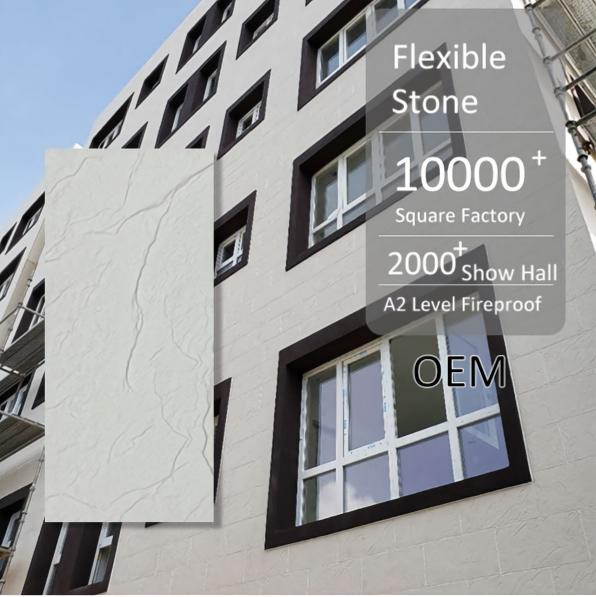
Traditional stone walls demand days of mixing mortar, cutting stone, and hoping the face looks even slightly intentional. Skip that entirely. Modern stone veneer panels with interlocking edges clip straight onto plywood or concrete board. You're not stacking individual rocks; you're hanging precision-molded sections that already have the irregular texture and shadow lines of a hand-built wall. Most homeowners finish a 10-foot accent wall before lunch.
Start by snapping a level line and screwing a starter strip to the base. Then work left to right, pressing each panel into the next and driving screws through the pre-drilled tabs. Corners come as L-shaped pieces, which saves the usual headache of mitering stone. If you hit an outlet or window, score the back with a utility knife and snap the panel cleanly—no wet saw, no dust cloud.
The finish is what sells it. A light brush of mineral-based tint into the seams hides any gaps and gives a slightly uneven, weathered look. Use a foam roller for an even coat, then step back. From three feet away, even a stone mason will nod. Total time: four to six hours, including cleanup. That's the whole point—get the wall up, get the room back.
Flexible Enough for Any Curve or Corner
Tight bends and awkward angles usually mean choosing between forcing something into place or leaving an ugly gap. This material doesn't ask you to make that choice. It follows the line you already have, wrapping around columns, tracing curved edges, and tucking into corners without kinking or pulling away.
What makes the difference is the way it flexes in every direction at once. Not just a gentle arc, but a real twist when the surface changes slope. You can push it into a recessed corner, run it along a staircase nosing, or bend it back on itself for a clean return edge, and it holds the shape you give it.
Installation stays simpler because you aren't fighting the product's memory. Cut it to length, warm it slightly if the radius is especially tight, and press it into position. The result looks intentional, as if it had been formed for that exact spot rather than adapted to fit.
Built to Handle Harsh Weather Without Fading
Sun, salt, rain, and wind take a toll on most outdoor materials, but this one was engineered to shrug them off. The color isn’t just painted on—it runs through the entire substrate, so even if the surface gets scratched, the tone stays consistent. After months of direct exposure, there’s no chalky residue or dulling; it looks like it did on day one.
What makes the difference is a UV-stable formulation that locks pigments at the molecular level. Instead of breaking down under intense sunlight, the surface reflects a portion of the rays and diffuses the rest. That means no brittle edges, no cracking from thermal cycling, and no visible shift in shade between shaded and sunlit areas.
For anyone dealing with coastal air, heavy snowfall, or desert heat, the payoff is simple: you’re not repainting, touching up, or replacing every couple of years. The same material that stands up to a storm season also keeps its depth of color through clear, bright summers.
High-End Stone Looks at a Fraction of the Cost
Real marble has a way of making a room feel instantly more expensive, but the price tag—and the upkeep—can be brutal. Porcelain slabs and high-definition printed tiles now mimic the veining, depth, and even the subtle imperfections of Carrara, Calacatta, and travertine so closely that guests won't know the difference unless they touch the surface. The best part? You can cover an entire kitchen backsplash or bathroom wall for less than what a single slab of quarried stone would cost.
Beyond the upfront savings, these alternatives eliminate the long-term headaches of natural stone. No sealing, no etching from acidic spills, no staining from red wine or coffee. Many of these composite and porcelain options are also lighter and easier to cut, which means lower installation costs and less risk of breakage during fitting. You get the rich, layered look of high-end stone without the fragility or maintenance calendar.
For those who want the authentic texture underfoot, some manufacturers now offer matte finishes and subtle surface undulations that replicate honed limestone or leathered granite. Pair a large-format porcelain floor with slim-profile grout lines, and even a modest entryway can read like a custom-designed space. The visual weight is there; the budget strain is not.
The Chinese Slate Veneer Winning Over Builders
Walk onto almost any job site these days and you'll spot the same tired exterior cladding options: fiber cement, vinyl, maybe some manufactured stone that tries too hard. But a growing number of builders are quietly swapping those out for Chinese slate veneer, and once you handle a pallet of it, the reason becomes obvious. The material arrives with a natural cleft surface that catches light differently across each piece, no two identical. It's thin enough to cut with a standard wet saw, yet the density holds up against freeze-thaw cycles better than most domestically quarried alternatives at twice the price.
The shift isn't driven by some marketing campaign—it's word of mouth from contractors who've been burned by inconsistent supply chains elsewhere. Chinese slate veneer comes in reliably flat bundles, width and length tolerances tight enough that a rookie installer can maintain a clean running bond without shimming every third piece. That consistency extends to color, with batches held back for months to ensure a single wall doesn't end up looking like a patchwork of three different quarries.
Builders also appreciate that the product doesn't require a structural ledge or special fasteners. Standard thin-set mortar and a weather-resistant barrier are all it takes, which means one less subcontractor to schedule. On recent custom homes, architects have started detailing Chinese slate veneer around entryways and chimneys, using its darker graphite tones to ground the lighter stucco or vertical siding above. It reads as premium without the premium lead time, and that's a combination few in the trades are willing to ignore.
FAQ
It uses real slate shaved thin enough to bend, so you're not faking the texture—you're getting actual stone with a fraction of the weight. The flexible backing lets you wrap curves and corners without special pieces.
Yes, many people tackle it as a weekend project. The sheets are light, easy to cut with a utility knife or tin snips, and don't demand specialty tools. You just need patience with adhesive and seam alignment.
It works well on fireplace surrounds, accent walls, kitchen islands, and even bathroom feature walls. Rounded columns and archways are where it really stands out because rigid stone would be a headache there.
The slate itself is moisture-resistant, but installation details matter. In showers, use a waterproofing membrane behind it and seal the surface after grouting. For exterior use, pick an adhesive rated for outdoor temperatures and seal edges to prevent water intrusion.
It's thin—usually a few millimeters—but surprisingly tough. It resists cracking from minor bumps, though a hard direct hit can dent or chip it. For typical wall applications, it holds up as well as thicker veneers.
The wall should be clean, dry, and reasonably flat. Small dips and bumps are okay because the material flexes. Prime very porous surfaces and use a polymer-modified adhesive made for stone or large-format tile.
In most lighting, the natural cleft and color shifts read as solid stone. The only tell is the edge profile, so using matching trim or butting seams tightly makes a big difference.
Chinese slate used for these veneers tends to have consistent layering, which allows it to be split into thin flexible sheets without losing strength. The color range is broad, and most suppliers run strict quality checks before export, so performance is on par with European or North American slate.
Conclusion
China Slate flexible stone veneer changes how a stone wall gets built. The panels are light enough to carry under one arm, yet they reproduce the cleft, grain, and cool touch of real slate so well that guests often tap them to check. Because the material bends, it wraps around curved bars, folds neatly into corners, and follows arched openings without cracking or leaving gaps. Installation skips the heavy work: no mortar beds, no masonry crew, no days of dust. A homeowner can measure, cut with a utility knife, peel the backing, and press the panel into place, often finishing an accent wall before lunch.
Built for real weather, the surface holds its color under full sun, heavy rain, and freeze-thaw cycles, so it works just as well on an exterior entry as it does around a fireplace. Builders have started reaching for this Chinese slate veneer for feature walls, kitchen islands, and cladding because it removes the cost and weight problems of natural stone while keeping the visual weight. At a fraction of quarried slate’s price, it fits renovation budgets and new construction timelines. Once you see a sharp corner or a curved range hood wrapped in it, the practical appeal is hard to ignore.
Contact Us
Contact Person: Vito
Email: [email protected]
Tel/WhatsApp: 86 13088879266
Website: https://www.magicstonemcm.com