

China Spinning Masterbatch: Revolutionizing the Textile Industry with Advanced Color Solutions
2026-07-24
What if the colors in your textiles could not only pop with unmatched vibrancy but also carry a promise of consistency and sustainability? In the fast-evolving world of textile manufacturing, spinning masterbatch has emerged as a quiet powerhouse, turning raw fibers into vivid statements of quality. And at the forefront of this revolution stands Xinwancai, a name that's reshaping how we think about color integration. As China continues to lead global textile innovation, the techniques behind spinning masterbatch are unlocking possibilities that once seemed out of reach. This blog peels back the layers of this transformative technology, revealing why it's become the backbone of modern fabric production—and how Xinwancai is setting new standards every step of the way.
Color Precision Unleashed: The Science Behind China’s Spinning Masterbatch
The quest for perfect color in synthetic fibers begins long before the yarn is woven. In China's advanced spinning masterbatch facilities, precision is engineered at the molecular level. Ultra-fine pigment particles, often reduced to mere nanometers, are meticulously dispersed within a polymer carrier. This isn’t simple mixing; it’s a controlled process where shearing forces and specialized wetting agents break down agglomerates, ensuring each pigment particle is individually coated and stabilized. The result is a masterbatch that, when introduced to the melt spinning stream, delivers color with remarkable homogeneity — no streaks, no specks, just pure, consistent tone from the first meter of fiber to the last.
Temperature control and rheological balance form the backbone of this science. During masterbatch production, the melt must flow with exact viscosity to prevent pigment migration or thermal degradation. Chinese manufacturers employ real-time spectrophotometry and inline monitoring, adjusting parameters instantly to match the refractive index of the pigment to the base polymer. This minimizes light scattering, amplifying color depth and brilliance without adding excessive pigment load. The approach not only conserves costly colorants but also preserves the mechanical integrity of the final fiber, allowing for vibrant shades that resist fading through countless wear and wash cycles.
Beyond mere aesthetics, the underlying science tackles functional demands. For automotive textiles or outdoor gear, masterbatch formulations incorporate UV stabilizers, flame retardants, or antimicrobial agents directly into the color concentrate. In China’s spinning hubs, chemists have developed carrier systems that act as bridges, binding additives to polymers with covalent-like affinity. This eliminates blooming or leaching, common pitfalls in less sophisticated processes. The synergy between color science and material engineering ensures that every filament not only looks precise but performs under stress, showcasing how Chinese innovation has turned a basic industrial input into a high-tech enabler of global textile quality.
Beyond Traditional Dyeing: How Masterbatch Transforms Fiber from Core to Sheath
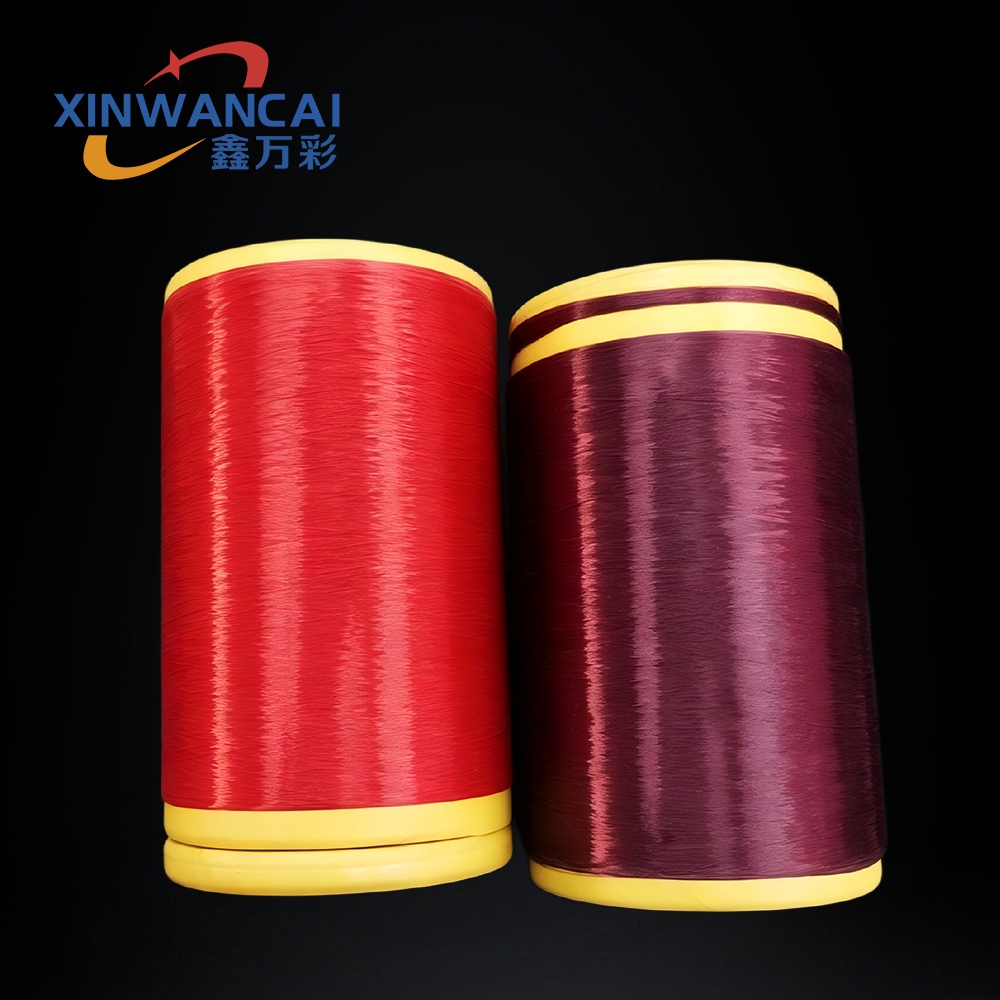
Traditional dyeing methods often treat the fiber's surface, applying color externally in a way that can fade or rub off over time. Masterbatch technology takes a completely different route, embedding pigments directly into the polymer melt during fiber extrusion. This means the color isn't just sitting on the outside—it's an inherent part of the fiber from the core outward. The result is a depth and uniformity of shade that surface dyeing can't match, offering a vibrancy that persists even under harsh conditions.
The real magic happens at the microscopic level, where pigment particles become evenly distributed throughout the fiber's cross-section. Unlike artisanal dyeing, which can leave uneven patches or require lengthy processing, masterbatch ensures every filament is saturated with color as it's formed. This integration creates fibers that resist color migration, maintain their hue when stretched or abraded, and don't bleed during washing. It also sidesteps the water and chemical waste typical of conventional dye baths, making the process both cleaner and more resource-efficient.
Beyond practical durability, the core-to-sheath coloration enables effects that traditional methods can barely attempt. By precisely controlling pigment dispersion, manufacturers can produce fibers with nuanced color gradients, heather effects, or functional properties like UV resistance built right into the matrix. The sheath isn't merely a protective layer—it's a canvas that shows off the integrity of the coloring process. Whether it's automotive textiles that need to withstand years of sunlight or performance apparel that demands colorfastness after endless cycles, masterbatch-based fibers deliver consistency from inside out.
Sustainability in Every Shade: Eco-Friendly Advantages Driving Industry Change
From pigments to packaging, every layer of production is being reimagined through a greener lens. The shift isn’t just about swapping one material for another—it’s a fundamental rethink of how we source, process, and deliver color. Bio-based dyes extracted from agricultural waste are replacing petroleum-derived synthetics, while waterless dyeing technologies slash consumption and pollution in one stroke. These aren't niche experiments; they're scaled solutions gaining real traction because they make both ecological and economic sense.
What’s driving the change isn't just regulation or consumer pressure, but a quiet recognition that longevity and profitability now hinge on resource intelligence. Factories that once discharged untreated effluent are investing in closed-loop water systems, recovering heat and chemicals in the process. Logistics networks are being redesigned to shrink carbon footprints through regional sourcing and lightweight, reusable packaging. Each decision ripples outward, reducing the overall impact of bringing a single product to market while often trimming costs.
This isn't a one-size-fits-all narrative. Different industries are finding their own leverage points—fashion brands are leaning into traceable supply chains and take-back programs, while construction materials suppliers are incorporating post-industrial recycled content without sacrificing performance. The common thread is adaptability: seeing sustainability not as a constraint but as a design challenge that unlocks smarter ways of working. In an era of volatile raw material prices and tightening environmental oversight, these eco-advantages are rapidly becoming the new baseline for competitive advantage.
Customization at Scale: Meeting Global Textile Trends with Agile Color Solutions
The textile industry is moving faster than ever, with micro-trends emerging overnight and regional preferences shifting continuously. Brands face a daunting challenge: to offer fresh, localized colorways without ballooning inventory or months of lead time. Traditional dyeing processes, built for large batches and long runs, buckle under the pressure of demand for variety. Customization at scale isn’t just a buzzword—it’s the new baseline for staying relevant.
Agile color solutions rewrite the rules by decoupling color creation from production volume. Digital color matching and on-demand dispensing systems allow mills to hit exact shades in hours, not weeks. Small batch dyeing techniques—like precision liquid color dosing—remove the need for massive minimums. This flexibility means a tent pole trend seen in Paris can be translated into a commercial palette for Ho Chi Minh City or São Paulo almost in real time, without re-engineering the entire supply chain.
The payoff goes beyond speed. By eliminating overproduction and dye waste, agile methods cut both costs and environmental footprint. More importantly, they empower design teams to experiment and respond to what customers actually want, rather than guessing eighteen months ahead. The result is a tighter connection between runway, retail, and reality—where color becomes a conversation, not a forecast.
Durability Meets Vibrancy: Long-Lasting Hues for High-Performance Fabrics
When fabrics face demanding conditions—think outdoor gear, athletic wear, or heavy-duty upholstery—color often fades before the material gives out. This intersection of ruggedness and radiance has long been a sticking point, but it’s also where real innovation happens. We’re no longer forced to choose between a textile that can take a beating and one that holds its visual punch. Instead, advances in dye chemistry and finishing techniques are rewriting the rules, making it possible for even the most hard-worn fabrics to retain deep, true color wash after wash, season after season.
The secret lies in how the color is locked into the fiber itself. Rather than sitting on the surface where friction and light can easily scrub it away, modern dyes penetrate and bond at a molecular level. For synthetics, solution-dyeing integrates pigment right into the polymer melt before extrusion, creating fibers that are inherently colored from core to sheath. Natural fibers, often more finicky, benefit from reactive dyes that form covalent bonds—essentially becoming part of the material. Paired with advanced fixatives and UV-inhibiting treatments, these methods ensure that vibrant reds, blues, and yellows aren’t just a temporary coating but an enduring characteristic of the fabric.
This harmony of toughness and tint doesn’t happen by chance. It demands precise control over variables like temperature, pH, and dwell time during processing. The payoff is a textile that shrugs off repeated stress—abrasion, sweat, sun, and industrial laundering—while still looking freshly dyed. For designers and engineers, that means no more dulling down a product to meet performance specs. The color remains as bold as the weave is strong, transforming high-performance fabrics from mere utilities into expressive, lasting components of whatever they touch.
From Concept to Yarn: Streamlining Production with Integrated Masterbatch Systems
Traditional color matching for synthetic yarns often involves multiple stages, from color concentrate formulation to let-down, where inconsistencies can creep in and compromise final shade accuracy. An integrated masterbatch approach collapses these fragmented steps, allowing dope dyeing to be engineered at the pigment dispersion level, so the color is locked into the polymer melt before filament formation. This not only sharpens batch-to-batch consistency but also slashes the time lost in purging and transitional waste between color changes.
By moving color development closer to the spinning line, mills can bypass the bottlenecks associated with aqueous dyeing or topically applied finishes, eliminating the need for downstream wet processing entirely. The masterbatch becomes a bespoke, data-driven component of the extrusion process, with precisely calibrated carrier resins that match the host polymer's rheology. The result is a seamless fusion of colorant and substrate, yielding fibers with deep, lightfast hues that resist fading without sacrificing tensile properties.
Compact dosing units on the hopper throat allow real-time adjustments, so a single base polymer can feed multiple yarn variants on adjacent spinning positions. This agility reduces minimum order quantities and enables just-in-sequence production for fashion brands demanding rapid shifts between palettes. Ultimately, the integrated system transforms color from an afterthought into a continuous, inline variable, empowering mills to shrink lead times and respond to market trends with unprecedented speed.
FAQ
Spinning masterbatch is a concentrated mixture of pigments or additives encapsulated in a carrier resin, designed to color synthetic fibers during the melt-spinning process. It is fed into the extruder along with the base polymer, ensuring the color is evenly dispersed throughout the fiber. This method eliminates the need for post-production dyeing, delivering consistent shade directly in the yarn.
China has become a dominant force in spinning masterbatch production due to its vast polymer manufacturing infrastructure, competitive raw material supply, and significant investments in colorant research. The country’s textile industry scale allows for rapid adoption of advanced coloring solutions, while local producers have refined dispersion technologies to meet diverse global demands efficiently.
By integrating color during fiber extrusion, spinning masterbatch removes the water-intensive dyeing step, drastically cutting water usage, chemical discharge, and energy consumption. It also reduces dye waste and allows for high colorfastness, leading to longer-lasting products that need less frequent replacement and generate less microplastic pollution during washing.
Masterbatch offers superior color consistency across batches, better light and wash fastness, and eliminates dyeing-related environmental issues like polluted effluents. It also streamlines production by combining coloring and fiber formation into one step, reducing processing time and costs while enabling more complex color effects that are difficult to achieve with aqueous dyeing.
Spinning masterbatch is prevalent in polyester and polypropylene fibers for apparel, home textiles, automotive interiors, and industrial fabrics. It is especially favored for performance wear, outdoor gear, and upholstery, where color durability against UV exposure and repeated washing is critical. It is also widely applied in nonwovens, carpets, and technical textiles that require precise shade control.
Recent innovations include nano-scale pigment dispersion for deeper, more vibrant colors with lower loading, improved carrier resins that enhance compatibility with bio-based and recycled polymers, and smart additive combinations that impart multifunctional properties like antimicrobial or flame-retardant effects simultaneously with color. Advanced dosification and real-time color monitoring systems have also boosted accuracy and efficiency.
Since the pigment is pre-dispersed and metered precisely into the melt stream, each fiber filament receives an identical pigment concentration, eliminating the shade variations common in piece-dyed fabrics. Strict quality control during masterbatch production further ensures that different batches of masterbatch yield the same color, which is vital for large-scale textile orders.
Absolutely. Masterbatch formulations can be tailored to deliver specific characteristics such as fluorescence, pearlescence, metallic sheen, or infrared reflectance. They are also adapted for difficult-to-color polymers like aramid and recycled polyester, enabling manufacturers to create unique aesthetic and functional textiles that meet niche market demands.
Conclusion
China's spinning masterbatch technology is reshaping textile coloration by embedding pigment directly into polymer melts before fiber formation, achieving unprecedented color precision through advanced dispersion science. Unlike conventional surface dyeing, this method infuses color from the fiber's core to its sheath, creating uniformly vivid hues that resist fading even under harsh conditions. The shift eliminates water-intensive dye baths and chemical fixatives, aligning with global sustainability demands by drastically reducing effluent and energy consumption. Manufacturers leverage closed-loop systems and bio-based carriers to further shrink the environmental footprint, offering eco-conscious brands a tangible way to meet green targets without sacrificing chromatic brilliance.
Agility in color customization sets this approach apart: producers rapidly adjust formulations to mirror seasonal fashion trends or functional requirements, delivering small-batch precision at industrial scale. The inherent durability of masterbatch-colored fibers—where pigments are locked into the polymer matrix—ensures sportswear, outdoor gear, and home textiles retain their vibrancy after repeated exposure to sunlight, perspiration, and washing. Integrated systems intertwine color development with spinning, compressing the journey from design concept to finished yarn. This seamless pipeline not only accelerates time-to-market but also fosters innovation, enabling textile mills to pivot quickly in a dynamic global marketplace.
Contact Us
Contact Person: JACK
Email: [email protected]
Tel/WhatsApp: 86 18650130917
Website: https://www.xinwancai.com/