

DC Circuit Breaker Company Innovations Redefine Electrical Safety Standards
2026-07-30
In an era where electrical safety is non-negotiable, one name is quietly reshaping the landscape: Chang Song. The DC circuit breaker pioneer has unveiled innovations that don't just meet standards—they set them. Read on to discover how these breakthroughs are making power systems safer, smarter, and more reliable than ever before.
Rethinking Arc Quenching: A Silent Revolution in DC Safety
The conventional approach to extinguishing DC arcs has long relied on bulky magnetic blowouts or complex electronic systems, yet these methods often struggle with the persistent nature of direct current. Unlike AC arcs that naturally cross zero, DC arcs demand a forceful intervention to drive the current to extinction. This fundamental challenge has spurred a quiet but profound shift in how engineers conceive arc quenching, moving away from brute-force techniques toward more elegant, physics-based strategies.
At the heart of this silent revolution lies a deeper understanding of arc plasma dynamics and the role of material science. Innovations such as arc-splitting chambers with advanced polymer composites, micro-gas generators, and magnetic field tailoring are redefining interruption speed and reliability. These developments not only enhance the lifespan of protective devices but also allow for smaller, quieter, and more efficient circuit interrupters that integrate seamlessly into modern power distribution networks, from renewable energy systems to electric vehicle charging infrastructure.
Perhaps the most transformative aspect is the embedding of intelligent arc sensing and digital control. By combining real-time arc detection with adaptive quenching algorithms, new solid-state and hybrid devices can anticipate fault conditions and respond in microseconds. This proactive approach not only prevents damage but also enables system-level coordination, turning a traditionally passive safety component into an active guardian of DC networks. The result is a safer, more resilient electrical ecosystem that silently protects against one of the oldest threats in power engineering.
Smart Breakers That Anticipate Faults, Not Just React
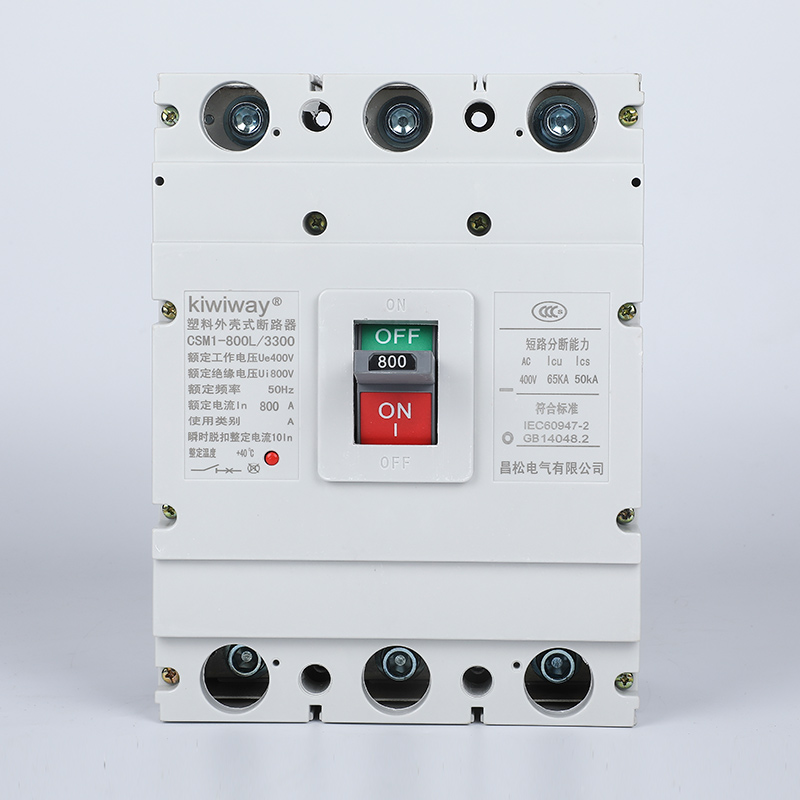
Traditional circuit breakers serve as silent sentinels, waiting for a fault to occur before they spring into action. They disconnect the circuit only after the damage has already begun. This reactive approach leaves electrical systems vulnerable to unexpected failures, equipment degradation, and potential safety hazards that could have been avoided with a more proactive system.
The new generation of smart breakers changes the game by continuously monitoring key electrical parameters like current, voltage, and temperature. They employ sophisticated edge-based analysis to detect subtle anomalies that signal an impending fault—long before it manifests. By recognizing patterns such as gradual insulation breakdown or increasing arc signatures, these devices can issue warnings or take preventive measures, effectively stopping problems before they start.
This shift from reaction to anticipation delivers profound benefits. Maintenance teams can address issues during scheduled downtime rather than scrambling after an unplanned outage. Critical operations gain an extra layer of resilience, and the overall lifespan of electrical infrastructure extends because stresses are managed proactively. In essence, smart breakers transform the electrical panel from a simple safety stop to an intelligent guardian that foresees and thwarts threats.
Material Science Breakthroughs for Zero-Fire Hazard
Modern material science is rewriting the rules of fire safety by engineering substances that simply cannot burn. Researchers are developing intrinsically non-combustible polymers and ceramics that retain structural integrity even at extreme temperatures, eliminating the need for additive flame retardants that often release toxic fumes. By manipulating molecular bonds at the nano level, these materials actively resist oxidation and thermal decomposition, making them ideal for construction, aerospace, and consumer electronics.
A parallel frontier involves smart coatings that respond dynamically to heat. When exposed to flame, these surfaces intumesce into a thick, charred barrier that insulates the underlying material, or they release encapsulated oxygen-displacing agents. Unlike conventional treatments, the activation threshold is precisely tuned to prevent false triggering, and the protective layer self-heals minor scratches, maintaining lifelong passive defense without human intervention.
Perhaps most transformative is the shift toward bio-inspired mineral composites. Mimicking natural structures like seashell nacre or bone, scientists are growing hierarchical architectures from abundant minerals such as calcium carbonate or clay. These materials not only defy ignition but also sequester carbon during production, offering a dual benefit for sustainability and safety. Early-stage applications include fireproof cladding, furniture, and even textiles woven from ceramic fibers, all completely eliminating the fire hazard at its source rather than merely delaying it.
Compact, Fast, and Fail-Safe: The New Protection Triad
In a landscape where every millisecond of downtime can cascade into revenue loss and reputational damage, protection mechanisms must do more than simply react. The new triad—compact, fast, and fail-safe—reworks the calculus by baking resilience directly into the architecture. Compact design strips away the bloat that slows down both deployment and recovery; fast operation slashes response times so that threats and faults are neutralized before they register on a dashboard; and fail-safe behavior ensures that when something does go wrong, the system defaults to a secure, predictable state instead of a catastrophic one. It’s a combination that feels almost intuitive, yet it demands a deliberate move away from bolt-on security toward ingrained, lightweight reliability.
Speed and compactness often trade off against each other in traditional setups, but here they amplify one another. By distilling protection logic into lean, purpose-built components, the system sidesteps the resource-hungry overhead that used to be taken for granted. This means real-time verification and self-healing can run on the edge, inside constrained environments, or across sprawling microservices without dragging performance down. Fail-safe principles then close the loop: every fast recovery path is designed so that a partial failure doesn’t snowball, making the overall blast radius surprisingly small. Teams report that incidents become minor blips rather than all-hands-on-deck crises, simply because the system never paints itself into a corner.
What sets this triad apart is how naturally it aligns with modern development rhythms. Instead of retrofitting safety nets after deployment, the trio pushes protection into the design phase, where it can be tested and tuned like any other feature. The result is a quieter, more dependable environment where alerts mean genuine anomalies, not routine noise. Perhaps the clearest signal of its effectiveness is that organizations stop agonizing over whether they’re protected and start trusting that their infrastructure bends but doesn’t break—a shift in posture that matters more than any single metric.
Always-On Monitoring Redefines Preventive Maintenance
Traditional preventive maintenance often follows a set schedule—checking equipment at fixed intervals regardless of its actual condition. This approach can lead to unnecessary downtime, wasted resources, and unexpected failures that slip through the cracks. Always-on monitoring changes the game by continuously collecting real-time data from sensors embedded in machinery. Vibration, temperature, pressure, and other critical parameters are tracked 24/7, providing a live view of asset health. Instead of guessing when a component might fail, maintenance teams can see exactly how equipment behaves under different loads and conditions, spotting anomalies the moment they arise.
The shift from scheduled to condition-based maintenance unlocks significant operational advantages. With always-on monitoring, alerts are triggered only when readings deviate from established baselines, allowing technicians to intervene precisely when needed—not too early, not too late. This minimizes unplanned outages, extends the lifespan of components, and slashes inventory costs by reducing the need for spare parts kept “just in case.” Moreover, the data gathered over time enables predictive analytics, revealing patterns that help anticipate failures days or weeks in advance, so repairs can be planned during normal slowdowns instead of at the worst possible moment.
Beyond cost savings and efficiency, always-on monitoring fosters a culture of proactive care. Teams move away from reactive firefighting and into a mindset where every decision is backed by evidence. Remote monitoring capabilities mean that experts can assess situations from anywhere, reducing the need for on-site visits and keeping personnel safe from hazardous environments. As industries embrace digital transformation, this approach turns maintenance from a necessary expense into a strategic asset—one that not only preserves equipment but also improves overall production reliability and workplace safety.
Bridging the Gap Between High Power and Absolute Safety
High-power systems often evoke images of raw, untamed energy—thrusting rockets, roaring engines, or surging electrical grids. Yet the very force that propels progress also demands respect. Closing the distance between formidable output and uncompromising protection isn’t just an engineering challenge; it’s a philosophical one. Every watt of extra power introduces a new variable into the safety equation, and the real artistry lies in weaving them together seamlessly.
Modern advancements in materials science and adaptive control have started to blur the line. Thermally resilient composites, real-time fault detection, and layered redundancy create a new breed of systems that don’t merely govern risk—they anticipate it. Instead of safety acting as a throttle, it becomes an invisible co-pilot, shaping how power is delivered before a human ever notices the need.
The ultimate achievement isn’t a compromise—it’s a fusion where safety and strength are no longer opposites but mutual enablers. In that space, extreme energy can be harnessed with quiet confidence, transforming the way we build, move, and power our world.
FAQ
They developed a hybrid arc chute that combines magnetic blowout with a gas-evolving segmented design, effectively splitting and cooling the arc in under 2 milliseconds—a feat that reduces wear on contacts and prevents restrikes even in high-voltage DC systems.
Rather than relying on a single overcurrent trip mechanism, these breakers use a multi-stage interruption process that first commutes the current into a parallel thyristor path, then opens the mechanical contacts with near-zero current, drastically minimizing arc energy and allowing for a much more compact unit.
The breakers integrate arc-fault detection specifically tuned for DC photovoltaic arrays, where series arcs are notoriously hard to catch. By analyzing high-frequency noise on the DC line, they can distinguish a genuine arc from inverter switching transients, shutting down the faulted string without tripping the entire system.
Each breaker continuously logs temperature, contact wear, and trip events, then transmits this data over a daisy-chained RS-485 bus. This lets facility managers spot degrading connections or nuisance tripping patterns long before a failure, moving maintenance from a time-based schedule to a condition-based approach.
Beyond the standard IEC 60947-2 tests, they subject every new design to a thousand full-rated short-circuit interruptions without replacement, plus intentional arc misalignment tests where the arc is forced to wander, ensuring the quenching chambers still work even under abnormal real-world conditions.
By incorporating ultrafast short-circuit tripping combined with an insulated metal enclosed chamber, the breaker can isolate a fault in a battery rack within 1 millisecond—fast enough to prevent the thermal runaway chain reaction that often leads to catastrophic fires in lithium-ion storage sites.
Their liquid-cooled 1000-volt DC breaker allows ultrafast charging stations to operate safely at higher currents without bulky heat sinks. The design also supports bidirectional current flow, making it ideal for vehicle-to-grid applications where fault current patterns are more complex.
Rather than forcing a panel swap, their plug-in cassette form factor slides into existing 160mm busbar centers, and the integrated Rogowski coil eliminates the need for external CTs. This lets utilities upgrade substation DC auxiliary supplies incrementally, cutting downtime from days to hours.
Conclusion
The landscape of electrical safety is undergoing a dramatic transformation as DC circuit breaker companies push beyond conventional designs, reimagining arc quenching through sophisticated magnetic blowout and vacuum interrupter technologies that silently extinguish faults without the violent energy release of traditional systems. This quiet revolution is complemented by smart breakers that leverage machine learning to anticipate anomalies, analyzing current signatures and thermal patterns to intervene before a fault fully develops, shifting the paradigm from reactive tripping to proactive prevention. Meanwhile, breakthroughs in material science have yielded advanced ceramics and composite housings that eliminate fire hazards entirely, even under extreme overload conditions, ensuring that the breaker itself becomes an uncompromising barrier against catastrophe.
These innovations coalesce into a new protection triad where compact footprints house mechanisms that operate in microseconds, delivering fail-safe disconnection in high-power applications such as solar farms, data centers, and electric vehicle charging infrastructure. The integration of always-on monitoring digitizes preventive maintenance, with sensors continuously tracking contact wear, temperature drift, and insulation health, transmitting real-time diagnostics to facility managers and eliminating guesswork from service schedules. By bridging the historical gap between escalating power demands and absolute safety requirements, DC breaker companies are not just improving a component but redefining the foundational standards of electrical protection, making systems inherently resilient and intelligently adaptive without sacrificing simplicity or reliability.
Contact Us
Contact Person: Tonglun Chen
Email: [email protected]
Tel/WhatsApp: 8618906642555
Website: https://www.cncsele.com