

Essential Questions to Ask a Sandwich Panel Supplier Before Your Next Build
2026-11-16
Every build has a moment where the wrong sandwich panel choice turns into a costly rework—or worse, a safety issue down the road. That’s why the questions you ask a supplier before committing matter more than the quote itself. From core material and fire performance to panel joint integrity and delivery reliability, the answers reveal whether a supplier is a true partner or just a vendor. At LANYUN, we’ve seen how the right upfront questions separate smooth projects from painful ones. Here are the essential ones to bring to your next conversation.
Can Your Panels Survive My Site’s Worst Weather Day?
Before you trust a panel spec sheet, pull up the worst day your site has logged in the last decade. Not the average storm, the outlier that peeled siding off a neighbor's house or collapsed a carport. That's the wind speed, hail size, and snow load your mounting system and panel glass actually need to answer for. A panel rated for 2,400 Pa uplift won't help if the real gusts at your ridge line spike past that for even a few seconds.
Look at the failure photos from recent storm seasons and you'll notice a pattern: it's rarely the panel itself that gives up first. Clamps back out, rails twist, roof attachments tear loose. So when someone says their panels are 'weather-tested,' ask which part was tested and under what sequence. Hail followed by high wind behaves differently than either alone, and wet snow sitting overnight adds a creep load that many calculations ignore.
If you want a setup that survives your worst weather day, match the entire racking system to the site's microclimate, not just the module's nameplate rating. Check the edge zones on the roof, the slope, the height above ground, and whether debris can become airborne. Then add a margin that feels slightly uncomfortable. That's usually the difference between panels still producing after the storm and panels scattered across the yard.
How Transparent Are You About Core Materials and Fire Ratings?
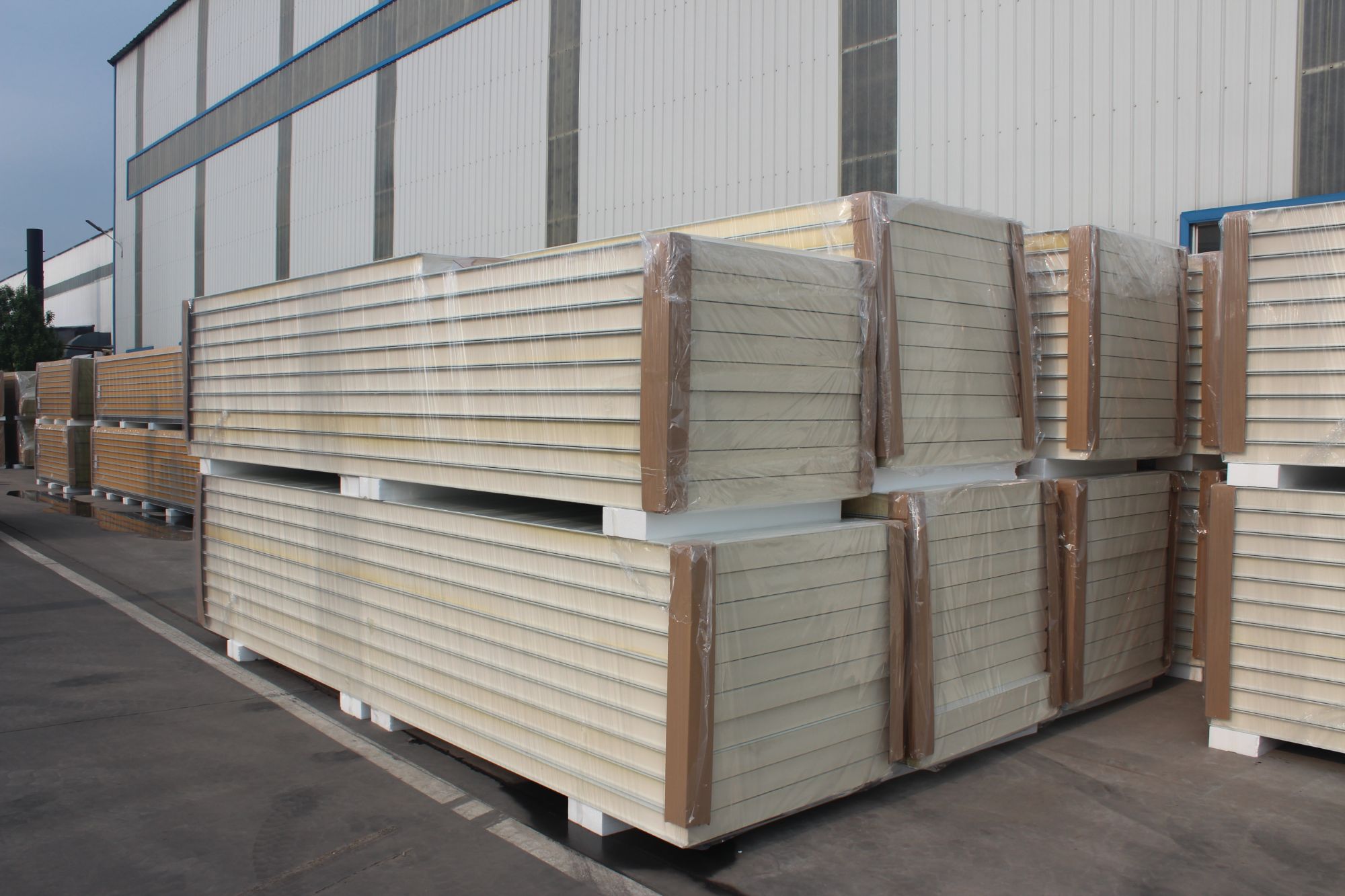
Most manufacturers will tell you their panels meet code, but not all of them make it easy to see what is actually inside. The core material determines how a product behaves in a fire, yet data sheets often bury that information under marketing terms like "high performance" or "non-combustible" without any specifics. Ask for the exact core composition, the thickness used in tested assemblies, and the corresponding fire test standard. A supplier with nothing to hide will give you the full test report, not just a one-line summary.
Fire ratings are only meaningful when they are tied to the complete system, not just a raw material. An insulated metal panel, for example, might pass a test with one joint design but fail with a different sealant or fastener spacing. Real transparency means showing how the core, the facing, and the installation method work together under heat. If the rating only exists in a brochure and not in a third-party certification directory, treat that as a warning sign.
There is also a difference between being "reaction to fire" and "resistance to fire." Some cores smoke heavily or produce flaming droplets even when they do not spread flame quickly. A transparent approach will mention both smoke development and droplet formation, along with the relevant ASTM E84, EN 13501, or ISO 9705 data. That level of detail rarely appears in typical sales language, but it is exactly what separates a responsible supplier from one hoping you will not ask.
What’s Your Lead Time Reality When Supply Chains Get Tight?
When suppliers start quoting 26 weeks instead of 10, the gap between your planning spreadsheet and the shop floor becomes impossible to ignore. Lead time assumptions built into MRP systems rarely survive first contact with a port backlog or a single-source component shortage. Those promised dates erode daily, and every “revised” confirmation chips away at the credibility of your own delivery commitments.
The uncomfortable truth is that most lead time data is historical, not predictive. Averages hide the tail risks: one late batch of castings can cascade into a missed installation window, while safety stock calculated for normal variability gets burned through in a single expedite cycle. Teams that treat supplier lead times as fixed inputs end up firefighting, whereas teams that track lead time volatility and map where buffers actually live can make trade-offs before customers start calling.
A tighter supply chain doesn’t just stretch timelines; it exposes how much of your planning depends on hope rather than routing rules. Ask your purchasing team which parts have quietly doubled in lead time over the past quarter, and whether the system’s frozen horizon still matches the real ordering window. If the answer comes with a shrug, you already know your lead time reality needs more than a status update.
Do You Have Real Projects I Can Inspect, Not Just Brochures?
Absolutely. We can put you in front of a live build of a current project, not a slide deck. You'll get a temporary login and the freedom to click around, break things, and see how the system actually behaves under real conditions.
For a recent client, we can walk you through the same production dashboard their operations team uses daily. You'll see the actual data flow, the mistakes we caught during rollout, and the patches we shipped within hours. No cherry-picked screenshots, just the working tool.
If you're serious about digging deeper, we'll draft an NDA and open up our repository history, issue tracker, and even a call with the client's project lead. That should give you a much clearer picture than any brochure ever could.
What’s the True Cost of Custom Sizes and Finishes?
A custom width or depth rarely carries a simple per-inch surcharge. Most shops batch standard sizes, so one odd measurement forces a separate setup, extra handling, and sometimes a one-off jig. That interruption gets billed as a setup fee or hidden in a higher unit price—often two to three times the cost of a standard piece before you even touch the finish.
Finishes are where costs quietly multiply. A non-catalog color or sheen means the line stops, spray equipment gets cleaned, and drying schedules shift. You end up paying for that downtime, plus the higher rejection rate when a custom tone doesn’t match the sample on the first pass. It’s not just paint; it’s labor, waste, and rework folded into the quote.
Then there’s the wait. Standard runs happen on a predictable cycle, but custom work slots in wherever it fits. If the project can’t absorb that delay, a rush charge appears—or you carry the holding cost somewhere else. Before committing to an unusual dimension or matte lacquer, ask for a breakdown of setup, finishing, and lead-time costs, not a single blended number.
Will Your Technical Support Still Answer After the Invoice Is Paid?
It’s an uncomfortable question, but one worth asking before you sign. Many firms front-load their responsiveness during the sales cycle. Emails get replies within minutes, demo calls happen on your schedule, and every concern is treated as urgent. The real test comes later, when the contract is signed and the invoice has been paid. Does that same urgency survive? In a lot of cases, it quietly fades.
Technical support after payment often splits into two very different experiences. Some vendors keep a dedicated team ready for genuine post-sale issues—bugs, integration snags, unexpected outages. Others route you to a generic ticketing queue that may take days to acknowledge a problem. The difference rarely shows up in marketing materials or onboarding sessions. It shows up when something breaks at the worst possible moment and you need a human who understands your setup.
Before committing, try a small test. Ask about average response times for existing clients, or request a reference call with someone who has been paying for at least six months. Pay attention to how the vendor handles your question itself—does the salesperson dodge it, or do they give a straight answer with names and numbers? A company that hesitates when you ask about post-invoice support is already telling you something important.
FAQ
We typically supply panels with expanded polystyrene, mineral wool, or polyisocyanurate cores. The choice changes insulation stability, moisture resistance, and fire behavior over the life of the building, so I'd want to match the core to your climate and occupancy type rather than defaulting to the cheapest option.
Yes, we can share test reports from accredited labs covering the specific metal skins, core thickness, and joint details you'd actually use. Avoid any supplier who only offers generic brochures or claims a panel is fire-rated without showing the full assembly test.
Our joint design includes thermal breaks and factory-sealed edges, and we test for condensation risk using your local climate data. For coastal projects we also offer corrosion-resistant coatings and non-absorbent core options so moisture doesn't get trapped inside the panel.
We provide a written warranty that separates coating performance, structural integrity, and thermal performance, usually ranging from five to twenty years depending on the system. The main exclusions are installation not following our approved details, unapproved fasteners, or exposure to chemicals beyond the panel's specified limits.
For standard panels in common colors, we're typically shipping in three to four weeks. Custom lengths, non-stock coatings, or thicker cores can push that to six or seven weeks, so it's better to lock in dimensions early than to plan around an optimistic estimate.
We include a half-day installer briefing with every first order, and for complex facades we can arrange a technical supervisor for the first few days on site. The goal is to catch sealant and fastener mistakes early, because most panel failures trace back to installation rather than manufacturing.
Yes, we keep a reference list by building type and climate zone. We'll provide direct contact details for owners or contractors from projects with similar spans, wind loads, and finishes, and we encourage you to ask them about delivery accuracy and how the panels held up after two or three seasons.
We ask for a photo report within three business days of delivery, then we either ship replacement panels with the next scheduled truck or run a small special order if the match is urgent. Clear documentation at receiving is key, because after panels are installed we can't separate handling damage from installation damage.
Conclusion
Before you sign off on a sandwich panel order, push past the polished spec sheets and ask the uncomfortable questions. Start with weather resilience: can the panels actually survive your site’s worst day—not the average conditions, but that once-a-decade windstorm or heavy snow load? Ask for specific performance data tied to your location, not just generic wind ratings. Then move to material honesty. Find out exactly what’s inside the core and how the supplier backs up fire ratings. You want test reports, classification documents, and clear answers about smoke and toxicity—not vague phrases like "fire-resistant." The same scrutiny applies to lead times. Supply chains get tight, so ask what happens when raw materials are delayed. Will they tell you early enough to adjust your build schedule, or will you find out on delivery day?
A reliable supplier should also be willing to show you real projects—actual buildings you can inspect or clients you can call—not just brochure photos. Ask for addresses and walk around the site if possible. Then get granular on cost. Custom sizes and finishes often hide waste charges, setup fees, or premium coatings that balloon the final invoice. Demand a line-by-line quote before committing. Finally, test their after-sales attitude. Will their technical support still answer your calls once the invoice is paid? Ask about response times, warranty claims, and whether they offer on-site guidance during tricky installation details. These questions separate suppliers who want a long-term partnership from those who just want to move inventory.
Contact Us
Contact Person: Nia
Email: [email protected]
Tel/WhatsApp: +86 18954360337
Website: https://www.sdppgi.com