

Forged Steel Check Valve Exporter Delivers Dependable High Pressure Flow Solutions
2026-11-23
A check valve rarely gets attention until pressure spikes and a weak point fails. That is exactly where forged steel construction matters. CRXV has earned its name as a forged steel check valve exporter by delivering high-pressure flow solutions that hold steady when standard valves give way. Here is a closer look at the engineering and export experience behind that reliability.
Why Forged Steel Outperforms Cast in High Pressure Check Valves
Forged steel check valves hold an edge because the metal's grain structure is realigned under extreme pressure, following the contours of the valve body instead of being randomly frozen like in a casting. That directional flow gives the part substantially higher tensile strength and fatigue resistance, which matters when a high-pressure line slams shut and sends a shock wave back through the seat and disc.
Castings, even well-made ones, can hide micro-porosity, trapped gas, or inclusions that become stress risers once the valve starts cycling between high and low pressure. Forgings start as solid billet and are compressed until those internal voids are largely squeezed out. The result is a denser, more predictable material that holds up longer under pulsating loads and thermal swings without cracking at the thin sections.
There is also a practical difference in failure behavior. A forged body tends to deform visibly before breaking, giving operators time to spot trouble during routine inspections. Cast bodies can fail more abruptly at internal flaws. In high-pressure service where unplanned shutdowns carry heavy costs, that extra margin of toughness and warning is usually worth the higher initial price.
Common Ways Check Valves Lose Pressure and How to Prevent It
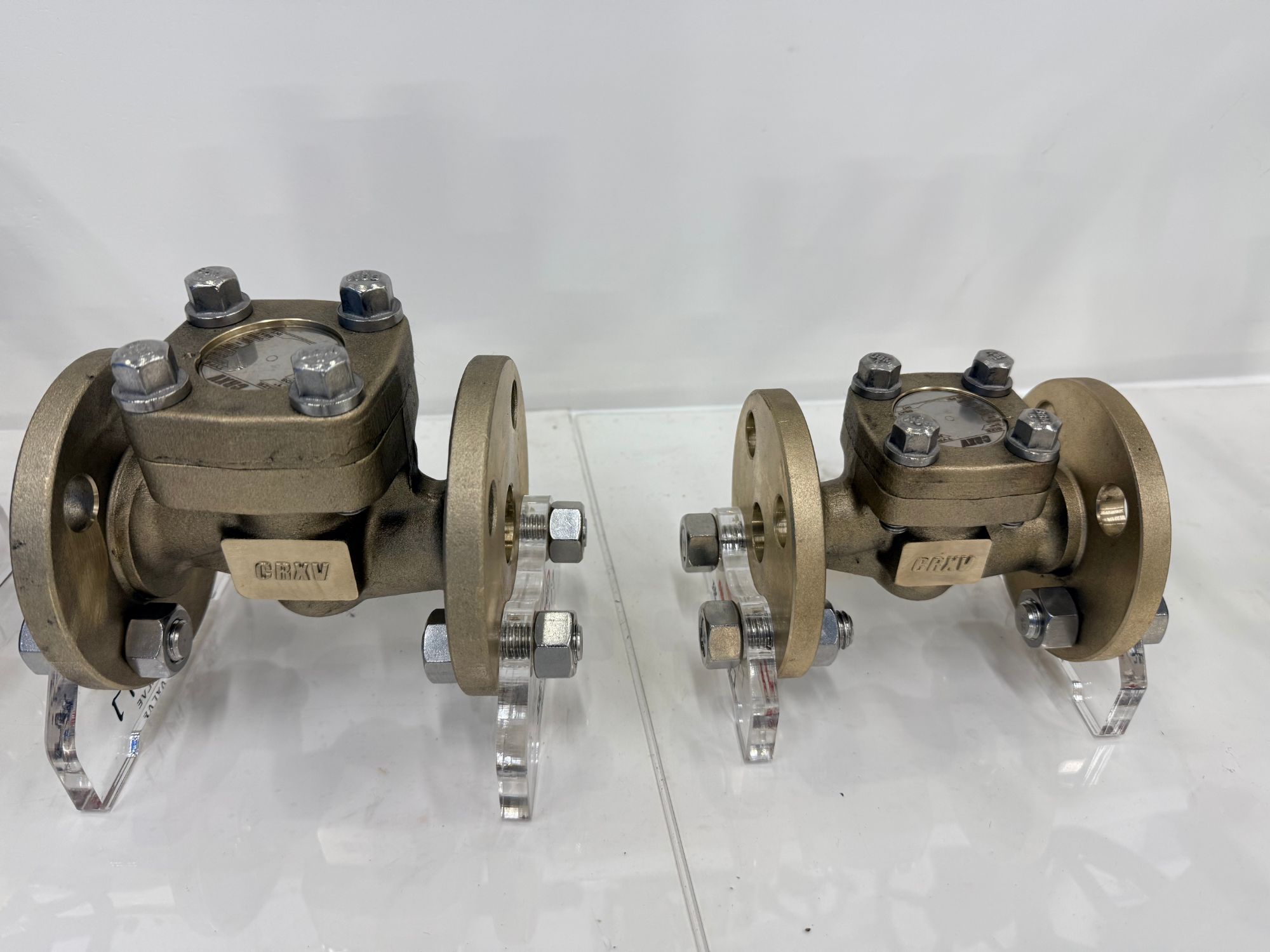
A lot of pressure loss in check valves never shows up as a sudden failure; it accumulates through undersized ports and springs that stay stiffer than the actual flow requires. Even when the disc is fully open, the flow still has to push around the disc and through a reduced seat area, which adds a permanent restriction. If the valve is barely cracking open at normal demand instead of lifting fully, the pressure drop climbs fast. Matching the valve size to the real flow range, not just the pipe diameter, keeps this kind of loss from becoming normal.
Leakage past the seating surfaces is another common path. Hard particles cut small grooves in the disc or seat, mineral deposits hold the poppet slightly off-center, and thermal cycling can warp sealing edges enough to let fluid slip backward. This reverse flow does not just waste pressure; it can also unbalance a system that depends on holding a fixed head. Pulling the valve during scheduled downtime and lapping or replacing worn seats catches most of these problems before they turn into a pressure drop that is hard to trace.
Installation choices also contribute. A check valve placed too close to a pump discharge or elbow sees turbulent, swirling flow that can flutter the disc and break the seal repeatedly. Oversized valves may chatter, and valves with heavy springs in low-flow circuits act like a throttle. Using a low-cracking-pressure or axial-flow design for low-velocity lines, giving the inlet some straight run, and keeping the valve free of debris with a strainer are simple ways to keep the pressure loss predictable and low.
Key Material and Heat Treatment Details That Extend Valve Life
Valve longevity often starts with the base alloy rather than the final machining step. Austenitic stainless steels such as 316 or 317 are common, but for seats and stems that see repeated impact, precipitation-hardening grades like 17-4 PH or duplex alloys offer a better balance of strength and corrosion resistance. Small additions of molybdenum, nitrogen, or tungsten can shift pitting resistance enough to matter in chloride-bearing process streams. The point is not to choose the most expensive material, but to match the alloy to the specific failure mode—erosion, cavitation, galling, or crevice attack.
Heat treatment details tend to separate valves that survive from those that fail early. Solution annealing dissolves undesirable phases and restores a uniform microstructure before machining, which reduces the risk of stress corrosion cracking later. For martensitic grades, tempering temperature has to be chosen carefully: too low leaves the part brittle, too high sacrifices surface hardness needed for sealing. In nitrided or carburized stems, case depth and core hardness should be specified together, otherwise a hard surface over a soft core can spall under side load. Stress relief after welding or hardfacing is equally important, because residual tensile stress in the heat-affected zone often becomes the starting point for fatigue cracks.
What works in the field is rarely a single treatment but a sequence. A typical robust valve might be rough machined, solution treated, quenched, double tempered, finish machined, then given a low-temperature nitriding or hard chrome plating on the stem sealing area. Each step has to leave the next one enough dimensional allowance, and the final surface finish matters as much as bulk hardness. Tight control of furnace atmosphere, quench rate, and cooling after tempering prevents embrittlement and distortion that later shows up as leakage or sticking.
What Dependable Exporters Check Before Your Valve Ships
Before a valve gets cleared for export, serious suppliers go beyond the nameplate. They match the casting heat number against the mill certificates and the purchase order, then check wall thickness at several points on the body and bonnet. Castings get a close visual pass for blowholes, sand inclusions, or repair welds that should have been disclosed. For stainless and alloy valves, a handheld PMI test is often used to confirm the actual chemistry instead of trusting the paperwork.
Pressure testing is rarely a single quick step. Dependable exporters watch the test duration, pressure drop, and any visible leakage at the seat and packing. They also run the valve through at least one full open-close cycle, and if an actuator is involved, they verify stroke time, limit switch signals, and torque settings. Small details like a scratched sealing face or debris inside the body are caught here rather than at the job site.
Finally, the shipment itself gets inspected. Flange faces should have protective covers, end connections should be sealed, and the coating should be uniform without thin edges or overspray on machined surfaces. The crate has to survive ocean freight, so blocking and corrosion protection matter. The paperwork is checked as a set: test reports, material certificates, packing list, and installation notes all need to match the actual valve, not just the order number.
Sizing and Flow Direction Decisions That Save Time On Site
Picking duct and pipe sizes before the crew rolls out prevents most of the field rework that eats a morning. Match duct dimensions to the equipment openings and the filter racks that are already on the job. When a transition or reducer has to be built in the parking lot, that is the first sign the sizing call was made too late. Mark the direction of airflow on the shop drawings, not just with arrows on a legend, so the installer does not have to flip a plenum after it is taped and hung.
Flow direction choices work the same way. Decide which side the return pulls from and where the drain lines need to fall before piping is cut. A left-hand return that gets swapped to the right after the unit is set can force a new chase, a longer lineset, or a condensate pump that was never in the estimate. Locking those directions early means prefabbed spools and hangers land where they are supposed to, and the only tool left is the impact driver, not the saw.
Questions That Reveal Whether a Supplier Can Handle Tough Flow Conditions
A supplier’s datasheet can look flawless while the real question is whether their equipment survives the messier side of your process. Ask for references that involve solids, entrained gas, viscosity swings, or unstable inlet pressure, not just clean water curves. The useful answers usually surface when you press for what went wrong, which parts wore first, and how they corrected the clearance or material choice.
It also helps to ask how they validate performance under pressure spikes, low NPSH, pulsating flow, or brief reverse flow events. Suppliers who actually understand tough conditions will mention specific instrumentation, test loops, accelerated wear trials, or derating practices. If the conversation stays at the level of general reliability claims, dig deeper.
Finally, ask them to describe a job that nearly failed. The way they explain the root cause and the redesign tells you more than any brochure. A strong partner will admit where a standard design was wrong and why the revised geometry, coating, seal plan, or control strategy made the difference.
FAQ
Most forged steel check valves are supplied in Class 800, 1500, and 2500 ratings. The actual working pressure depends on the end connection, material grade, temperature, and seat design, so it is best to review the full pressure-temperature chart for the specific trim before selection.
They usually rely on fixed foundry partners, traceable heat numbers, and in-house pressure testing rather than outsourcing inspection. Every valve is marked with its material grade and test report, which makes repeat orders predictable even when specifications change between projects.
Oil and gas gathering lines, steam injection, chemical injection skids, hydraulic power units, and high pressure pump discharge lines are typical applications. The common thread is that backflow in those systems can damage equipment quickly, so a non-slam or piston check design is often specified.
A practical test plan includes a shell test at 1.5 times the rated cold working pressure, a seat closure test, and a visual or dimensional check against the order drawing. For sour service or offshore projects, additional NACE compliance and positive material identification may be required.
Yes, within material limits. Common options include NPT, socket weld, butt weld, and flanged ends, along with stainless steel or hardfaced trim for corrosive or abrasive flow. It is important to give the exporter the full fluid composition, temperature range, and piping standard so the right body and seat materials are selected.
Slamming happens when reverse flow arrives before the disc fully closes, often because the valve is oversized or placed too close to a pump. A spring-loaded piston or tilting disc check can close faster, and the valve should be sized for the normal flow range rather than the pipe diameter alone.
Class numbers such as 800 or 1500 only tell part of the story. As temperature rises, the allowable working pressure drops because the body and seat materials lose strength. The pressure-temperature chart shows the real operating window and helps avoid selecting a valve that passes at ambient temperature but fails under process heat.
Besides the commercial invoice and packing list, the exporter should provide material test certificates, pressure test reports, and a declaration of conformity to the relevant standard. For regulated markets, a certificate of origin and detailed heat number traceability can speed up customs and site acceptance.
Conclusion
Forged steel check valves earn their place in high pressure systems because the grain structure stays intact under stress in ways cast bodies rarely match. A dependable exporter builds from that advantage, pairing tight disc-to-seat contact with guided internals so the valve closes before reverse flow can hammer the line. Pressure loss often comes from poor trim alignment, undersized passages, or seats that wear unevenly; the better suppliers address these through controlled machining and full-flow port designs rather than relying on soft seals alone. Material selection and heat treatment matter just as much, with normalized forgings and controlled hardness ranges keeping seats stable through thermal cycling and abrasive media.
Before shipment, careful exporters verify more than shell pressure. They inspect seat contact, backseat integrity, end dimensions, and marking against traceable heat numbers, then confirm the disc opens fully at the stated cracking pressure. Sizing advice covers more than line size; flow direction, minimum closing pressure, and installation orientation are checked so site crews do not field-modify a valve that was never meant to run backwards. For difficult conditions, the right questions reveal depth: whether the supplier has handled sour gas, steam, or high cycle counts, and whether their forging source can document mechanical properties batch by batch. That is the difference between a commodity valve and a high pressure flow solution that stays dependable after startup.
Contact Us
Contact Person: TIM
Email: [email protected]
Tel/WhatsApp: 8615857807381
Website: https://www.crxv.com/en/