

Fourth-generation hydraulic cement mold driving industry innovation and efficiency
2026-07-02
The construction industry is witnessing a transformative leap with the emergence of fourth-generation hydraulic cement molds, redefining how we approach efficiency and innovation. At the heart of this evolution is LugongMachinery, pioneering advanced molding solutions that not only accelerate production but also elevate structural integrity to new standards. As demands for sustainable and cost-effective building materials intensify, these cutting-edge molds promise to reshape the landscape—making traditional methods a thing of the past. Discover how this technology is setting a bold new direction for modern construction.
Redefining Precision in Modern Construction
The construction industry has long grappled with the gap between design intent and on-site execution, but recent advances are closing that divide in unexpected ways. Laser scanning and reality capture now allow teams to compare as-built conditions against digital models with millimeter accuracy, catching deviations before they compound into costly errors. It’s no longer just about tighter tolerances; it’s about creating a dynamic feedback loop where field data continually refines the virtual blueprint, ensuring every beam, joint, and facade aligns with the original vision.
What sets modern precision apart is its reliance on integrated robotics and AI-driven analytics. Instead of relying solely on manual measurements, autonomous total stations and drones can map entire sites overnight, feeding algorithms that predict structural behavior under various loads. This shifts precision from a reactive check to a proactive design parameter—enabling architects to experiment with complex geometries that would have been unbuildable a decade ago. The result is not just greater accuracy but a fundamental rethinking of what can be achieved with concrete, steel, and glass.
Precision today also extends into sustainability and material use. By precisely calculating the exact amount of concrete needed for a column or the optimal placement of rebar, projects cut waste significantly while maintaining strength. Prefabrication guided by digital twins ensures components snap together on site with almost no rework, slashing timelines and the carbon footprint of rework. In this new landscape, precision isn’t just about perfect form—it’s a holistic approach that balances aesthetics, efficiency, and environmental responsibility.
Accelerating Production with Smart Hydraulic Systems
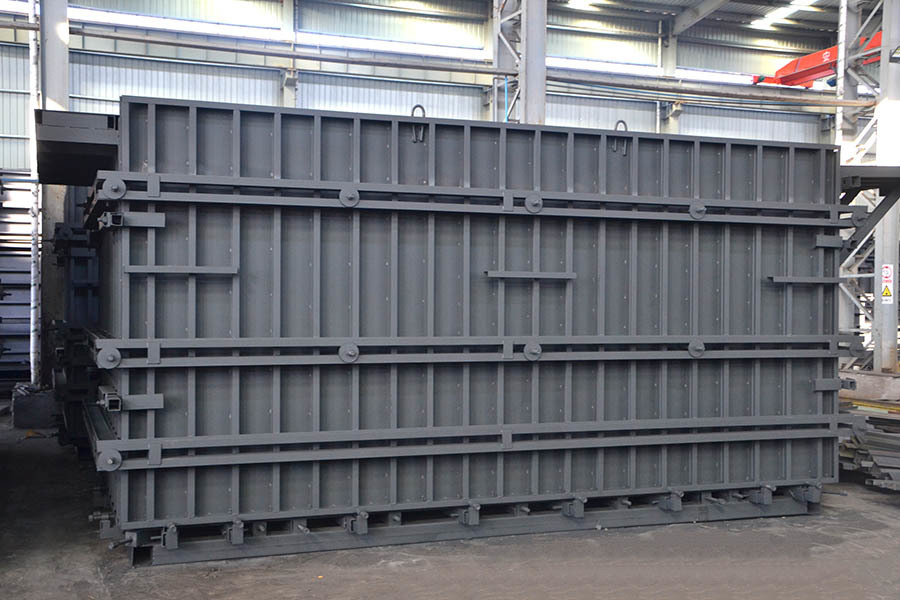
Modern manufacturing floors are shedding the rigid, one-size-fits-all approach of traditional hydraulics. Instead, embedded sensors and adaptive control algorithms now allow presses, injection molders, and material handlers to self-adjust in real time. This means a stamping line can sense a slight variation in metal thickness and instantly modify clamping force and cycle speed without any operator intervention, keeping throughput high and scrap rates near zero.
The real leap comes from systems that learn. By coupling hydraulic power units with edge computing, the equipment analyzes patterns across thousands of cycles—peak pressures, temperature drifts, valve response lags—and quietly optimizes its own parameters overnight. A shift supervisor might arrive to find that the same machine is now running 12% faster on delicate composite parts, simply because the software figured out how to ramp pressure curves more aggressively without risking micro-cracks.
Uptime also gets a boost when hydraulics stop being silent workhorses and start talking. Predictive maintenance models, fed by continuous oil quality data and actuator wear signatures, flag a degrading seal weeks before it would leak. Maintenance teams swap it during a planned lull rather than during a midnight breakdown, keeping the entire production schedule on track. This shift from reactive fixes to proactive care transforms the hydraulic system from a potential bottleneck into a steady accelerator of the factory's rhythm.
Cost Efficiency Through Advanced Mold Design
Cutting down on production expenses often starts long before the first part is molded. With advanced mold design, we re-evaluate every component—from runner systems to cooling channels—so material waste drops dramatically and energy consumption stays low. The goal isn't just a cheaper mold; it's a smarter layout that spreads wear evenly and reduces secondary finishing steps, trimming overhead in ways that standard off-the-shelf tooling never can.
One overlooked lever for savings is the thermal balance inside the tool. By simulating heat flow and adjusting gate placements, we can shorten cycle times without pushing resin temperatures into risky territory. This means less scrap, fewer rejected parts, and steady output even when running commodity-grade materials. The upfront engineering cost is quickly recovered through consistent, high-yield production that doesn't demand constant babysitting.
We also lean on modular inserts and standardized base frames to swap out only worn sections instead of replacing whole molds. That approach slashes maintenance bills and keeps your machine uptime high, because changeovers happen in minutes rather than hours. It's practical cost control woven directly into the design DNA—no gimmicks, just real savings that compound run after run.
Sustainable Practices in Cement Mold Manufacturing
Cement mold production has long been associated with heavy resource consumption and waste, but a quiet revolution is taking place in workshops around the world. Smaller manufacturers are turning to recycled aggregates—crushed glass, reclaimed concrete, and even post-industrial ceramics—to cut down on virgin material extraction. By carefully grading these alternatives, they achieve molds that meet strength requirements while reducing their carbon footprint. It’s a shift driven not just by regulation, but by a growing realization that material costs can drop when you look at waste streams as resources rather than problems.
Energy use during casting and curing is another area where practical changes add up. Some plants are switching to solar-powered mixing stations or using waste heat from nearby industries to accelerate curing without additional fossil fuels. Others have adopted insulated formwork that retains warmth longer, slashing the need for continuous heating. On the water side, closed-loop systems are becoming standard; water from washing mixers and forms is filtered and reused, dramatically cutting consumption. These measures often pay for themselves within a few production cycles, creating a compelling business case alongside environmental benefits.
Perhaps the most impactful shift is in mold design itself. Modular, reusable formwork that can be disassembled and reconfigured for different products extends the lifespan of each mold, reducing the volume of waste sent to landfills. Bio-based release agents made from vegetable oils are replacing petroleum-based chemicals, improving workplace safety and simplifying cleanup. The result is a quiet but thorough rewiring of the manufacturing process—one that values durability, adaptability, and closed-loop thinking over the old linear model of production and disposal.
Next-Gen Automation for Consistent Output
When every deployment carries the risk of subtle drift, the only real safeguard is automation that thinks ahead. Next-gen approaches don't just replicate tasks—they learn the intent behind each workflow and guard consistency at that higher level. By weaving validation directly into the execution pipeline, these systems catch mismatches long before they reach end users, turning quality from a final gate into a continuous undercurrent.
What sets this apart is how it handles variation. Instead of brittle scripts that break the moment an environment changes slightly, the automation adapts its steps based on real-time signals. It sees that a dataset shifted shape, or a dependency updated its interface, and adjusts accordingly—while still meeting the same output contract. The result is reliability that doesn't come at the cost of fragility.
Teams often discover that the biggest gain isn't just fewer errors, but a shared confidence that grows over time. Once you stop using precious mental energy wondering if the last release changed something it shouldn't have, you start shipping bolder ideas faster. That cultural shift—from anxiety to trust—is where the true consistency lives.
Expanding Design Possibilities with Fourth-Gen Technology
As creative tools absorb the latest wave of hardware and software advances, the boundaries that once constrained designers are quietly dissolving. Fourth-generation technology doesn’t just speed up familiar workflows—it reshapes the very logic of how a concept becomes reality. Instead of modeling static forms, teams now craft responsive systems that adapt to material stress, environmental data, or user behavior in real time. This shift turns speculative ideas into testable prototypes within hours, not weeks, allowing a more playful, iterative relationship with the unknown.
What makes this generation distinct is its ability to collapse the distance between imagination and physical output. Tools once reserved for specialized engineers—generative algorithms, real-time physics simulation, sensor-driven feedback loops—are now embedded in accessible platforms. A designer can sketch a rough form, let computational logic refine it against performance criteria, and 3D-print a functional component that embodies those optimizations. The result isn’t just a faster version of old methods; it’s an invitation to explore forms that wouldn’t occur to a human mind working alone, from bone-like lattice structures to fluid, wind-responsive facades.
Yet the deepest expansion isn’t technical—it’s conceptual. When iteration costs plummet, teams grow comfortable with ambiguity, treating each prototype as a question rather than an answer. Fourth-gen technology encourages cross-disciplinary leaps: a fashion designer borrows parametric logic from architecture, a furniture maker integrates living organisms into material growth. These unexpected collisions don’t produce incremental improvements; they open entirely new categories of objects, spaces, and experiences that feel inevitable only after they exist.
FAQ
It incorporates advanced pressure control systems and modular design, allowing operators to adjust compaction force in real time. Older generations relied on fixed hydraulic circuits, while this iteration uses sensor feedback to maintain uniform density across complex shapes, reducing rejects from uneven curing.
The quick-change plate system lets crews swap out mold profiles in under 15 minutes without recalibrating the entire press. Integrated heating elements also accelerate initial setting, so blocks are ready for handling sooner. A typical wall panel that took four hours with previous molds now takes just over two.
Precision-guided rams minimize excess paste squeeze-out during forming, which used to be a common waste point. The mold geometry includes micro‑vents that eliminate air pockets, so you get full compaction with less raw mix. Over a year, this can cut cement consumption by roughly 8 percent for a medium‑sized plant.
Built-in load cells track pressing force cycle by cycle, flagging deviations before they become faulty products. Operators get visual alerts on a simple interface rather than having to check manual gauges. In high‑volume yards, this has cut the error rate from around 5 percent to well under 1 percent, mainly by catching uneven filling early.
Interlocking, hollow‑core facade panels with embedded drainage channels. The previous generation couldn't hold the core inserts steady under lateral flow, but the fourth‑gen mold uses servo‑assisted side clamps that maintain alignment throughout the pour. These panels are now used in sound barrier walls along highways, combining structural and acoustic functions in one lift.
The adaptive tamping algorithm reads mix workability through the resistance on the press head and automatically tweaks vibration frequency and duration. Whether you're using a stiff zero‑slump mix or a slightly flowable blend, the mold compensates within a pre‑taught range, so changeovers take minutes instead of hours of trial runs.
The wear surfaces are lined with replaceable hard‑chromium inserts that last about 300,000 cycles before requiring a swap. Hydraulic seals are rated for high‑cycle operation with a recommended check every six months. The real shift is that most adjustments are now self‑diagnosed through the on‑board telemetry, so routine servicing is more predictable and unscheduled downtime is rare.
Conclusion
The fourth-generation hydraulic cement mold is fundamentally reshaping how precision is understood in modern construction. By integrating smart hydraulic systems that react in real time to material behavior, these molds achieve dimensional accuracy and surface finish previously unattainable with conventional rigid forms. This level of control directly accelerates production cycles, as the systems handle varying concrete consistencies without manual recalibration, pushing output speeds significantly while maintaining the reliability of each cast. The technology thrives on a feedback loop where mold responsiveness not only boosts throughput but also informs design improvements, creating a manufacturing environment where tuning for speed does not force a trade-off with quality.
Beyond pure productivity, the fourth-gen approach delivers substantial cost efficiency through a complete rethinking of mold geometry and wear characteristics. Advanced materials and thermal management in the design cut down on energy waste and extend mold life, directly lowering per-unit costs over extended runs. At the same time, this innovation supports sustainable practices: less material waste through precise filling, reduced cement paste overflow, and the ability to reuse molds far longer than earlier generations. Automation then steps in to guarantee consistent output across high volumes, eliminating variability that often plagues manual operations. The creative payoff is a vastly expanded design palette—architects and engineers can now execute complex textures, undercuts, and organic shapes that were once too expensive or technically impossible, all while keeping project schedules and budgets firmly in check.
Contact Us
Contact Person: Zhang Zhenlai
Email: [email protected]
Tel/WhatsApp: 8618563210000
Website: https://en.lugongmachinery.com/