

GMP Cleanroom Construction: Key Strategies for Successful Projects
2026-08-06
Constructing a GMP cleanroom is far more than just erecting walls and installing filters—it's a high-stakes orchestration of precision, compliance, and foresight. Every detail, from airflow patterns to surface materials, must align with rigorous regulatory demands while balancing budget and timeline constraints. At GENO Pharmatech, we've seen firsthand how early-stage decisions can make or break a project. This blog unpacks the key strategies that separate successful cleanroom builds from costly setbacks, giving you actionable insights to streamline your next project.
Blueprinting Success: Strategic Planning for GMP Cleanrooms
Crafting a GMP cleanroom that truly delivers starts long before the first wall panel is installed. It’s about peering into the future of your operations—anticipating scale-up, material flows, and the intricate dance of personnel and product. Without a strategic blueprint, you risk a facility that meets code on paper but grates against daily reality, eroding compliance and draining resources through endless retrofits. The planning phase is where you embed flexibility, ensuring the space can evolve without tearing down its core.
From unidirectional airflow patterns to pressure cascade mapping, every technical decision must ladder back to your specific process risks. Instead of chasing the most advanced gadgetry, smart planning focuses on critical control points: how raw materials enter, where waste exits, and how gowning rituals shape contamination barriers. Too often, cleanrooms are overdesigned with excessive air changes that hike energy bills without added safety. A nuanced approach aligns HVAC design, surface materials, and monitoring systems into a cohesive, lean shield—one that protects both the product and the bottom line.
The real differentiator, however, is marrying engineering precision with human factors. A meticulously planned layout that ignores operator fatigue or simple workflow friction will see shortcuts taken the moment no one is watching. Integrating ergonomic principles early—think logical material staging, glare-free lighting, and intuitive alarm placements—builds a culture of compliance rather than forced discipline. The blueprint, then, isn’t just a construction document; it’s a quiet, steadfast guide that shapes behavior long after the ribbon is cut.
Beyond the Surface: Material Selection for Contamination Control
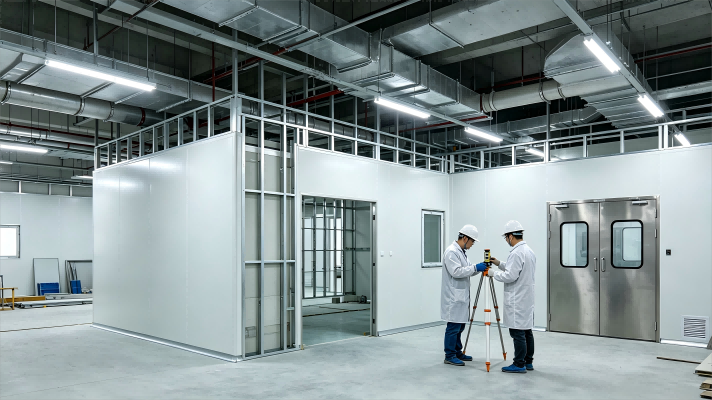
Choosing a material for contamination-sensitive environments demands more than a quick glance at its datasheet. The real story often lies beneath the polished exterior, in how the substance interacts with particles, chemicals, and biological agents over time. A visually smooth surface might hide micro-crevices that trap bacteria, while a seemingly inert polymer could leach additives under stress. These subtle behaviors define whether a cleanroom or a surgical tool truly stays clean.
Porosity, surface energy, and chemical compatibility form a triad that engineers must balance carefully. High surface energy materials can bond easily with adhesives but also attract airborne contaminants. Low-porosity metals might withstand aggressive sterilization cycles, yet their weight or cost can be prohibitive. Even the manufacturing process leaves an imprint: machining marks, polishing compounds, or trapped residues from molding can undermine sterility long before the product fails mechanically.
Beyond the lab, real-world use introduces variables that no specification sheet can fully anticipate. Thermal cycling, humidity, and exposure to cleaning agents gradually reshape the surface. A material that passes a 24-hour test might still harbor biofilms after weeks of repetitive soiling. That’s why proven selections often come from niche alloys or advanced polymers tested in the exact conditions they’ll face—not just from generic corrosion charts. Long-term contamination control is a marathon, and the right material choice is the first, critical stride.
Constructing with Precision: Minimizing Human Error in Cleanroom Builds
In cleanroom construction, even minor oversights can lead to contamination risks that compromise entire projects. Human error often creeps in during repetitive tasks like sealing joints or installing filtration systems, where a momentary lapse in attention can introduce particulates or create airflow inconsistencies. Addressing these vulnerabilities requires more than just rigorous training; it demands a shift toward systems that inherently guide workers toward correct actions. By embedding precision into every step—through clear visual cues, ergonomic tooling, and fail-safe assembly sequences—teams can drastically reduce the likelihood of mistakes that slip by unnoticed until later audits.
Real-world experience shows that standard checklists aren’t enough on their own. Workers need physical guides that prevent common errors, such as misaligned panel placement or incorrect fastener torque, without slowing down the build. For instance, using pre-calibrated torque wrenches with integrated feedback or color-coded mounting brackets can turn ambiguous instructions into intuitive actions. When the construction process feels natural and error-proof, the focus remains on quality rather than memorizing procedures, effectively shrinking the gap between planning and execution.
Long-term reliability depends on making precision a habit, not an afterthought. This involves designing construction protocols that minimize reliance on human memory—like automated component verification systems that flag inconsistencies in real time. Complementary strategies, such as peer-driven spot checks and clear documentation that is easy to interpret on the fly, further reinforce accuracy without adding burden. Ultimately, reducing human error isn’t about eliminating human involvement; it’s about creating an environment where mistakes are harder to make and easier to catch before they escalate.
Airflow Architecture: Engineering Critical HVAC Systems
In environments where temperature, humidity, and particulate control are non-negotiable—think semiconductor fabs, biocontainment labs, or acute-care hospital wings—airflow architecture becomes the silent guardian of process integrity and human safety. It’s not merely about moving cubic feet per minute; it’s about choreographing pressure cascades, ensuring that air always flows from clean to less-clean spaces, that contaminants are swept away from critical zones rather than drawn into them. A single miscalculated return grille placement or an overlooked door undercut can subvert the entire cascade, turning a supposedly sterile corridor into a contamination highway.
The engineering backbone of such systems relies on a judicious blend of physical modeling and operational pragmatism. Computational fluid dynamics offers dazzlingly detailed simulations, but seasoned engineers know that the real world is messier than any mesh grid. Occupancy patterns shift, filter loading alters resistance, and outdoor conditions swing wildly. Robust designs therefore incorporate adaptive elements—modulating dampers that respond to live pressure readings, variable-speed fans that trim airflow in near-real time, and strategic redundancy that allows maintenance without compromising the envelope. Crucially, the architecture must degrade gracefully: if a sensor fails or a drive belt snaps, the system should default to a safe state, not silently drift into a dangerous imbalance.
What sets truly resilient airflow designs apart is the willingness to question inherited assumptions. Rather than blindly replicating textbook air-change rates, forward-looking teams conduct tracer-gas studies to validate actual ventilation effectiveness. They explore unconventional layouts—displacement ventilation from low sidewall diffusers, for instance, which gently lifts contaminants toward high returns instead of mixing them throughout the space. They also integrate the building’s thermal mass and external shading into the airflow strategy, reducing the burden on mechanical cooling while maintaining strict environmental tolerances. In critical facilities, airflow isn’t a back-of-the-envelope calculation; it’s a continuous negotiation between physics, failure modes, and the real-world behavior of the people who rely on the system.
Validating Excellence: A Proactive Approach to GMP Compliance
Excellence in validation isn't about ticking boxes when an auditor shows up. It's a mindset where processes are designed from the ground up to anticipate regulatory expectations and operational risks. By treating validation as an ongoing conversation with your systems—not a one-time project—you build a manufacturing environment where deviations become rare and quality is simply how work gets done.
A proactive approach connects validation directly to daily operations. Instead of writing protocols that gather dust, use living documents that evolve with process knowledge. Engage operators and engineers in regular risk reviews, so they own the validated state. This shifts the focus from proving compliance after the fact to maintaining it through every batch, every change, and every improvement cycle.
Ultimately, validating excellence means using data to stay ahead. Modern monitoring tools and statistical analysis help you spot trends before they trigger alarms. When you pair that with a culture that encourages speaking up about potential issues, your validation program stops being a costly burden and becomes the engine of continuous, predictable quality. That's the kind of compliance that regulators respect—and patients deserve.
Sustaining Sterility: Long-Term Maintenance and Lifecycle Strategies
Maintaining sterility over the long haul is less about a single point of control and more about weaving aseptic discipline into the fabric of daily operations. It starts with a well-designed facility where surfaces resist colonization, airflow patterns are validated routinely, and personnel move with an almost choreographed awareness of the unidirectional flow from clean to dirty zones. But beyond the physical setup, the real heavy lifting happens in the rituals of maintenance: scheduled filter integrity tests, timely replacement of wear-prone components, and a relentless dedication to cleaning protocols that leave no blind spots. Each pump, valve, and utility line becomes a potential breach point—our job is to stay ahead of them through a rhythm of inspection and intervention that never lets up.
A lifecycle approach forces us to look beyond today’s batch record and ask how sterility assurance evolves as equipment ages. Elastomer seals harden, sensor accuracy drifts, and even the best polished stainless steel develops micro-pits over repeated sterilization cycles. We counter this by building a technical dossier for each system—tracking change-outs, trending environmental monitoring data, and correlating excursions with specific maintenance events. This living document guides our decisions: when to overhaul instead of repair, when a persistent contamination pattern signals that a sterile boundary has been compromised beyond recovery. It’s a mindset that treats every preventive maintenance window as a chance to renew the system’s sterility promise, not just keep it running.
Ultimately, sustaining sterility is a campaign fought on multiple fronts—from the way we train operators to internalize contamination risks as their own problem, to the oversight of validated processes that can’t simply be set and forgotten. We challenge sanitization hold times under real-shift conditions, simulate power outages to verify fail-safes, and push hold norms for sterilized equipment in busy suites. Every tweak to the manufacturing sequence gets evaluated through the lens of potential microbial ingress. When the lifecycle strategy works, it creates a quiet confidence: the autoclave cycles, the air handlers hum, and inside the filling zone, nothing gets a foothold. That’s the goal—a state of sustained, boring, beautifully predictable sterility where emergencies are rare because vigilance has become second nature.
FAQ
It almost always comes down to early cross-functional planning. You need facility managers, quality leads, and process engineers in the room long before the first drawing is approved. When those teams align on workflow, material flow, and gowning logic upfront, you dodge the expensive rework that happens when HVAC or layouts get challenged during qualification.
Because there’s a tendency to treat cleanroom surfaces like standard commercial finishes. In reality, every joint, sealant, and panel coating has to resist repeated chemical cleaning and particle shedding. Using non-shedding, chemically compatible materials from the start avoids a world of trouble during viable monitoring and reduces the risk of product contamination investigations later.
One approach that works well is phasing the qualification steps. Instead of waiting until construction is 100% complete, you can begin IQ and OQ on individual systems—like the purified water loop or air handling units—as soon as they’re commissioned. Parallel testing accelerates the timeline while still satisfying regulatory expectations, provided your quality unit approves the strategy in advance.
Many designs focus only on static pressure differentials and forget about dynamic changes when doors open or equipment exhausts fluctuate. The real challenge is maintaining containment during everyday operations. Incorporating airlocks, real-time monitoring systems, and automated damper responses helps keep the cascade intact even when conditions shift unexpectedly.
Maintenance personnel understand the pain points that architects rarely see: filter changeouts above sensitive equipment, tight access to ductwork sensors, or drain lines that are impossible to clean. Their input early on leads to layouts that actually support long-term sterility assurance and reduce downtime, rather than creating beautiful but non-serviceable installations.
Beyond clash detection, a fully integrated BIM model allows you to map particle sources, visualize airflow paths, and simulate operator movements before physical walls go up. When the project team can walk through the cleanroom virtually and spot issues—like a LAF unit blocked by a structural beam—it’s a fraction of the cost to fix compared to on-site rework.
Flexibility is key. Rather than locking into one supplier for everything from air showers to pass-through chambers, savvy teams pre-qualify multiple vendors and, where possible, standardize on components that can be sourced interchangeably. They also build buffer stock agreements and schedule long-lead items like fan filter units immediately after basic design approvals, even if refined dimensions come later.
Conclusion
Successful GMP cleanroom construction begins long before the first wall is erected, rooted in meticulous strategic planning that aligns facility design with operational goals and regulatory requirements. This blueprinting phase demands a cross-functional team to map process workflows, define cleanliness classifications, and anticipate future scalability, ensuring that every square foot serves a purpose. Material selection follows as a silent guardian of contamination control, where surfaces must resist microbial growth, withstand aggressive cleaning agents, and minimize particle shedding—choices like electropolished stainless steel or seamless epoxy flooring become non-negotiable. During the build, precision orchestration minimizes human error through rigorous protocols: construction crews operate under strict gowning procedures, use captive tool systems, and follow stepwise airlock transitions to isolate the evolving clean envelope from external contaminants.
At the heart of the controlled environment lies the HVAC architecture, engineered not merely for comfort but as a dynamic shield that maintains cascading pressure differentials, controls temperature and humidity within narrow bands, and delivers HEPA-filtered laminar airflow to sweep away particulates. Commissioning this system intertwines with a proactive compliance mindset, where validation is not a final hurdle but an embedded process spanning design qualification, installation checks, and operational performance testing. The journey doesn't end at handover; sustaining sterility demands a long-term lifecycle strategy that blends continuous environmental monitoring, preventive maintenance of critical utilities, and periodic requalification to adapt to evolving production demands. Ultimately, a successful GMP cleanroom project fuses strategic foresight, material integrity, construction discipline, engineering excellence, and unwavering commitment to quality into a facility that consistently protects product and patient alike.
Contact Us
Contact Person: Amy Yang
Email: [email protected]
Tel/WhatsApp: 008619330882686
Website: https://www.genopharmatech.com/