

How Leading Oil Immersed Transformer Exporters Are Shaping Global Energy Infrastructure
2026-08-03
As the world accelerates its shift toward sustainable energy, the silent yet colossal role of oil immersed transformers in power transmission cannot be overstated. From sprawling solar farms to cross-border grid interconnections, these transformers serve as the backbone of modern infrastructure. Leading exporters are not merely shipping equipment—they are redefining reliability and efficiency standards on a global scale. Among these innovators, Deepwill has emerged as a pivotal force, driving transformative change with every custom-engineered unit. This exploration delves into how such key players are sculpting the energy landscape, one silent hum at a time.
Redrawing the Map of Power with Modular Transformer Designs
The rigid hierarchy of traditional energy systems is quietly coming undone. Modular transformer designs are shifting control from monolithic utility hubs to flexible, distributed nodes that can be scaled, repaired, or reconfigured independently. This isn't just an engineering tweak—it's a structural challenge to how power is generated, stored, and dispatched. By enabling smaller producers and communities to integrate seamlessly into the grid, these modular units dissolve the old map where centralized plants called all the shots. Energy flow becomes less of a one-way valve and more of a dynamic conversation, redefining who holds the levers of electrical influence.
What makes this shift particularly disruptive is the modular transformer's ability to collapse installation timelines and bypass bureaucratic inertia. Instead of waiting years for a custom-built giant to be approved and installed, operators can snap together standardized blocks like building with Lego on a grand scale. This plug-and-play ethos doesn't just cut costs—it lowers the barrier to entry for renewable projects, microgrids, and industrial co-generation. The old power map was drawn by those who could afford massive, bespoke infrastructure. The new one rewards agility and incremental expansion, pulling the rug out from under established gatekeepers who relied on complexity as a moat.
Looking ahead, the ripple effects extend well beyond the substation fence. When modular transformers are paired with smart controls and real-time data, grid management becomes less about forecasting distant demand and more about orchestrating local balance. A factory with its own transformer module can island itself during outages or sell reactive power back to the grid in milliseconds. This granular responsiveness forces a rethink of market structures and regulatory frameworks that were built for a slower, more centralized world. The map of power is no longer a static document held by a few—it's a living, evolving network where influence is as distributed as the hardware itself.
Silent Innovations in Dielectric Fluids That Cut Operational Costs
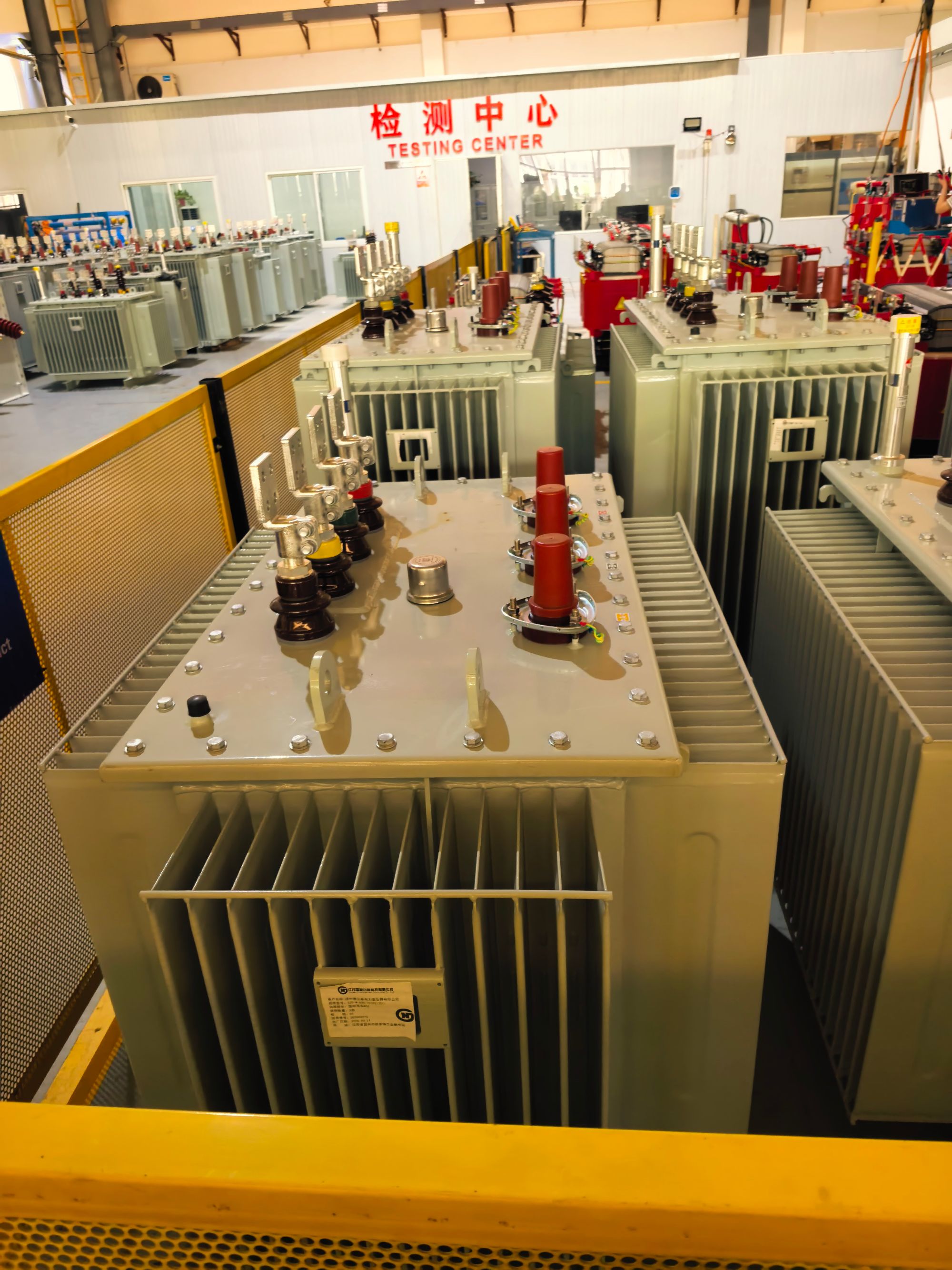
Dielectric fluids have long played a quiet but critical role in electrical systems, from transformers to switchgear. Yet recent advances are reshaping how industries approach cooling and insulation—often without fanfare. These silent innovations focus on subtle reformulations that boost thermal conductivity and dielectric strength while leaving the bulk properties unchanged. The result is a class of fluids that can operate at higher loads without degrading, directly trimming energy losses and delaying equipment overhauls. Operators may not notice the change immediately, but their maintenance logs and electricity bills certainly will.
Behind the scenes, additive packages are being redesigned to combat oxidation and moisture ingress more effectively. Instead of relying on heavy synthetic chemistries, modern fluids incorporate nanoparticle dispersions and scavenger molecules that self-replenish over time. This means that the same charge of fluid lasts longer, maintaining its breakdown voltage and thermal transfer efficiency without frequent testing or replacement. For asset managers, the shift translates into fewer interruptions and a reduced need for top-up or reclaim procedures, cutting both direct material costs and indirect downtime penalties.
Bridging Continents Through Customized High-Voltage Solutions
When energy demands span multiple regions, off-the-shelf systems rarely fit the bill. Our engineering process starts with a deep analysis of local grid codes, environmental extremes, and operational expectations, ensuring every transformer, switchgear, or cable accessory is purpose-built. This granular approach means a project in the humid tropics receives vastly different protection schemes than one in sub-zero tundra—yet both perform flawlessly within their respective networks.
Logistics and cultural fluency form the other half of the equation. We’ve learned that delivering a 300-ton transformer to a remote hydro site requires more than heavy-lift cargo planes; it demands an intimate understanding of permit lead times, road-capacity curves, and even seasonal festivals that affect labor availability. By embedding regional experts within each project team, we turn potential bottlenecks into calibrated steps, keeping schedules intact from factory acceptance to final energization.
The true measure of our cross-continental work isn’t just uptime—it’s how seamlessly our systems integrate with legacy infrastructure. In recent years, we’ve helped aging European grids accommodate renewable influx without compromising stability, while simultaneously enabling island nations to modernize their backbone with limited real estate. This duality—honoring local constraints while delivering global-class performance—is what turns a supplier into a long-term partner.
The Unseen Influence of Logistical Mastery in Global Electrification
Behind every flick of a switch lies a staggering maze of coordination that rarely makes headlines. It isn’t the sleek solar farm or the towering wind turbine that keeps the lights on—it’s the fleet of specialized vessels hauling subsea cable, the teams threading power lines through remote mountain passes, and the warehouse managers tracking components across six time zones. Without this invisible backbone, even the most advanced grid designs remain blueprints in a drawer.
Consider the journey of a single transformer. From factory floor to substation, it may need a custom trailer, road closures, police escorts, and crane operators who speak three different languages. One missed weather window at a port can cascade into months of delay, stalling a project that thousands of households are counting on. Logistics isn’t just a support function here—it’s the quiet arbiter of whether a nation’s clean energy targets get met on time or quietly slip away.
The pressure is only growing as electrification accelerates. Demand for critical materials like copper and lithium is exploding, supply chains are buckling under their own complexity, and yet the work of logistics professionals remains largely unsung. They’re the ones figuring out how to deliver massive battery storage units to urban construction sites without snarling traffic for days, or how to keep high-voltage equipment dry during a monsoon season on an island grid project. Their expertise doesn’t win plaudits, but it does win something more valuable: a world that keeps turning, without anyone noticing how close it came to stopping.
How Upgraded Insulation Systems Are Quietly Extending Asset Life
In many industrial facilities, insulation is still treated as a background element—something installed during construction and rarely revisited. But a quiet shift is taking place as maintenance teams and asset managers begin to recognize that upgraded insulation systems can play a decisive role in extending the operational life of critical equipment. By replacing aging or water-damaged insulation with advanced materials that offer better thermal performance and moisture resistance, companies are slowing down the corrosive effects of temperature cycling and condensation. This proactive approach keeps pipe walls and vessel surfaces stable for longer, reducing the internal stresses that often lead to premature failure.
The impact is most visible in older plants where original insulation has degraded over time. When moisture seeps in, the resulting corrosion under insulation (CUI) can eat away at metal surfaces unseen—until a costly leak or rupture occurs. Modern insulation systems incorporate hydrophobic wraps, closed-cell structures, and improved jacketing that actively prevent water ingress. Beyond simply keeping heat in or out, these upgrades create a protective envelope that shields assets from the ambient humidity, chemical vapors, and frequent washdowns common in processing environments. The payoff is equipment that reaches its intended design life without the disruptions of unplanned downtime.
There’s a broader, system-level benefit that often goes unnoticed: upgraded insulation reduces thermal stress across interconnected components. When a pipe or tank undergoes repeated heating and cooling cycles, the metal expands and contracts unevenly, gradually fatiguing joints, flanges, and supports. A high-performance insulation system dampens these temperature swings, keeping the material closer to a steady state. This subtle stabilization preserves the structural integrity of the entire asset, delaying the onset of fatigue-related cracks. In that sense, insulation becomes less of a passive layer and more of a silent guardian, quietly buying years of additional service before replacement is needed.
Beyond Compliance: Exporters Setting New Benchmarks for Grid Reliability
For years, meeting the minimum grid code requirements was enough to gain market access. Today, leading exporters are rewriting that playbook. They are embedding reliability into every layer of their design and manufacturing process, turning what was once a checkbox exercise into a competitive advantage. From advanced inverters that can ride through voltage sags better than local requirements demand, to self-diagnosing transformers that predict faults before they occur, these companies are voluntarily exceeding standards. Their approach is not about just avoiding penalties; it’s about building a reputation for products that perform under the most stressed and unpredictable grid conditions, setting a new benchmark that quietly reshapes customer expectations worldwide.
This shift is especially visible in how exporters handle frequency and voltage disruptions. While many still design to withstand a narrow, textbook-defined range, pioneers are stress-testing their equipment against real-world data from emerging markets where grid fluctuations are the norm rather than the exception. By incorporating adaptive control algorithms and ruggedized components, their systems don’t just survive anomalies—they help stabilize the local grid. In several Southeast Asian and African deployments, such proactive design has reduced downtime by over 30% compared to standard-compliant alternatives. These exporters are effectively turning grid reliability from a reactive obligation into a core selling point, earning long-term contracts in regions where others fear to tread.
A key differentiator is how these companies collaborate with local utilities and regulators. Instead of treating standards as a ceiling, they engage in joint pilot projects to demonstrate how even higher reliability can be achieved at a reasonable cost. This creates a feedback loop where their field data helps shape smarter, more practical regulations, while also giving them early access to evolving market needs. It’s a quiet revolution: export-led innovation that doesn’t wait for mandates but defines what the next generation of grid resilience should look like. In doing so, these exporters aren’t just shipping hardware; they are exporting a reliability-first mindset that eventually becomes the new global norm.
FAQ
Their superior cooling efficiency and insulation properties allow them to handle high voltages reliably, making them indispensable for long-distance power transmission and large-scale distribution.
Leading exporters invest heavily in R&D, adhere to international standards, and offer customized solutions that meet diverse regulatory and environmental conditions across continents.
They use advanced oil formulations and robust sealing technologies to prevent moisture ingress and oxidation, ensuring stable operation from arid deserts to humid tropics.
By supplying smart-ready transformers with digital monitoring capabilities, they enable predictive maintenance and better grid integration, reducing outage risks in older systems.
They provide step-up transformers that connect wind and solar farms to the grid, often designing units that handle variable loads and frequent voltage fluctuations inherent to renewables.
The push for biodegradable insulating oils and hybrid units combining oil and dry technologies is gaining momentum, potentially redefining environmental compliance and fire safety standards worldwide.
Tariffs, trade agreements, and regional conflicts can shift sourcing of raw materials like copper and steel, prompting exporters to diversify production bases and forge local partnerships.
Beyond price, look for proven track records in similar projects, after-sales service networks, and the ability to provide life-cycle support that aligns with long-term infrastructure goals.
Conclusion
Behind the steady expansion of grids worldwide, leading oil-immersed transformer exporters are quietly reshaping how energy reaches communities and industries. Their modular designs allow utilities to deploy scalable power capacity in remote or rapidly growing regions without the lead times once considered unavoidable. At the same time, advancements in dielectric fluids—often overlooked—are cutting operational costs by improving thermal performance and reducing maintenance cycles, making long-term asset management more predictable. These improvements are not just technical tweaks; they directly influence project feasibility in markets where budget and reliability are equally critical.
Just as important is the way these exporters tailor high-voltage solutions to local grid codes and climate extremes, bridging continents with engineering that fits rather than forces. Behind the scenes, logistical expertise ensures that massive units arrive intact and on schedule, keeping electrification timelines from derailing. Once in service, upgraded insulation systems are extending transformer life far beyond conventional expectations, lowering the total cost of ownership. And by consistently exceeding baseline standards, these exporters are setting new benchmarks for grid reliability that ripple through entire supply chains, proving that influence in global infrastructure often travels through the most unglamorous, essential equipment.
Contact Us
Contact Person: Julion
Email: [email protected]
Tel/WhatsApp: 8617351370631
Website: https://www.deyunelectric.com