

Integrated Energy Storage Cabinet 135kW/261kWh Manufacturer Selection: Essential Factors for Reliable Commercial Power
2026-11-23
Selecting a 135kW/261kWh integrated energy storage cabinet rarely comes down to the spec sheet alone. The real test happens weeks after installation, when the system cycles daily under partial loads, shifting tariffs, and less-than-ideal ambient conditions. That is where manufacturer choices quietly determine whether a project meets its savings targets or drifts into costly downtime. Thermal design, battery management logic, enclosure integrity, and service response all interact in ways that data sheets seldom reveal. This guide looks past headline capacity to the factors that make commercial storage dependable over time, drawing on field experience and the engineering approach behind UNC.
How Battery Chemistry Testing Separates Dependable 261kWh Cabinets from Paper Specifications
A spec sheet can promise 261kWh, but it rarely says what happens to that capacity after eighteen months of daily cycling in a warm enclosure. Chemistry testing digs into the electrode coatings, electrolyte additives, and separator behavior to reveal whether the cells drift out of balance, gas slowly, or lose accessible lithium at an unacceptable rate. Without that layer of validation, two cabinets with identical nameplate capacity can behave like entirely different assets once they are installed.
Thermal stability is where the gap becomes most visible. Differential scanning calorimetry and accelerating rate calorimetry expose the exothermic onset points that a datasheet never lists, while nail penetration and overcharge tests show whether a local failure stays contained or cascades through the pack. Cabinets built on cells with a narrow safe operating window may pass a basic capacity check but become unpredictable under realistic state-of-charge and temperature swings.
Cycle-life projections also change once chemistry testing replaces simple extrapolation. Techniques such as electrochemical impedance spectroscopy and incremental capacity analysis track growth in internal resistance and loss of active material long before total capacity drops below a warranty threshold. That kind of evidence separates a 261kWh cabinet that holds its usable energy over thousands of cycles from one that only looks competitive on a fresh-out-of-the-box datasheet.
Inverter Peak Load Behavior Tells You More Than the 135kW Label Ever Will
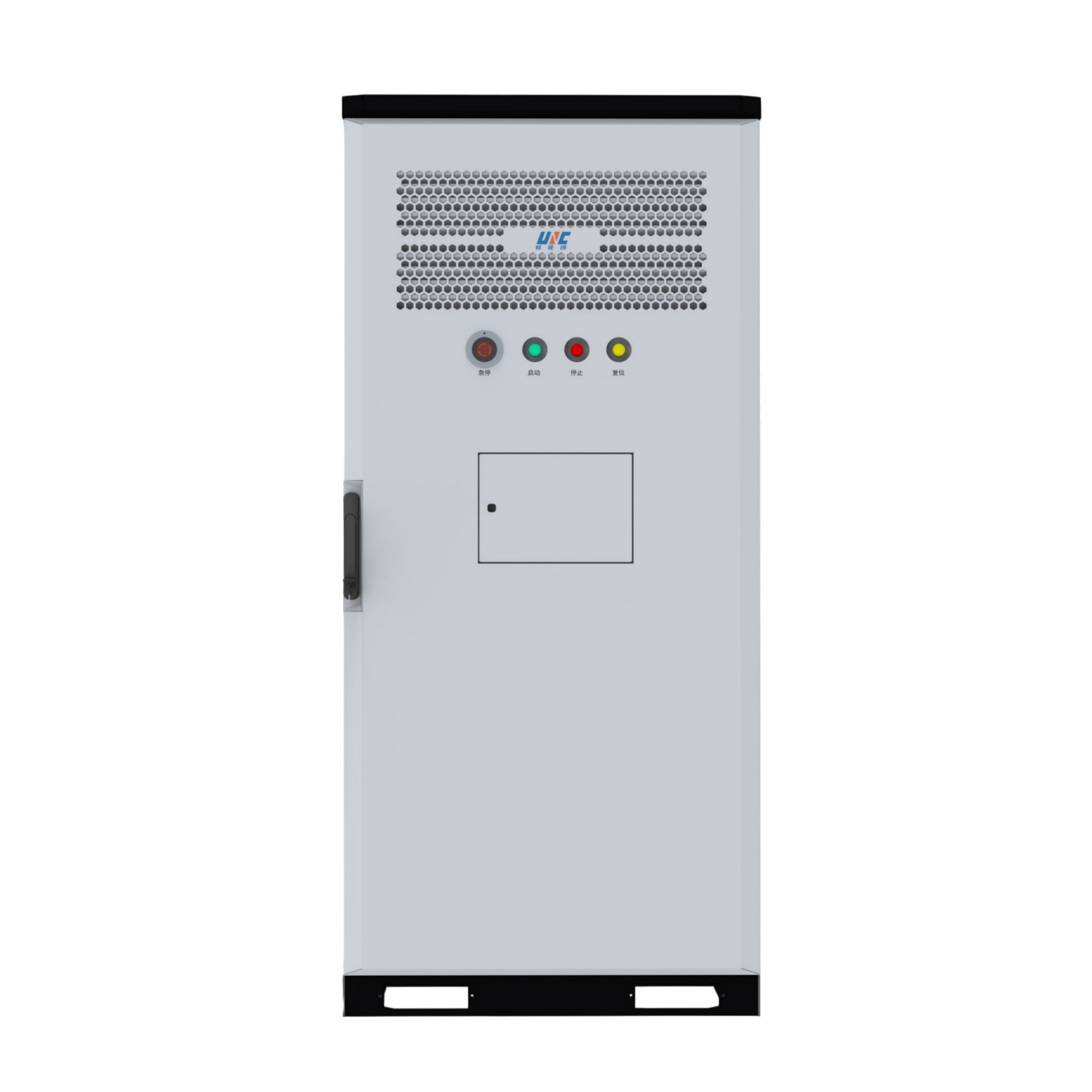
A 135kW nameplate rating looks clean on paper, but it says almost nothing about how the inverter behaves when a well pump starts, a cloud thins, or the grid voltage sags for half a second. Peak load behavior fills in that missing part. Some units ride through a 112% surge without clipping, then settle back smoothly; others clamp down hard the moment demand crosses 101% and take several seconds to recover. That difference does not show up in a datasheet headline, but it shows up in daily production and in the wear on DC-link capacitors.
The printed number also ignores thermal derating. A 135kW unit that starts backing off at 40°C will often lose to a smaller machine that holds its rating to 48°C, especially on a rooftop or in a dusty cabinet. Then there is recovery time. After a cloud passes, some inverters snap back to full output in a fraction of a second; others creep up over several seconds, losing energy every time it happens. That shape of the response, not the nameplate, is what determines whether a site meets its production model.
Two systems can carry the same 135kW label and still produce noticeably different energy in the same conditions. One may clip early and stay clipped through the midday peak; another may allow a short overload window that captures exactly the burst of power a passing cloud edge creates. Over a year, those small differences in peak handling add up. The label is a starting point, but the inverter's response under sudden load is the better predictor of whether the system actually delivers.
Thermal Runaway Prevention Starts with Enclosure Design, Not Just Cell Selection
Most battery teams spend months qualifying cells, checking for impurities, micro-shorts, and manufacturing variance, then drop the finished pack into a shell that was treated as an afterthought. That sequence quietly undermines the safety work. The enclosure is not just a box; it is the first physical barrier that decides whether a single cell failure stays local or turns into a chain reaction. Things like gas vent paths, internal bulkheads, and how quickly heat can escape toward the outside air matter just as much as the chemistry inside every 18650 or prismatic can.
A well-designed enclosure slows down the moments that lead to thermal runaway in the first place, and if a cell does go, it gives the rest of the system a fighting chance. For example, separating cells into smaller, thermally isolated groups prevents a hot neighbor from preheating the whole module. Vent channels that direct hot gases away from intact cells, and rupture panels that release pressure at a predictable point, change the outcome from a cascading fire into a controlled, survivable event. None of that requires a more exotic cell; it requires treating the mechanical architecture as part of the safety strategy from day one.
Teams that understand this start with the enclosure, not the datasheet. They sketch the pack so that no single point of failure can expose the entire array, and they test the structure against realistic failure modes, not just perfect lab conditions. Over time, this approach produces packs that are safer, lighter, and easier to certify, because the protection is built into the geometry instead of being borrowed from an ever-longer list of cell supplier promises.
Control System Openness Determines Whether the Cabinet Works with Your Building
A cabinet filled with proprietary controls can quickly become the weakest link in a building retrofit. The moment the existing building management system cannot read its points or adjust schedules, you are left adding gateways, translators, or manual workarounds that pile up over time. What looked like a complete package on the shop drawing often turns into a recurring integration cost once it reaches the site.
Open protocols such as BACnet, Modbus, and LonWorks change that equation. When the controller inside the cabinet speaks a common language, the building system can pull data, respond to demand events, and push setpoint changes without a custom integration project. That openness matters less on day one than it does three years later, when a chiller gets replaced or a tenant fit-out shifts zone boundaries and the original contractor is no longer around.
It is worth confirming exactly which objects are exposed, not just which protocol is printed on the cut sheet. Some vendors advertise openness while locking away critical points behind proprietary extensions or licensing restrictions. Ask for a point list early and have the controls contractor demonstrate a live read from the front end before the cabinet ever ships to the building.
Replacement Parts and Remote Troubleshooting Reveal the Manufacturer's Real Priorities
A quick look at how easily you can source a replacement seal, switch, or drive belt tells you more about a manufacturer than any spec sheet. Some brands keep common wear parts in stock at fair prices and let you order them without jumping through approval hoops. Others make you wait weeks for a small plastic clip that should have cost a few dollars. That gap is not about logistics. It shows whether the company sees your machine as something to support over time or as a one-time sale that locks you into their service channel.
Remote troubleshooting works the same way. The useful version connects you to someone who knows the equipment well enough to say "check the harness behind the control board" instead of reading back a generic reset script. The weaker version asks for videos, serial numbers, and repeated callbacks, then ends with a return label. What separates them is not always technical skill; it is whether remote support is staffed and empowered to solve problems, or just built to filter complaints and protect the warranty budget.
When a manufacturer makes parts easy to find and remote guidance specific enough to trust, the priority is clear: keeping equipment running matters more than controlling every repair. When both are difficult, the real strategy shows up in delayed shipments and scripted troubleshooting rather than in the marketing language. Replacement parts and remote support are not afterthoughts. They are the most honest test of how much a company cares about what happens after the purchase.
The Price Gap Between Cabinets Usually Reappears in Maintenance and Downtime Costs
A cheaper cabinet rarely stays cheaper once it is bolted into place. The initial savings tend to shift into replacement hinges, latch adjustments, and more frequent service calls, especially in facilities where the enclosure is opened several times a day. Technicians quickly learn which units need constant attention, and those are seldom the ones that carried a premium price.
Downtime is where the real price difference shows up. When a door sticks or a mounting rail loosens, the cost is not just the part; it is the paused production line, the crew waiting, and the overtime needed to catch up. A cabinet that avoids those interruptions often pays for itself long before the first major repair would have occurred on a lower-cost alternative.
The gap also reappears in how the enclosure handles small failures. Premium cabinets may still break, but they tend to fail in ways that are easier to service, with standard components and accessible fasteners. Budget options more often turn a simple fix into a partial disassembly, which multiplies labour cost and keeps critical equipment offline longer than planned.
FAQ
Focus on field-proven systems rather than glossy datasheets. Ask for reference installations with similar duty cycles, request performance data over at least 12 months, and verify that the manufacturer owns the core battery management and thermal control design instead of outsourcing it.
It determines cycle life, thermal behavior, and usable capacity under partial state of charge. Lithium iron phosphate remains the safer default for indoor commercial sites, but the real difference comes from how the manufacturer derates cells, manages balancing, and validates aging under your specific load profile.
Liquid cooling generally keeps cell temperatures tighter than forced air, which matters if the cabinet cycles more than once per day. Look for a design that maintains cell-to-cell temperature spread under 3–5°C and includes clear cooling failure derating behavior.
Expect full UL 9540 and UL 9540A for the integrated system, plus UN38.3 for transport and relevant grid interconnection compliance. Be wary of suppliers offering only component-level certificates and then asking extra for system-level testing.
Request a warranty that defines minimum retained capacity at specific annual throughput, not just years. Ask the manufacturer to show accelerated cycle data, calendar aging tests, and the exact ambient temperature assumptions behind the warranty.
The contract should name local spare parts inventory, response time for remote faults, and firmware update rights. If the manufacturer cannot guarantee replacement of a power module or BMS board within a short window, downtime risk transfers entirely to the owner.
Usually yes for commercial sites, because the cabinet needs to coordinate with solar, load shedding, and tariff schedules. An integrated software stack avoids the finger-pointing that occurs when storage hardware and controls come from different vendors.
Electrical interconnection upgrades, fire suppression compliance, extended commissioning, grid approval delays, and software licensing fees. A credible manufacturer will itemize these early and confirm whether the quoted price includes commissioning and first-year remote monitoring.
Conclusion
Comparing integrated energy storage cabinets on a datasheet rarely reveals how a 135kW/261kWh unit will behave when commercial loads swing or ambient temperatures climb. Battery chemistry testing matters because cells that look identical on paper can diverge sharply after a few hundred cycles, leaving some 261kWh cabinets delivering far less usable capacity than promised. Inverter behavior under peak load is equally telling: the 135kW label often describes a narrow operating window, while real sites see motor starts, transformer inrush, or abrupt load steps that force the inverter into derating or brief shutdown. Enclosure design then determines whether heat from those events stays manageable or pushes cells toward thermal runaway; passive cooling assumptions and thin steel do little once a battery module enters a fault condition.
Beyond hardware, the control system's openness decides whether the cabinet connects cleanly to existing building automation, generators, or solar inverters, or becomes a standalone island that demands costly integration work. Manufacturers that provide clear replacement part pricing, stocked components, and remote diagnostics tend to treat the equipment as a serviceable long-term asset rather than a one-time sale. That distinction often explains the price gap between cabinets: a lower upfront cost can return later as higher maintenance labor, longer downtime, and fewer firmware updates. For reliable commercial power, the selection should favor demonstrated thermal containment, honest inverter performance, and a support structure that keeps the system operating after the warranty period ends.
Contact Us
Contact Person: Manager Leng
Email: [email protected]
Tel/WhatsApp: 8613764878967
Website: https://www.unc-energy.com