
OEM Cryogenic Ball Valve Supplier for Critical Low-Temperature Applications
2026-08-26
When temperatures plunge to cryogenic levels, ordinary valves fail—sometimes catastrophically. In LNG, liquid nitrogen, and aerospace fueling systems, a single frozen seal or brittle stem can shut down an entire operation. That's why selecting the right OEM cryogenic ball valve supplier is not just a procurement decision; it's a risk-management strategy. ZMV has spent years engineering ball valves that hold tight at -196°C and beyond, but what really sets them apart in critical low-temperature applications? In this post, we'll explore the hidden design challenges—and why off-the-shelf rarely survives.
Why Cryogenic Ball Valves Are Not Just 'Cold-Rated' Commodities
A valve that simply survives a low-temperature rating test is not the same as one engineered for actual cryogenic service. The distinction shows up in details like extended bonnets that keep stem packing above the frost line, vented balls or relief systems that prevent trapped liquid from overpressurizing during warm-up, and seat geometries that remain tight after repeated thermal cycles. These are design choices, not options you can bolt on after the fact.
Materials matter, but so does the way they interact under contraction. A stainless steel body might retain toughness at -196°C, yet the real challenge lies in the differential shrinkage between trim, seats, and shell. Without proper clearances and seat loading, a cryogenic ball valve can lock up or leak long before it reaches its rated temperature. That is why performance validation under actual cryogenic media—not just a cold box test—separates a dependable isolation point from an expensive guess.
The Hidden Costs of Choosing the Wrong Low-Temperature Valve
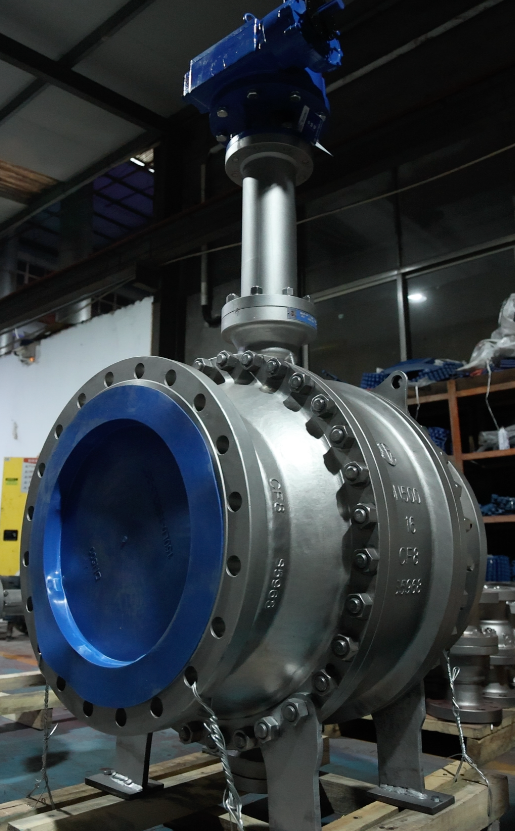
Low-temperature service turns ordinary valve problems into expensive ones. At cryogenic temperatures, PTFE and elastomer seals lose their elasticity, metal components contract unevenly, and even a valve that passes a shop test can begin weeping after a few thermal cycles. What starts as a thin line of frost near the bonnet is often dismissed as normal. In reality, that frost is evidence of gas bypassing the stem packing—a leak that will gradually widen into a safety hazard and a measurable product loss.
The financial drain continues with maintenance. A wrongly specified valve may need repacking or seat replacement two or three times more often than a proper cryogenic design. But unlike a standard process line, you cannot simply isolate and swap parts on a live low-temperature pipe. Every intervention means purging, depressurizing, and reheating the section—just to reach the valve. Nitrogen consumption alone can surpass the original valve cost within a year. Spare parts create another layer of waste: separate inventories for multiple valve brands, some of which may be discontinued or difficult to source during a shutdown.
Then there are the costs that never show up on a balance sheet until it is too late. A leaking low-temperature valve on an LNG or liquid oxygen line can release flammable or oxygen-enriched vapor, creating conditions for fire or asphyxiation. Even a minor release can trigger an emergency response, a regulatory report, or a customer audit. Insurance premiums creep upward, and your reputation as a reliable operator takes a hit that no warranty can repair. The wrong valve may have a lower invoice price, but it quietly transfers those savings into unplanned downtime, overtime labor, and exposure you never wanted to own.
From CAD Model to Cryo Chamber: The OEM Journey
The route from a digital CAD model to a finished cryo chamber is rarely a straight line. It begins with a customer's rough thermal performance targets, which our engineers translate into detailed mechanical drawings, material selections, and insulation layouts. Instead of forcing a standard design, we adjust internal dimensions, port placements, and door swing directions to match the client's existing lab workflow. This early back-and-forth often uncovers practical constraints that never appear in the initial spec, such as clearance for a nearby fume hood or the need for a left-hinged door to avoid blocking a service corridor.
Once the CAD file is approved, the manufacturing phase introduces its own set of decisions. We cut, bend, and weld the stainless steel shell in-house, then apply multi-layer vacuum insulation rather than relying on bulky foam panels. Every weld is inspected under a bright light and pressure-tested before the chamber moves to assembly. The OEM partnership means we also handle the less glamorous steps: sourcing cryogenic-rated valves, routing sensor wiring through sealed conduits, and calibrating the controller to hold temperature within a few tenths of a degree. A client may never see the hand-finished door latch or the custom gasket groove, but those details determine whether the chamber performs reliably after five years of daily use.
The final stage is not simply crating and shipping. We run a full thermal cycle in our own facility, logging pull-down time, steady-state temperature, and vacuum retention over a 72-hour period. Only then does the chamber get disassembled into its major components for transport, with each port capped and the interior purged with dry nitrogen. On-site, our engineers oversee reassembly and repeat the same performance test before handing over the keys. That shared journey, from CAD refinement to a chamber humming quietly in a customer's lab, is what we mean by an OEM partner rather than a vendor.
Leak Rates, Thermal Cycles, and the Art of Staying Tight
Most bolted joints don't fail from a single catastrophic event. They fail slowly, through the quiet accumulation of micro-deformations that happen every time the temperature swings. When a flange heats up, the bolts and the housing expand at different rates, and that mismatch quietly eats away at the original clamp load. A joint that seals perfectly at 20°C can begin to weep at 180°C, not because the gasket suddenly died, but because the bolt preload has relaxed by a few percent just when the sealing surfaces needed it most.
Leak rate, then, isn't a fixed property of a gasket or a torque value. It's a moving target that shifts with each thermal cycle. The first heat-up might produce a barely measurable leak, but after fifty cycles of expansion and contraction, the gasket has taken a set, the bolt threads have bedded deeper, and the mating flanges no longer return to the same position. At that point, the original torque reading on the wrench means very little. What matters is the residual stress still holding the joint together, and that's something you can only infer through careful measurement or expensive testing.
Staying tight under thermal cycling is less about brute force and more about managing the joint as a system. That means choosing a gasket with enough recovery to follow the flange movement, specifying bolts with similar thermal expansion to the housing, and often doing a hot re-torque after the first few cycles to claw back lost preload. Some engineers also rely on disc springs or tensioners that act as a mechanical battery, releasing stored energy as the joint tries to loosen. The ones who get it right aren't just following a torque spec; they're thinking about how the joint breathes when the heat comes on and how to keep that breath from turning into a leak.
LNG, LH2, and Beyond: Matching Valve Design to Fluid Behavior
Valve spec sheets often treat cryogenic fluids as a single category, but LNG and liquid hydrogen behave so differently that a one-size-fits-all approach fails quickly. LNG sits around -162°C with a density close to water, so it carries meaningful momentum and can hammer through seats or erode trims if flow paths aren't carefully shaped. Liquid hydrogen, by contrast, is only a fraction of that density at -253°C and has almost no viscosity, meaning it can sneak through microscopic clearances and flash to gas from the slightest heat input. A valve that seals perfectly in LNG service may weep hydrogen within hours, not because of poor machining but because the fluid itself challenges every sealing surface differently.
Design choices that work for one fluid often backfire for the other. LNG valves lean toward robust metal seats and anti-cavitation trims, since the liquid's density can cause severe pressure drops and bubble collapse. LH2 valves must instead prioritize minimal thermal mass and extended bonnets to keep the stem packing above freezing, while also avoiding materials that become brittle at 20 Kelvin. Even the act of opening and closing matters: hydrogen's low density means flow-induced vibration is less forceful, but thermal contraction cycles demand flexible wedges or floating balls that can reposition without binding. Ignoring these distinctions leads to premature seat wear, stem leakage, or outright fracture.
Looking beyond these two, future fuels like liquid ammonia, liquid methane, or even slush hydrogen will keep pushing valve design into new territory. Each fluid brings its own quirks—ammonia's toxicity and copper incompatibility, methane's similarity to LNG but with a tighter flammability window, and slush hydrogen's solid particles that scour soft seals. Rather than building a single "universal cryo valve," engineers are increasingly adopting modular platforms: core body and actuation remain standard, while trim, sealing elements, and thermal compensation are swapped to match the fluid's personality. This isn't about chasing every exotic molecule, but about accepting that fluid behavior—not just temperature—dictates the true valve specification.
When Your Supplier's Inventory Becomes Your Safety Margin
Most buyers treat supplier stock as someone else's problem until a shipment slips or a lead time doubles. But the smartest operations teams watch their vendors' warehouses the way a pilot watches an altimeter. A supplier with deep raw material buffers or semi-finished goods sitting idle can absorb sudden swings in demand without you holding a single extra pallet. That visibility turns their shelf depth into your shock absorber. When your own inventory is lean by design, the next best thing to having the parts on hand is knowing exactly where they sit upstream—and how fast they can move.
The real shift happens when you stop negotiating only on price and start negotiating on buffer access. Ask your supplier for committed stock levels, not just committed delivery dates. Some vendors will reserve a percentage of their output for your forecast if you share demand signals early and agree to rolling flexibility. That arrangement costs far less than building your own safety stock, and it keeps your working capital free. The catch is trust: a supplier won't hold inventory for you if they fear you'll disappear when orders slow. So the relationship has to move from transactional to contractual—with clear minimums, shared risk, and regular replenishment signals.
Done well, this approach flips the old logic of safety margin. Instead of hiding from uncertainty behind your own warehouse walls, you extend your margin into the supplier's facility. You pay for that buffer only when you use it, and you avoid the waste of expired or obsolete stock sitting on your books. The supplier benefits from steadier production runs and predictable demand. When their inventory becomes your safety margin, both sides stop bracing for surprise and start planning for it.
FAQ
The extended bonnet moves the stem packing away from the cold zone, and the ball has a pressure relief hole to vent trapped cavity pressure. Seats and seals are usually PCTFE or filled PTFE so they stay pliable at -196°C instead of cracking.
Yes, OEM work is the core of what we do. We can cast or engrave your logo, part numbers, and tag information directly on the body or nameplate. Assembly procedures and test documents can also be issued under your company name.
They handle liquid nitrogen, liquid oxygen, liquid argon, LNG, and liquid carbon dioxide, among others. Material selection changes slightly for oxygen service because it requires special cleaning and lubricant-free assembly.
We run a standard shell and seat test at ambient temperature first, then the valve goes into a liquid nitrogen bath at -196°C. After it stabilizes, we check seat leakage and operate the valve several times to confirm the torque remains acceptable.
Austenitic stainless steels like CF8M and CF3M are the most common because they keep good toughness at low temperatures. For tougher media or higher pressure classes, we also offer Monel and Inconel trims, but the body is usually stainless unless the application requires otherwise.
Yes, we supply complete actuated packages. The actuator is mounted with a cryogenic extension bracket so the actuator stays at ambient temperature. We test the full assembly with the actuator connected before packing, so it arrives ready to install.
We need the line size, pressure class, end connections, working temperature, and the media type. For OEM orders, also let us know your target part number, required certifications, and whether you need special cleaning or packaging.
For long-term partners we hold safety stock of raw castings and finish machining on a kanban basis. This shortens lead times for repeat orders without requiring you to commit to a large upfront purchase.
Conclusion
OEM cryogenic ball valves for critical low-temperature service demand far more than a cold-rated label. Material contraction, seat geometry, and stem sealing each shift unpredictably when temperatures plunge toward LNG or LH2 ranges, so treating these valves as interchangeable commodities invites failures that no amount of field rework can fix. The real cost of choosing the wrong low-temperature valve rarely shows up on the purchase order. It hides in unplanned shutdowns, fugitive emissions discovered during cooldown, and the slow erosion of confidence in a processing line. A genuine OEM journey begins with CAD models that account for cryogenic shrinkage and ends inside a cryo chamber where thermal cycles expose leak paths that static tests miss. Every machining tolerance and surface finish decision on the ball, seat, and bonnet affects how the valve stays tight after repeated thermal shocks.
Leak rates are not just a specification line; they are the difference between a contained process and an emergency response. Thermal cycles force seats and seals to work harder than they ever would at ambient temperature, and only designs that respect this reality survive. Matching valve internals to fluid behavior matters because LNG and LH2 are not interchangeable: liquid hydrogen's deeper cold and smaller molecular size require different seal materials, stem extensions, and cavity relief strategies than those sufficient for methane. When a supplier maintains real inventory of finished valves and cryogenic-tested components, that stock becomes the end user's safety margin. Lead times for bespoke cryogenic valve packages can stretch for months, so a partner with available product and proven low-temperature validation is not just a vendor but a risk management asset.
Contact Us
Contact Person: Lucas Lin
Email: [email protected]
Tel/WhatsApp: +8613968913000 / +8613868610141
Website: https://www.zhengmaogroup.com