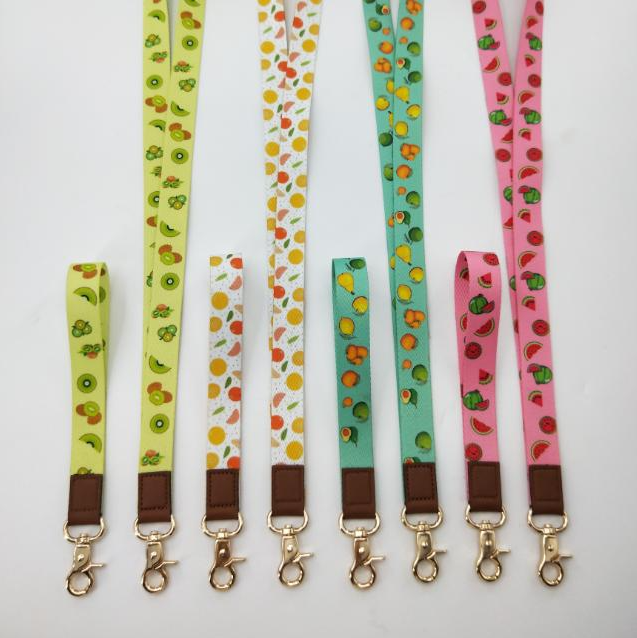

Original Manufacturer of Logo Lanyards: A Complete Sourcing Guide
2026-11-16
Most sourcing guides for logo lanyards stop at price, minimums, and lead time. But if you have ever received a batch with faded text, rough edges, or hardware that feels cheap, you already know the real question is who actually made the product. That is where DONGCHUANG comes in. As an original manufacturer, they give you a closer look at materials, printing, stitching, and attachment options before you commit. This guide covers what to check, which questions to ask, and how to source with fewer surprises.
Why Factory-Direct Lanyard Programs Rarely Cost What You Think
The per-unit price on a quote sheet rarely tells the whole story. Factory-direct programs often arrive with separate charges for plate making, pre-production samples, inland freight, export cartons, and customs clearance that never made it into the first conversation. Some suppliers trim the visible unit cost by switching to a lighter strap, reducing thread density, or skipping edge finishing, which leaves you with lanyards that fray after a few weeks of daily wear.
Order minimums also reshape the math. If the factory asks for a thousand pieces and your event only needs four hundred, the remaining stock becomes dead weight in a supply closet. The time difference is another quiet expense: a design tweak that takes a local vendor one afternoon might wait overnight for an overseas reply, and a two-week production delay can push you into expensive last-minute alternatives.
What really changes the final cost is the handling around the order, not the cord itself. Chasing approvals, managing inconsistent dye lots, replacing units with broken safety breaks, and dealing with uneven print registration all consume hours that never show up on the invoice. Once those hidden risks are included, a factory-direct price can end up costing more than a local program with higher upfront numbers and far fewer surprises.
What Spec Sheets Do Not Tell You About Daily Wear
Spec sheets love to list the weight of a watch as if it's something you feel only when you take it off. They rarely mention the way a case back warms against your skin after twenty minutes, or how a clasp digs into your wrist when you've been typing all afternoon. Daily wear isn't about grams and millimeters on a page; it's about the slow negotiation between metal and bone, the small adjustments you make without thinking, and the marks that appear because life doesn't sit still.
You won't find a column for the sound a bracelet makes when you rest your arm on a desk, or for how the bezel catches the edge of a jacket sleeve every time you reach for a door. These are the details that decide whether a watch stays on your wrist or ends up in a drawer after a month. A spec sheet can tell you the lug-to-lug distance, but it can't tell you if the crown will press into the back of your hand during a long drive. It can list the water resistance, but not whether the watch survives a week of dishwashing, gym sessions, and sudden rain without fogging or rattling.
The real story of daily wear is written in scuffs on the clasp, in the slight stretch of a leather strap, in the way a dial catches light at 8 a.m. versus 8 p.m. Spec sheets give you the skeleton; the living watch has a pulse you only notice when you stop comparing columns and start paying attention to the hours.
How Attachment Hardware Shifts Your Real Cost Per Unit
The quoted price of a fastener rarely survives contact with the assembly line. A bracket that needs three hands to hold in place, a clip that snaps only when pressed at an exact angle, or a screw that strips after two cycles each add seconds that never appear on the purchase order. Those seconds compound across thousands of units and quickly outweigh the per-piece savings of a cheaper component. When you calculate real cost per unit, the labor time spent positioning, adjusting, or reworking a bad connection belongs on the same line as material cost.
Attachment hardware also determines how often a line stops and how many finished units get pulled for repair. A loose ground stud or a connector that vibrates free changes cost through warranty claims, inspection bottlenecks, and unplanned teardown time. In many assemblies, the hardware is the least expensive part in the bag and the most expensive point of failure. Shifting to a self-aligning washer, a captive screw, or a lower-count fastener design can reduce touch time and scrap in ways that a bill-of-materials comparison never shows.
The shift becomes visible only when costing moves from piece price to total assembly burden. Two fasteners with identical specs may differ sharply in how they feed, seat, and stay seated. One may require a torque check at every station; another may allow a visual confirmation in passing. Over a production year, that difference is not marginal. It changes throughput, rework rates, and the number of spare parts kept near the line. Real cost per unit drops when attachment hardware stops being treated as a commodity line item and starts being evaluated for the labor, downtime, and risk it removes or introduces.
Getting Printable Areas Right Without Overdesigning
The whole point of a printable area is to stop content from kissing the edge of the page, but that does not mean every layout needs a custom grid of print breakpoints. Start with the physical limit: most desktop printers and PDF exporters are comfortable with a margin around 12 to 15 millimeters. From there, let the normal document flow do the work instead of forcing every block into a separate print rule.
Where things get messy is when a layout tries to predict every printer, paper size, and browser quirk. That usually adds fragile overrides that make the stylesheet harder to read without making the printout noticeably better. It helps to isolate only the elements that actually misbehave in a printed preview, such as wide tables, preformatted text, or images with fixed widths. Give those a max-width or a controlled break, and leave the rest alone.
A quick print preview at full scale will reveal more than a long list of edge-case rules. If the margins hold, the page numbers do not collide with body text, and nothing important gets clipped, the printable area is already doing its job. Resisting the urge to over-specify keeps the layout easier to change later and still produces clean paper output.
Quality Signals to Verify Before the First Shipment
Before clearing a first shipment, the most useful signal is whether the supplier actually built the batch under the same conditions as the approved sample. Ask for the first-piece approval records from the production run, not just the golden sample data. Compare the cavity numbers, machine settings, and raw material lot codes against what was signed off. A mismatch here usually shows up later as dimensional drift or color variation that no final inspection can fully catch.
Next, look at the measurement spread rather than the average. Ask for 10 to 20 consecutive readings from one cavity or one production line. If the values are tightly grouped, the process is stable. If they bounce around the tolerance limit but still pass, that is a warning. Also verify certificates for plating, heat treatment, or resin batches, and match the certificate numbers to the actual carton labels before the goods leave the factory.
Finally, have the supplier walk you through packaging and loading with photos or a short video before the container door closes. Check the label placement, barcode readability, desiccant placement, and stacking pattern. These details rarely appear on a standard inspection report, but they are exactly what causes receiving delays or repacking costs after arrival. If any of these signals is unclear, hold the shipment until the supplier clarifies it in writing.
Building a Reorder Pipeline Instead of a One-Time Buy
Most businesses treat replenishment as an afterthought—a customer runs out, remembers the product, and maybe places another order if the timing happens to align. That approach quietly leaves money on the table. A reorder pipeline, by contrast, turns that first purchase into the beginning of a predictable sequence. Instead of hoping a buyer returns, you design the next order while the current one is still in use. This shifts the relationship from a single transaction to an ongoing rhythm, which is far easier to sustain than a series of cold starts.
The mechanics matter less than the mindset. You are not simply adding a “buy again” button; you are mapping the natural consumption cycle of your product. If a customer typically finishes a supply in three weeks, that third week becomes the moment your reminder, refill offer, or subscription prompt shows up—not before they need it, and not long after they have already ordered elsewhere. Nailing that timing requires watching real purchase intervals, testing different nudges, and letting quiet signals like page revisits or support questions inform when someone is running low.
What often gets overlooked is how a reorder pipeline changes the economics of acquisition. A one-time buyer has to be won over again and again, but a customer in a well-built pipeline stays warm without repeated ad spend. The product itself becomes the retention tool. Over time, you can bundle refills with complementary items, offer a slight discount for locking in a cadence, or move high-frequency buyers toward a subscription that feels like convenience rather than commitment. The goal is not to pressure anyone into buying more—it is to make the next order so obvious and effortless that choosing a competitor feels like extra work.
FAQ
It means you are dealing with the factory that actually produces the lanyards instead of going through a trading company or middleman. That usually gives you better control over materials, production timelines, and pricing because there is no extra markup for an intermediary.
Ask for evidence like factory audit reports, a video of the production floor, or a business license that clearly covers manufacturing. A real factory can typically show live footage of weaving, dyeing, cutting, and assembly happening under one roof.
Many original manufacturers start around 100 to 500 pieces per design. Some will accept smaller runs if you stick with stock colors and standard attachments, but the unit price usually goes up quite a bit for low quantities.
Polyester is the most common because it holds dye well and works nicely for sublimation. Nylon gives a smoother, satin-like finish, while recycled PET or bamboo fiber are available when a brand wants a more eco-friendly option.
You can usually choose the print or weave method, strap width, length, safety breakaway, buckle type, badge clip, and even the surface texture. Some factories also offer individual poly bags, hang tags, or barcode labels as part of the packaging.
For standard polyester lanyards, production often takes about 7 to 15 business days after artwork approval. More complex options such as woven patterns, multiple thread colors, or special attachments can push lead times closer to 20 or 30 days.
Request a pre-production sample before the bulk run and keep it as a reference. Ask whether the factory performs pull tests on the clips and breakaway joints, and what their inspection process looks like for color accuracy, alignment, and loose threads.
The differences usually come from raw material quality, weaving density, printing method, attachment types, and whether assembly is automated or manual. A much lower quote can mean thinner straps, weaker clips, slower communication, or less consistent finishing.
Conclusion
Most buyers assume going factory-direct on logo lanyards strips out middlemen and lands the lowest price, but the math changes once you account for minimums, setup charges, freight, and the revisions that happen when a sample comes back looking nothing like the mockup. The spec sheet gives you width, material, and print method, yet it says little about how the polyester weave handles daily friction, sweat, or sunlight, or whether the edges start to fray after two months of badge pulling. Attachment hardware is another quiet cost driver: a cheap trigger clip or plastic buckle can fail first, and replacing it later wipes out any initial per-unit savings, so the real unit cost includes the failure rate, not just the invoice price.
Printable areas deserve more restraint than ambition. A logo forced too close to the edge or stretched across the full strap often turns blurry or scratches off faster, so it is smarter to let the loom do its job and keep the imprint modest. Before approving the first shipment, ask for a pre-production sample and check the stitching near the clip, the consistency of the repeat pattern, and whether the color matches under daylight instead of a phone screen. Once a dependable base is set, the real value is not in one large order but in a reorder pipeline with locked files, stored dies or screens, and agreed lead times, because the second order should be easier and cheaper than the first, not another round of surprises.
Contact Us
Contact Person: Bill Huang
Email: [email protected]
Tel/WhatsApp: 8613829102720
Website: https://www.dclanyard.com