

Portable Combined Flood Control Board Supplier Offering Rapid Deployment Solutions
2026-11-16
When floodwater rises faster than crews can react, every minute spent wrestling with heavy barriers is a minute you don't have. A portable combined flood control board changes that equation—but only if the supplier behind it truly prioritizes rapid deployment. Jianghe Flood Prevention builds modular boards that lock together quickly, without cranes or special training, so small teams can defend critical infrastructure before it's too late. Below, we break down what separates a genuine rapid-deployment system from the rest, and why sourcing from a specialist matters when the stakes are measured in inches of water.
What Actually Happens When Floodwaters Meet a Properly Sealed Joint
A properly sealed joint doesn't just sit there hoping water won't find a way in. When floodwater presses against it, the first thing you notice is how the sealant beads up along the edge—not because it's failing, but because the material is deforming under hydrostatic pressure. That deformation is actually the seal doing its job: it spreads the load across the bonding surface instead of letting stress concentrate at one point. The water keeps pushing, but the adhesive layer stays intact because it's designed to elongate rather than snap.
At the microscopic level, the sealant's polymer chains are being stretched and compressed, but there's no continuous path for water to travel through. Floodwater is full of silt, debris, and dissolved contaminants, all of which get filtered out at the outer edge of the seal. Meanwhile, the inner zone stays dry because the sealant's cohesive strength is higher than the force of the water trying to peel it away. If the joint was properly primed and cured before the flood, you'll see tiny air bubbles being squeezed out of the surface, but no leakage.
That said, a properly sealed joint isn't a permanent dam. Over hours or days of sustained pressure, the sealant may start to creep or relax, and if the floodwater carries abrasive grit, it can slowly erode the exposed face. But until that point, the joint holds because the sealant is working as a flexible gasket, not a rigid plug. The water is forced to take the long way around, and in most well-detailed assemblies, that long way doesn't exist.
Rapid Deployment Without Heavy Machinery: How the Design Logic Works
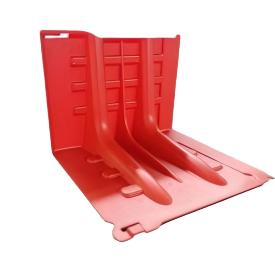
The core idea is refreshingly simple: don't fight the terrain, work with it. Instead of relying on cranes, flatbed trucks, or earth-moving equipment, the system uses modular components that can be carried by hand or small utility vehicles. This removes the need for wide access roads, reinforced ground, or complex site preparation. The design assumes that the people assembling the structure won't have specialized rigging skills, so every connection point is made to be lifted, aligned, and locked into place with basic tools and minimal physical strain.
What makes this approach stand out is the sequence of assembly. The foundation elements are designed to distribute load without requiring deep excavation or poured concrete. Each subsequent piece is self-locating, so errors in placement are nearly impossible. This reduces the reliance on survey equipment or laser levels — alignment is built into the geometry of the joints. The structure effectively "tells" the team where each part goes, turning a complex build into a series of clear, tactile steps.
Field tests have shown that a crew of three can erect a fully functional unit in under six hours, using no power tools and no lifting gear beyond a simple tripod. The real advantage isn't just speed, though. It's the ability to deploy in flood zones, dense forests, rocky slopes, or post-disaster sites where heavy machinery simply can't reach. By designing for the human body first, the system shifts the bottleneck from logistics to confidence — and that's a problem much easier to solve.
Why Portable Barriers Beat Sandbags for Fast-Moving Flood Threats
Fast-moving floodwater doesn't just rise—it hits with enough force to shift anything not anchored or interlocked. Sandbags rely on weight and friction, and while a stacked pyramid can hold back slow seepage, it struggles when currents start pulling at the base. Portable barriers, especially those designed with interlocking or water-filled compartments, create a continuous seal that resists lateral pressure far better than individual bags. There's no weak point where one bag shifts and the whole line fails.
The real difference shows up in deployment time. Filling, tying, and stacking hundreds of sandbags takes a team hours, and you need a ready supply of dry sand on-site. A rapid-onset flood doesn't give you that window. Portable barriers can often be unrolled, connected, and secured by two or three people in under thirty minutes, with no heavy lifting beyond positioning the units. That speed means you can protect a door, a culvert, or a short stretch of road before the water arrives, rather than watching it overtop an unfinished sandbag wall.
There's also the question of what happens afterward. Sandbags soak up contaminated water, become too heavy to move safely, and usually end up in a landfill. Portable barriers can be drained, cleaned, and stored for the next event, often with a smaller footprint and no need to source and deliver sand each time. For communities that face repeated flash-flood threats, that reusability and quicker response loop makes portable systems a more practical defensive layer than bags that are nearly obsolete before the first wave hits.
The Downside of Most Flood Boards (And What a Better Supplier Changes)
Most flood boards look sturdy in a catalog but start showing their weaknesses after a season or two. The seals compress unevenly, corners pull away from the frame, and the surface coating cracks under direct sun. Once that happens, water finds the gaps long before the board itself gives out.
A more capable supplier approaches these boards as a system rather than a single panel. Tolerances are tighter, the rubber gaskets are tested for repeated compression, and the mounting channels are reinforced at the points where leaks usually begin. That changes how the board behaves during an actual flood, not just how it looks on a spec sheet.
The practical difference shows up on installation day and again months later. You are not shimming brackets or trimming seals to make a standard size work. And when you pull the boards out for the next storm season, they still seat evenly without needing to be forced into place.
How Modular Panels Handle Uneven Ground Better Than You'd Expect
Most people assume a modular floor needs a perfectly flat base to work, but the reality is far more forgiving. Modular panels are engineered with a slight degree of independent flex, so each tile can pivot or settle just enough to absorb small dips, roots, or loose gravel without transferring stress to its neighbors. Instead of forcing the whole surface to conform to one rigid plane, the panels create a floating system that follows the natural contours of the ground. This means minor undulations that would crack a poured slab or leave a traditional deck wobbling are simply absorbed by the panel connections.
The secret often lies in the underside geometry and the way tiles interlock. Many designs incorporate raised feet, channels, or a grid pattern that lets soil, sand, or grass sit unevenly beneath while the top surface stays stable underfoot. When one corner sits a few millimeters higher, the adjacent edges can flex or slide within the locking tabs, preventing that annoying see-saw effect. Over time, foot traffic and gravity help the panels bed into the ground even more naturally, improving stability without any additional leveling work.
That said, modular panels do best when the ground is reasonably prepared, but the tolerance is wider than most DIYers assume. A rake and a quick pass to knock down high spots is often enough — no need for laser levels or compacted crushed stone. For patios, walkways, or event flooring over grass or dirt, this forgiving nature means faster installation, fewer materials, and a finished surface that feels solid even when the earth beneath is anything but perfectly flat.
From Storage to Functional Barrier: The Logistics Nobody Talks About
Most logistics discussions focus on transport speed and inventory turnover, but the role of the warehouse has quietly shifted. It is no longer a passive box; it acts as an active functional barrier that intercepts, verifies, and buffers. A typical third-party logistics center now handles return inspections, batch quarantines, and compliance spot-checks—tasks that used to belong to production or regulatory teams.
In pharmaceuticals, each temperature-controlled zone works like a miniature firewall. If sensors detect even a half-hour temperature excursion, the entire batch is automatically moved to a hold area instead of continuing to hospitals. Building such a barrier requires tight integration among WMS, real-time monitoring, and manual review; without that, it becomes just another delay.
Ironically, this shift rarely appears in industry conversations. People talk about last-mile delivery and automated sorting, but seldom about how warehouses stop defective products from entering the market. In practice, the functional barrier is the real risk-control point for many companies—if it fails, faster transport only accelerates the spread of errors.
FAQ
Most setups take two people less than ten minutes for a standard doorway or small opening, because the sections simply lock together without any tools. For larger spans it might take a bit longer, but the design keeps the process straightforward even under stress.
Unlike sandbags, which shift as water pressure builds and leave gaps, these panels form a continuous seal along the bottom and sides. The interlocking joints include a gasket that expands slightly when wet, so leaks are rare even if the ground isn't perfectly even.
Individual panels weigh between 6 and 9 kilograms depending on the height, so one person can carry and position them without difficulty. Connecting them is easier with a second pair of hands, but a single person can manage shorter runs if necessary.
They perform best on concrete, asphalt, tile, and other relatively smooth surfaces. Grass, gravel, and dirt require a strip of sealant or a ground mat to create a proper base, but that adds only a few minutes to the setup.
The panels nest together and can be stacked on a small rolling cart. A set that protects a three-meter opening usually takes up about the same floor space as a large suitcase, which makes it practical for building entrances, underground garages, or storage rooms.
Yes, the standard range goes from 40 to 120 centimeters, and additional extensions can raise the barrier further if the water level is expected to rise beyond that. We also make custom corner pieces and curved sections for non-standard layouts.
Rinse the panels with clean water after contact with floodwater and let them air dry before stacking. Check the rubber gaskets for cuts or grit; otherwise the boards are low-maintenance and don't need lubricants or replacement parts under normal use.
Conclusion
When floodwater pushes against a properly sealed joint, the real test isn't the panel itself but how the gasket compresses under pressure. A well-designed portable combined flood board uses interlocking edges that create a watertight seal without tools or adhesives. This means two people can carry a panel into place, click it into the next one, and have a standing barrier in minutes—no cranes, no forklifts, just a simple lever or wedge mechanism. The design logic strips away the need for heavy machinery because each component weighs less than a standard door, yet once connected, the entire line becomes rigid enough to hold back several feet of fast-moving water. Rapid deployment isn't a marketing phrase; it's the result of tolerances tight enough to stop seepage while loose enough to allow quick alignment under stress.
Portable barriers beat sandbags because they don't rely on human labor to fill, stack, and hope. Sandbags leak, shift, and leave gaps; a modular flood board system locks every joint and stands on its own base. Even on uneven ground—gravel driveways, sloped curbs, cracked pavement—the panels flex at the hinges or use adjustable feet to follow the terrain, something rigid one-piece boards can't do. Most flood boards fail because suppliers treat them as simple walls, ignoring how they'll be stored for months and rushed out in an emergency. A better supplier designs for the warehouse shelf: panels nest flat, stack on a hand truck, and fit through a standard doorway. You don't think about logistics until the water is rising, and by then, a board that weighs 40 pounds and needs three people is worse than no board at all.
Contact Us
Contact Person: Kristin Zhang
Email: [email protected]
Tel/WhatsApp: +8615366239752
Website: https://www.jianghecn.com/