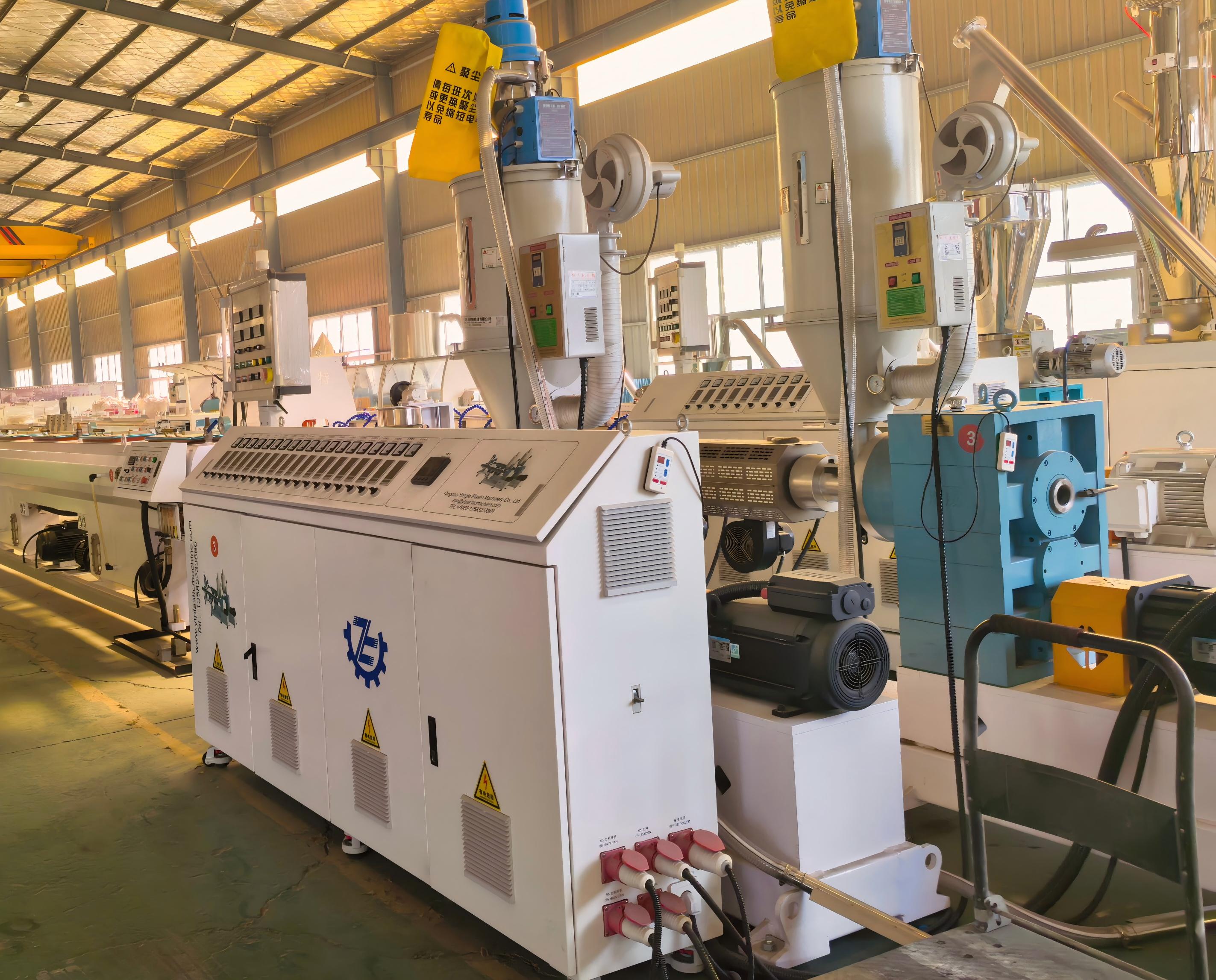

PPR Pipe Machine Supplier: Your Trusted Partner for Advanced Production Lines
2026-07-06
In the competitive world of plastic pipe manufacturing, choosing the right machinery partner can make or break your success. Yongte brings decades of engineering expertise to PPR pipe production lines, blending precision, speed, and reliability in ways that generic suppliers simply can't match. Whether you're scaling up or entering new markets, the technology behind your pipes defines your product quality. Let’s explore what sets a truly advanced production line apart—and why industry leaders consistently turn to Yongte for solutions that go beyond the ordinary.
Engineering Tomorrow’s PPR Pipes Today
We don’t wait for the future to arrive—we build it into every PPR pipe we produce. By rethinking polymer structures at the molecular level, our pipes already meet standards that the industry won’t mandate for another decade. That means higher temperature resistance, lower thermal expansion, and a lifespan that quietly outlasts the buildings they serve.
Every weld, every layer, every extrusion parameter is calibrated using predictive models that simulate decades of stress in a matter of hours. This lets us spot failure points before they appear in the real world, so the pipe arriving on your site isn’t just a product—it’s a solution that’s already lived through tomorrow’s worst-case scenarios.
While others chase code minimums, we’re busy making those codes obsolete. Our fittings lock with a precision that slashes installation time, yet require no compromise on long-term integrity. It’s not about being trendy—it’s about handing installers and engineers a material so evolved that “tomorrow” feels like it’s already here, quietly moving water through walls without a second thought.
Where Reliability Meets Production Speed
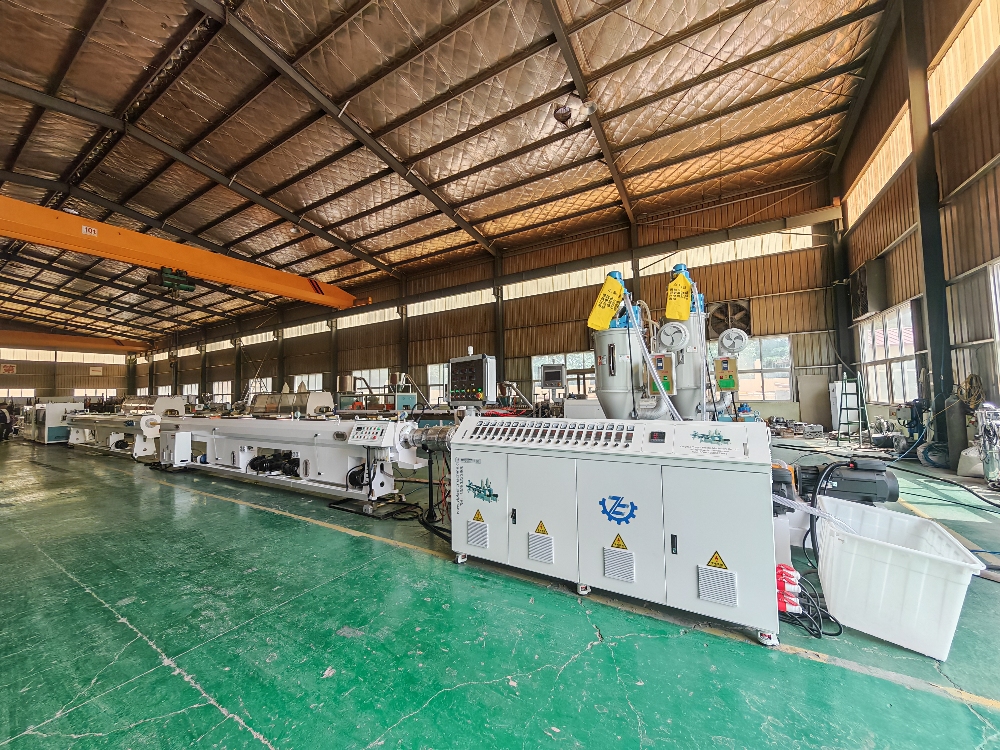
In high‑stakes manufacturing environments, there’s a persistent myth that speed sacrifices precision. We’ve engineered our systems to disprove that daily. Every component we ship is backed by real‑time telemetry that tracks wear, vibration, and thermal drift—flagging anomalies before they become failures. This isn’t just preventative; it’s predictive. By embedding reliability into the rhythm of the line itself, we’ve helped partners cut unplanned downtime by over forty percent while pushing throughput limits.
The secret lies in how our platforms handle variability. Traditional setups force you to choose between a rigidly tuned quick line and a flexible one that creeps along. Our adaptive control architecture lets a single line switch between product variants in minutes, not hours, without recalibration runs. Self-levelling conveyors, torque‑compensating spindles, and AI‑driven quality gates make real‑time adjustments so the line never has to pause for perfection—it’s already built in.
Customers often tell us their previous machinery felt like a sprint with a fragile baton; ours feels like a steady, unbreakable stride. That’s because the entire ecosystem—from servo motors to software stacks—is designed to degrade gracefully. Even under surge demand, critical assets run within safe envelopes, and automated load balancing prevents the starvations and pile‑ups that kill both speed and trust. The result is a production cadence that operators can actually depend on, shift after shift.
Custom-Built Lines for Every Manufacturing Challenge
No two production floors are alike, and off-the-shelf equipment rarely addresses the subtle complexities of specialized processes. We focus on engineering entire lines from the ground up, factoring in everything from material behavior to facility layout. The goal isn’t just to automate—it’s to embed the exact sequence of steps, controls, and quality checks that your unique product demands.
Our approach starts with a deep dive into your operational bottlenecks, target throughput, and compliance requirements. Instead of forcing a pre-existing configuration onto your workflow, we blend proven mechanical modules with custom control logic and tooling. This hybrid strategy keeps lead times manageable while delivering a line that handles variations in raw materials, minimizes changeover downtime, and scales with your growth.
Ultimately, what you receive is a cohesive production ecosystem—complete with integrated validation and real-time data feedback loops. Every sensor placement, motion profile, and ergonomic consideration is documented and trained on, ensuring your team can run at full autonomy. The result is a line that doesn’t just meet a spec sheet but becomes the benchmark for how your product should be made.
The Quiet Power Behind Efficient Pipe Production
In the world of industrial manufacturing, the real efficiency of pipe production often comes down to forces that rarely grab headlines. Instead of flashy breakthroughs, it’s the subtle orchestration of material science, precision engineering, and process control that quietly pushes output higher while maintaining consistency. Small adjustments in extrusion temperatures, incremental improvements in die design, and the meticulous monitoring of cooling rates all add up to a production line that hums along with minimal waste and maximum reliability.
Behind the scenes, the steady hand of automation plays a role that’s easy to overlook. Modern pipe mills lean on adaptive feedback loops that adjust parameters in real time, correcting for variations in raw material properties or environmental conditions before they become defects. This silent vigilance ensures that every meter of pipe meets exacting standards without constant human intervention, freeing up skilled workers to focus on optimization rather than troubleshooting. It’s a partnership between machine consistency and human expertise that turns complexity into a smooth, repeatable process.
Ultimately, the quiet power lies in how these elements intertwine—material quality, machine precision, and data-driven insight merging into a system that rarely calls attention to itself. When a plant achieves this level of seamless integration, the result isn’t just higher throughput; it’s a production environment where downtime becomes an exception, scrap rates plummet, and quality becomes almost a given. That’s the kind of efficiency that doesn’t need to shout, because it proves itself in every continuous coil of perfectly formed pipe.
Seamless Integration, From Granules to Pipes
The journey starts with raw plastic granules, carefully selected and blended to meet precise chemical and mechanical requirements. These tiny pellets are fed into the production line, where controlled heat and pressure transform them into a uniform melt. Every stage is monitored to maintain consistency, ensuring the material properties remain stable as they move from simple pellets to the beginning of a robust piping system.
As the molten material takes shape, extrusion and molding processes turn it into pipes of varying diameters and wall thicknesses. Advanced calibration tools guarantee dimensional accuracy, while inline testing verifies structural integrity without interrupting the flow. This cohesive workflow means the pipe emerges ready for immediate use, with its heritage from granule to finished product fully traceable and optimized for real-world demands.
The integration doesn't stop at the factory floor—it extends to how these pipes connect on site. The same attention to detail that guided the granule formulation ensures that joining methods, whether welding or mechanical coupling, create leak-free seals. From raw material to installed network, the seamless transition eliminates weak points, delivering a system where every component works in harmony, backed by a production lineage that leaves nothing to chance.
Your Global Partner in PPR Manufacturing Excellence
We don’t just manufacture PPR pipes and fittings — we build lasting partnerships on a global scale. From raw material sourcing to final delivery, every step is guided by a commitment to precision, consistency, and long-term reliability. Our manufacturing capabilities are designed to meet the rigorous demands of diverse markets, ensuring that wherever you are, you receive products that perform seamlessly in any plumbing or industrial system.
What sets us apart is a culture of continuous improvement and deep collaboration. We work closely with engineers, contractors, and distributors to tailor solutions that go beyond standard specifications. By combining advanced production technology with hands-on expertise, we turn complex requirements into practical, high-quality outcomes — making us more than a supplier, but a true global partner in PPR excellence.
FAQ
A PPR pipe machine manufactures pipes from polypropylene random copolymer, a material prized for its durability and heat resistance. These pipes are widely used in hot and cold water systems, making the machine a cornerstone for reliable plumbing infrastructures.
Look for a supplier with a proven track record, clear client testimonials, and a willingness to share case studies. A trustworthy partner will also offer transparent communication and adaptable solutions rather than pushing a one-size-fits-all product.
Advanced lines integrate high automation, precise temperature control, and real-time quality monitoring. They reduce material waste and energy use while ensuring consistent pipe dimensions and seamless surface finishes.
Choosing based solely on price often leads to hidden costs like frequent breakdowns, limited support, and inefficient extrusion. A valued partner invests in the long-term success of your operation through reliable machinery and responsive service.
Yes, the right supplier treats every partnership as unique. They should assess your space, capacity targets, and product range—then propose a configured line that fits seamlessly into your existing workflow.
Beyond supplying equipment, a dedicated partner provides operator training, preventive maintenance guidance, and quick troubleshooting. This ongoing collaboration minimizes downtime and keeps your lines running at peak performance.
Expect prompt technical support, readily available spare parts, and periodic check-ins to optimize performance. The best suppliers act as an extension of your team, committed to resolving issues before they escalate.
PPR is resistant to scaling, corrosion, and chemical leaching, making it safe for drinking water. The machine ensures quality through controlled melting and cooling phases, which lock in the material's inherent advantages without compromising structural integrity.
Conclusion
As a PPR pipe machine supplier, we embed tomorrow’s engineering into every line we build. Our systems don’t just promise reliability—they deliver it at production speeds that redefine throughput without sacrificing precision. The quiet hum of our equipment masks the intense efficiency within, where every component works in harmony to turn raw polypropylene into perfect piping with minimal waste and downtime. Advanced control systems monitor every stage, adjusting parameters in real time to maintain consistent quality, so you can trust that each meter of pipe meets rigorous standards day after day.
No two production floors face the same challenges. That’s why we shape our machines to fit your reality, not the other way around. From the moment granules enter the system to the final pipe cutting, seamless integration ensures a smooth, automated workflow. When you need ongoing support, our global reach means we’re never far away, acting as a true partner determined to elevate your manufacturing capabilities to new standards of excellence. Whether retrofitting an existing line or building from scratch, our expertise turns your vision into a robust, scalable reality. Our engineers work alongside your team from initial design through installation and beyond, ensuring that your production line evolves with your ambitions. With us, you gain more than machinery—you gain a long-term alliance dedicated to your success.
Contact Us
Contact Person: Ms Qin
Email: [email protected]
Tel/WhatsApp: 8613583233866
Website: https://www.yongteplast.com