

Professional Piezo Inkjet Printer: A Comprehensive Guide to High-Precision Printing Technology
2026-05-19
Precision in printing isn't just a luxury—it's the backbone of modern manufacturing, packaging, and design. Yet, achieving microscopic accuracy without sacrificing speed or reliability remains a challenge. Enter piezo inkjet technology, a game-changer that harnesses electricity to control ink droplets with breathtaking finesse. From vibrant labels to intricate electronics, its impact is everywhere. But not all systems are equal. That's where Danmajet steps in—redefining what professional piezo printing can achieve, one droplet at a time. Ready to explore the hidden world behind every flawless print? Let's dive into the tech that's quietly shaping tomorrow.
Precision Without Compromise: Inside Piezo Inkjet Mechanics
At the heart of every high-resolution print lies a deceptively simple principle: a microscopic crystal flexes under voltage, and that tiny movement sends ink flying with pinpoint accuracy. This is the piezo actuator at work, reshaping its dimensions in response to an electric field. Unlike thermal alternatives that boil ink to form bubbles, piezo elements physically deform, giving engineers direct control over droplet size, velocity, and trajectory. The result is a silent, reliable delivery system that can place picoliter-sized droplets within microns of their target, even on uneven surfaces or heat-sensitive materials.
What truly sets piezo technology apart is its nuanced handling of the ink itself. Because the actuation is mechanical and does not rely on heat, the ink chemistry remains stable over time—no evaporation, no thermal degradation. This opens the door to a wider palette of functional fluids: UV-curable resins, conductive nanoparticle suspensions, biological reagents, and high-viscosity coatings all flow predictably. The waveform driving each nozzle can be tuned, adjusting the squeeze-and-release cycle to match the ink’s rheology. Some printers even use multiple pulses to agitate particles, preventing sedimentation right before ejection—a quiet dance of physics that keeps every drop consistent.
But precision isn’t just about the nozzle; it’s a system-wide conversation. Modern printheads incorporate thousands of independent channels, each monitored in real time for misdirected jets or missing dots. Automated maintenance routines pulse the meniscus, clear blockages, and calibrate alignment without interrupting production. In industrial settings, this translates to miles of flawless textile printing or millions of identical circuit-board patterns, all sustained by feedback loops that detect and correct errors on the fly. The pursuit of uncompromising accuracy thus becomes a partnership between clever material science and relentless feedback—an invisible symphony that turns digital intent into physical reality, drop by drop.
The Secret Life of Droplets: From Piezo Pulse to Print
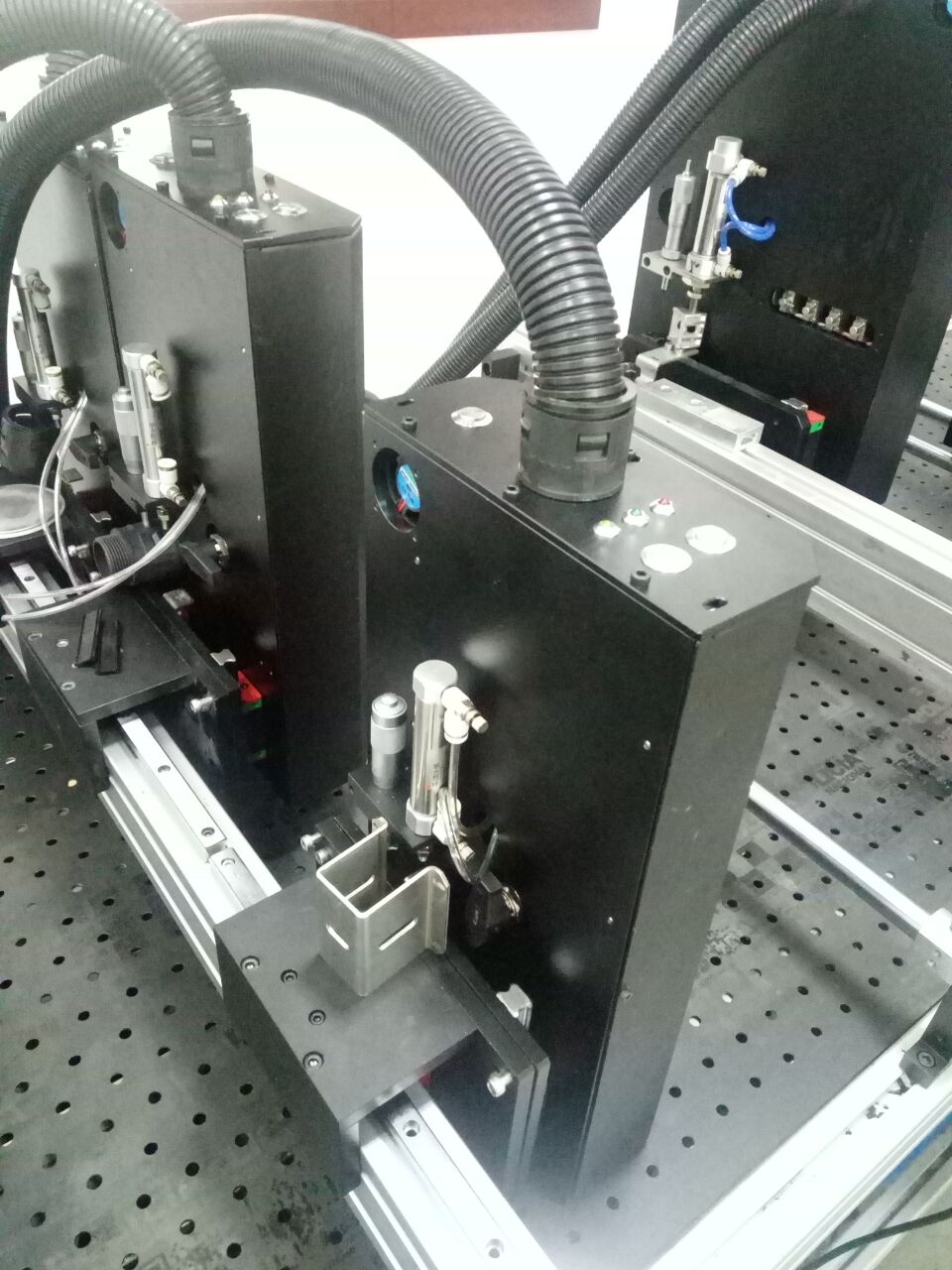
Inside the printhead, a crystal bends in response to an electric signal. That tiny flex creates a pressure wave, pushing ink through a microscopic nozzle. It’s a near-invisible ballet—voltage spikes becoming motion, then shape, then flight. Each droplet forms not by chance but by precise timing, with the pulse tuned to control its volume and velocity. What emerges is a liquid projectile barely wider than a human hair, yet its trajectory is calculated down to the microsecond.
That single droplet, once expelled, becomes part of a larger choreography. Thousands are jettisoned every second, merging on paper or fabric before they dry. The result might be a crisp line of text, a splash of color in a photograph, or a conductive path on a circuit board. Beneath every printed dot lies this unseen cycle: a crystal vibrating, a chamber emptying, a droplet flying. The printed page is just the final whisper of a process that begins with a pulse and ends with permanence.
Best-Kept Industry Applications of High-Precision Piezo Printing
High-precision piezo printing quietly revolutionizes fields that demand micron-level accuracy and material flexibility. One of its most guarded applications is in the fabrication of microfluidic chips, where piezoelectric inkjet heads dispense conductive inks and bio-inks to create intricate lab-on-a-chip designs. These devices, used for point-of-care diagnostics and drug screening, rely on piezo-driven droplets to form channels finer than a human hair, without the harsh chemical etching traditional methods require.
Another hidden gem lies in the production of customized optical elements. Piezo printing can deposit tiny droplets of UV-curable polymers onto lenses or waveguides, shaping light-manipulating microstructures that correct aberrations or enhance sensor performance. This additive approach slashes waste and enables geometries impossible to achieve through grinding or molding, all while maintaining exact refractive properties—making it a favorite for secretive defense optics and high-end camera modules.
In the realm of electronics repair, piezo printing is breathing new life into damaged circuits. Technicians can precisely jet conductive trace materials onto cracked PCBs or broken connectors, restoring connectivity without heat that would warp sensitive boards. This niche rescue technique, often shielded from public view, saves millions in scrapped prototypes and retrofits legacy equipment in aerospace and industrial controls, bypassing the logistical nightmare of full replacements.
Choosing Your Piezo Printer: What Specs Actually Matter
Not all piezo printers are created equal, and chasing the highest DPI number on a spec sheet rarely tells the full story. A more practical starting point is to look at minimum feature size and layer thickness—the real-world resolution you can expect when printing fine details on uneven surfaces. If you're printing on textured materials or need to replicate delicate patterns without clogging, the nozzle diameter and jetting frequency matter just as much as the ink's viscosity range. Machines that claim ultra-high resolution but can't maintain consistent drop placement across the entire bed will only lead to frustration.
Equally important are the printer's waveform control and the software behind it. A piezo head's ability to fine-tune pulse shape directly affects how well it handles different fluids, especially those with higher particle loads or unusual rheology. Without granular control over meniscus pressure and temperature compensation, you'll waste precious time tweaking settings between material batches. Pay attention to whether the printer supports open waveform libraries or locks you into proprietary inks—flexibility here often separates production-ready systems from lab toys.
Finally, don't underestimate the build platform and maintenance design. Fight the urge to fixate on speed alone; a printer with a vacuum chuck that securely holds thin substrates might save you more time than one with faster traversal but constant realignment. Check how easily you can access the printhead for flushing and purging, and whether the capping station design actually prevents nozzle drying during idle periods. In the long run, uptime and ease of material changeover often outweigh raw resolution numbers that look good in brochures but rarely materialize in daily use.
Solving the Ink Equation: Fluids That Flow Perfectly
The quest for the perfect ink has perplexed inventors since the first quill met parchment. At its heart lies a delicate balance of viscosity, surface tension, and particle suspension—a trio that must harmonize to deliver a smooth, uninterrupted line. Too thick, and the nib drags; too thin, and the page becomes a blotchy mess. Early fountain pen pioneers learned this the hard way, tinkering with gum arabic and iron gall to find a concoction that would glide without clogging.
Modern chemistry has turned this trial-and-error into a precise dance of molecules. Engineers now model ink behavior using the Navier-Stokes equations, factoring in shear thinning and capillary action to predict how a fluid wets a nib, forms a meniscus, and transfers to paper. The result is inks that can start on command after days of neglect, resist feathering on cheap paper, and even change color as they dry. Silicone surfactants and nano-pigments play a quiet but crucial role, allowing inks to behave like an extension of the writer’s hand.
Yet solving the ink equation isn’t just about utility—it’s an aesthetic pursuit. Think of calligraphers who demand a flow that responds to pressure with hairline precision, or illustrators who layer washes without blooming. Each specialty requires a tailored solution, from high-solid fountain pen inks that shade dramatically to fast-drying rollerball formulas. The perfect flow is never a universal constant; it’s a moving target defined by the tool, the surface, and the creator’s intent, making every successful formulation a small triumph of fluid dynamics.
Future-Proofing Your Prints: Maintenance and Longevity
Even the finest print can fade or deteriorate if left unprotected, so start by considering where and how you display it. Aim for a spot away from direct sunlight and harsh artificial light, as UV rays are the number one culprit behind yellowing and fading. If you can’t avoid bright areas, UV-filtering glass or acrylic glazing is a small investment that makes a huge difference over the years. Keep an eye on humidity too—consistently high moisture can lead to warping or mold, while overly dry air may cause brittleness. A stable environment, ideally between 40–50% relative humidity, helps your prints stay crisp and vibrant.
The materials you introduce during framing play a major role in long-term preservation. Acid-free mat boards and backing boards are non-negotiable; regular cardboard or wood pulp releases acids that will slowly eat away at the paper and discolour inks. When it comes to adhesives, skip the tape and opt for archival-quality corners or Japanese paper hinges—they hold securely without leaving a chemical stain. And don’t overlook the frame itself: sealed wooden frames or metal frames with a sturdy backing help block dust and pollutants that can settle into the print surface over time.
Preventive care goes beyond framing. Dust gently with a soft, dry microfiber cloth, working from the centre outward to avoid pushing debris under the frame’s edge. If your print is stored rather than displayed, use acid-free sleeves or portfolios and keep them flat in a cool, dark place. For limited editions or sentimental pieces, consider having a professional conservator inspect them every few years. A little attention now spares you from costly restoration later and ensures your prints remain as striking as the day you first saw them.
FAQ
It uses piezoelectric crystals to precisely control ink droplet ejection, unlike thermal inkjets that heat ink. This allows for more accurate droplet placement, a wider range of compatible inks, and longer printhead life, making it suitable for industrial and high-end applications.
A voltage is applied to a piezoelectric crystal, causing it to change shape. This deformation creates a pressure pulse that forces a tiny ink droplet out of the nozzle. The process is fast, repeatable, and offers excellent control over droplet size and velocity.
Solvent, UV-curable, aqueous, and even conductive or ceramic inks are all viable. This versatility means the same printing platform can produce everything from outdoor signage to circuit boards, expanding its utility beyond traditional paper printing.
Electronics manufacturing for printed circuits, textile printing for direct-to-fabric designs, packaging for custom corrugated boxes, and biomedical fields for lab-on-a-chip devices all leverage the precision and material flexibility of piezo inkjet.
Regular nozzle purging and wiping prevent clogs, ink circulation systems avoid sedimentation, and keeping the printer in a dust-free, temperature-controlled room reduces failures. Unlike thermal heads, these rarely burn out, but neglected maintenance still causes costly downtime.
While dry toner or thermal inkjet can hit similar DPI numbers, piezo's variable droplet technology and ability to lay down fine, consistent dots often result in smoother gradients and sharper edges, especially on textured or non-porous substrates where ink spread is a challenge.
Consider native resolution, droplet size range, supported ink types, substrate handling (rigid vs. roll), and the manufacturer's track record for service. A machine with modular printheads makes upgrades easier, and software integration matters just as much as hardware specs.
Conclusion
Professional piezo inkjet printing represents a leap in precision deposition, built on a foundation of mechanically controlled droplet ejection. Unlike thermal alternatives, piezo printheads use voltage-induced deformation of ceramic elements to push ink through micron-sized nozzles with exact timing. This pulse-to-drop dance occurs thousands of times per second, yielding droplets as small as a picoliter that land with pinpoint accuracy—no satellites, no splatter. But mechanics alone don’t guarantee perfection; the ink must match the machine’s rhythm. Viscosity, surface tension, and particle size are dialed in to ensure jetting reliability and sharp dot placement, turning fluid dynamics into a controlled art.
Beyond the physics, these printers have carved a niche in industries where ordinary marking fails. From printing conductive traces on flexible electronics to creating textured surfaces on luxury packaging, their ability to deposit functional fluids without contact opens doors that thermal or bulk methods can’t. Choosing the right system, however, demands looking past glossy brochures: native resolution, drop volume variability, and material compatibility are what separate capable machines from disappointments. And once integrated, proactive maintenance—like regular nozzle purging and environmental control—keeps performance consistent for years, ensuring the initial investment continues to yield precise, repeatable results.
Contact Us
Contact Person: Jacky
Email: [email protected]
Tel/WhatsApp: 086 15000607053
Website: https://www.danmajet.com