

RFID Inlay Company: Innovative Solutions for Asset Tracking and Inventory Management
2026-05-12
Managing assets and inventory with precision is a constant battle for businesses—lost items, miscounts, and delayed data disrupt operations. But what if there’s a smarter way to keep everything in check? At OSRFID, our RFID inlays are engineered to transform how you track and control resources, delivering accuracy where it counts most. This blog explores the technologies reshaping asset management and how our solutions turn everyday chaos into seamless efficiency.
Tailored RFID Inlays for Precise Asset Monitoring
Every asset tracking scenario brings its own set of challenges—varying surface materials, read distances, and environmental conditions. Off-the-shelf RFID inlays rarely fit the bill when precision is non-negotiable. That's where tailored inlays step in: by adjusting antenna geometry, chip sensitivity, and substrate composition, each design can overcome specific hurdles like metal proximity, dense tag populations, or curved surfaces. The result is a read rate and data accuracy that generic tags simply can't match.
The true value of a custom inlay becomes evident in real-world use. Consider a medical facility tracking high-value instruments through sterilization cycles—an inlay fine-tuned to withstand heat and moisture while delivering flawless reads on stainless steel trays. Or a construction site where tags embedded in rugged housings must answer reliably from deep within piles of grit and steel. Such scenarios demand more than just a one-size-fits-all antenna; they require an intentional blend of materials and RF tuning. With a tailored approach, you gain not only visibility but a dependable stream of asset intelligence that keeps operations flowing smoothly.
Streamlining Inventory Flow with Advanced RFID Technology
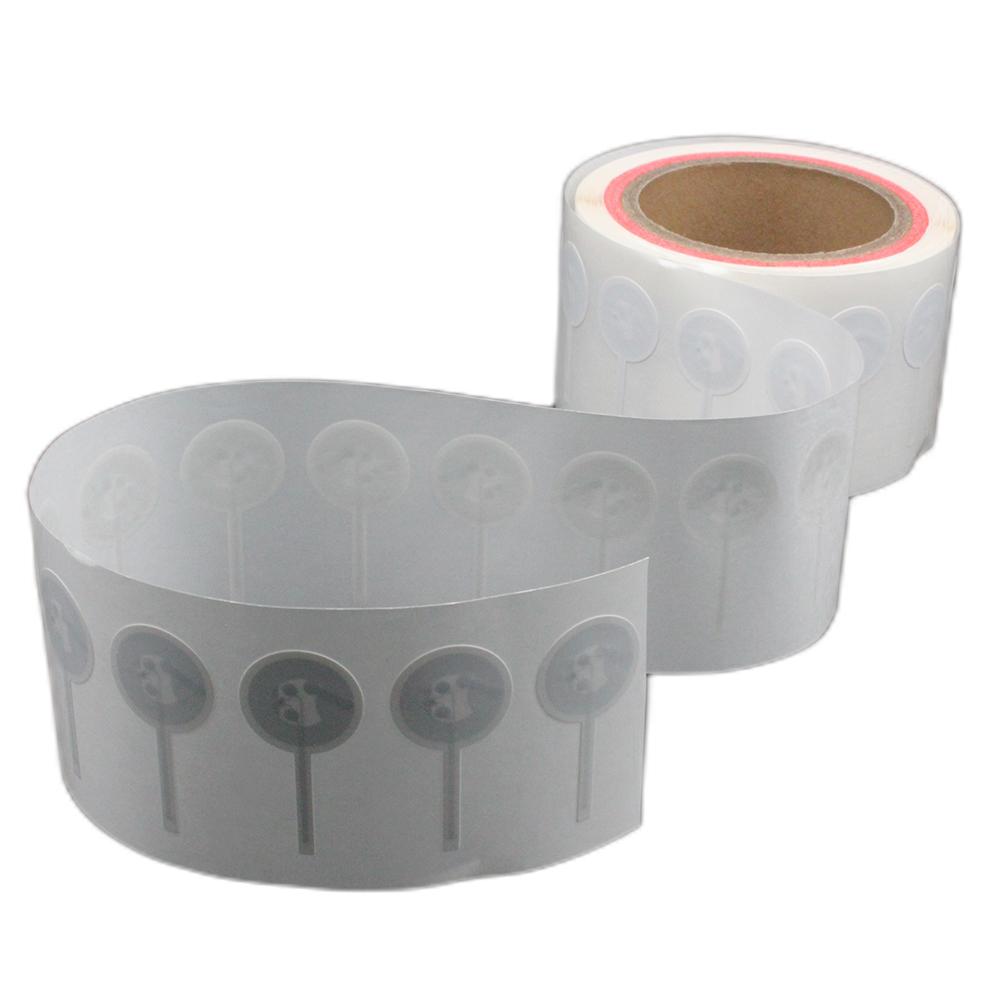
Every warehouse manager knows the drill: mismatched counts, hours lost to manual scans, and that sinking feeling when a shipment goes off track. Advanced RFID technology flips this script by offering real-time visibility that turns chaotic stockrooms into orderly, predictable systems. Instead of relying on line-of-sight barcode guns, passive or active tags communicate with readers positioned at key choke points—loading docks, conveyor junctions, or storage aisles—capturing data on the move. The result is a continuous stream of location and status information that lets you see exactly where every item sits, not just where it should be. This constant pulse on inventory removes the guesswork from replenishment cycles and frees up staff to tackle high-value tasks rather than hunting for pallets.
What sets modern RFID apart isn’t just its speed, but the granularity it brings to decision-making. With item-level tagging, you’re no longer treating cases as anonymous units; each piece carries its own identity, from manufacture date to last-moved timestamp. Integrate that data with a warehouse management system, and the flow practically choreographs itself—directing hot picks to forward areas, routing slow-movers to reserve, and even triggering automatic reorder points when stock dips. It’s a shift from reactive firefighting to proactive orchestration. The technology adapts to your facility’s rhythm rather than forcing you into rigid processes, absorbing spikes in volume without the usual scramble for temporary labor or expedited shipments.
Adopting RFID isn’t a plug-and-play fix; it’s a rethink of how inventory moves through space and time. The upfront work—mapping read points, tuning antennas for metal or liquid environments, training teams—pays back quietly in the everyday absence of errors. Orders go out accurate the first time, cycle counts shrink from weekly disruptions to background operations, and shrinkage becomes a measurable variance rather than an annual surprise. Over time, the digital trail reveals patterns no spreadsheet ever could: which supplier partnerships create the most friction, where layout bottlenecks live, and how seasonal swings really behave. That kind of insight is what turns a simple tracking tool into a competitive advantage.
Durable Inlays Built for Harsh Industrial Environments
Industrial settings push equipment to extremes—temperature swings, constant vibration, moisture, and chemical exposure quickly degrade ordinary identifiers. Our inlays are engineered from the ground up to resist these challenges, maintaining crisp readability and consistent performance even when caked in grime or subjected to heavy washdowns. They don’t just survive harsh conditions; they operate reliably within them, eliminating the frequent replacement cycles that slow down productivity.
The secret lies in the fusion of rugged substrate materials and specialized encapsulation. We use high-bond-strength adhesives and face stocks that shrug off abrasion, oils, and solvents, while the embedded chip and antenna are shielded by a flexible yet impermeable barrier. This construction prevents delamination and signal drift, ensuring that each inlay stays firmly attached and transmits data accurately regardless of the surface—be it curved metal, rough plastic, or textured composite.
From automated assembly lines to outdoor logistics hubs, these inlays become the backbone of traceability in places where failure isn’t an option. They endure repeated impact, UV exposure, and pressure extremes without losing integrity, giving maintenance teams one less thing to worry about. By choosing components built specifically for unforgiving environments, manufacturers avoid silent data gaps that lead to costly inventory errors and downtime.
Seamless Integration with Existing Asset Management Systems
Bringing a new asset tracking solution into your existing ecosystem shouldn’t feel like open-heart surgery. We built this around the idea that your current setup—however messy or slick—already holds value, and the last thing you need is a forced migration that puts data at risk or grinds daily ops to a halt. Instead, the system hooks directly into the tools your team logs into every morning, pulling live asset statuses, maintenance records, and purchase histories without anyone needing to juggle spreadsheets or rekey entries.
Out of the box, there are pre-built bridges for the heavy-hitters in enterprise asset management, so inventory counts, depreciation schedules, and check-in/check-out logs flow both ways just minutes after flipping the switch. It’s not a one-time data dump either—changes made in either environment appear in the other almost instantly, cutting out the usual “whose sheet is right?” confusion that bogs down audits and handovers. The sync feels so quiet and reliable that teams often forget there’s an integration running at all.
For shops with homegrown or niche systems, the API layer puts you in the driver’s seat with a design that expects oddball fields and custom workflows. We’ve seen facilities teams get a bespoke legacy database chatting with the platform over a couple of afternoons, no special consultants required, because the endpoints are pragmatic and the documentation reads like a conversation, not a tax form. That kind of flexibility means you can phase things in your own way—maybe start with asset location tracking while keeping your old maintenance scheduler, then merge later when it makes sense for the budget and the team’s comfort level.
Real-Time Data Capture: The Backbone of Smart Inventory
Real-time data capture transforms inventory management from a guessing game into a precise, responsive system. By continuously collecting information from sensors, RFID tags, and barcode scans as goods move, companies gain an uninterrupted stream of actionable insights. This constant pulse of data means that stock levels, location, and condition are never more than a moment old, empowering teams to make decisions based on what is actually happening, not on outdated reports.
In smart inventory environments, real-time capture does more than track items—it anticipates needs. For example, when a shelf sensor detects low stock, it can trigger an automatic replenishment order, bypassing human delay. This seamlessness extends to the shop floor and warehouse, where workers receive instant alerts on handheld devices if a popular item is out of place or running low, turning every employee into a frontline problem-solver.
The true backbone role emerges when you consider what happens without it: overstock ties up capital, stockouts frustrate customers, and manual counts consume hours that could be spent on strategy. Real-time data capture eliminates these pain points by creating a self-correcting loop—every scan, every sensor reading, feeds back into the system, refining forecasts and tightening supply chain efficiency. It’s not just technology; it’s the central nervous system that lets a smart inventory breathe and adapt on the fly.
Custom Form Factors for Unique Tracking Challenges
Off-the-shelf tracking devices often fall short when environments demand more than a standard box. Custom form factors step in where conventional designs simply can’t hold up—think curved surfaces on heavy machinery, narrow crevices in medical equipment, or flexible skins needed for wearable gear. By shaping the hardware to fit its surroundings, we sidestep the compromises that come with adapting a one-size-fits-all solution. It’s about letting the physical shape of the tracker become an asset, not an obstacle.
Take cold-chain monitoring in oddly stacked pallets, for instance. A rigid, rectangular unit might snap or lose contact, but a slim, elongated tracker that slides between layers of frozen goods maintains proximity without disrupting the load. This isn’t just about durability; it’s about preserving data integrity in spots where standard sensors drift or dislodge. The form itself becomes part of the tracking strategy, enabling reliable reads where others would miss the mark.
The process of tailoring these devices rarely follows a straight path. It demands close collaboration with the teams on the ground—those who know their daily hurdles better than any spec sheet can describe. Prototypes might start with 3D-printed shells that undergo real-world abuse, iterating until the shape works as naturally as the functionality. When done right, the result isn’t just a tracker; it’s a quiet, purpose-built companion that fades into the background while delivering exactly what the challenge requires.
FAQ
We focus on highly engineered antenna designs and advanced chip bonding methods that push read range and reliability beyond generic options. Our inlays are tuned for specific materials and use cases, so you get consistent performance on metal, liquid containers, or densely packed items—scenarios where standard tags usually fail. We also offer unusual form factors and attachment options that integrate cleanly into product packaging or asset surfaces without compromising aesthetics or function.
We put a lot of effort into real-world testing across warehouses, hospitals, and outdoor yards to understand the physical and electromagnetic hurdles. Our inlays use proprietary impedance matching and substrate materials that resist detuning near metal or water. This means fewer missed reads, precise location data, and a drastic drop in phantom or cross-reads, even when items are stacked or moving quickly on conveyors. The result is a truly reliable data stream you can act on in real time.
Absolutely—they’re designed to slot right into standard UHF RFID infrastructures. We make sure our inlay frequency responses align with global regulations and common reader protocols, so there’s no extra middleware or proprietary lock-in. You can print and encode them with your existing RFID printers, and the data format is fully compatible with mainstream enterprise software. We even provide sample code and tuning guidance if you’re working with a custom platform.
While we work across many sectors, we see the biggest impact in healthcare (tracking surgical instruments and high-value consumables), retail apparel (omnichannel inventory accuracy), automotive manufacturing (parts replenishment across assembly lines), and logistics (returnable container management). Each of these has unique tagging challenges—like sterilization resistance or high-speed scanning—that our inlays handle more gracefully than off-the-shelf alternatives.
Our approach combines ruggedized materials with rigorous lifecycle testing. We select substrates that resist moisture, heat, and flexing, and we reinforce chip-to-antenna bonds with specialized adhesives. Every design goes through thermal shock, vibration, and washdown simulations based on the intended deployment. We’ve had inlays survive thousands of laundry cycles for uniform tracking and years of exposure on outdoor equipment—durability is never an afterthought.
We run a collaborative process: you share your asset dimensions, surface materials, and reading environment; our engineers then model several antenna geometries and recommend the best chip and bond configuration. You get digital prototypes with predicted performance curves, and then physical samples for your own validation. Throughout the pilot, we’re fine-tuning the design until you’re satisfied, and we don’t charge for iterations unless the scope changes dramatically. It’s a partnership, not just a transaction.
Conclusion
A forward-thinking RFID inlay provider delivers specialized components that transform how businesses handle asset tracking and inventory control. Rather than offering generic tags, the company engineers inlays with custom form factors and tailored performance characteristics—whether for pinpoint accuracy in dense storage areas or for tracking high-value equipment across sprawling facilities. These bespoke designs ensure reliable reads even in challenging setups, enabling precise, real-time data capture that forms the foundation of intelligent inventory management. By embedding sensing capabilities directly into the inlay structure, the solutions empower organizations to move beyond simple identification and gain actionable visibility into asset movement, status, and utilization patterns.
Beyond customization, the company addresses the practical hurdles of deployment. Durable inlays withstand harsh industrial conditions—exposure to dust, moisture, and temperature extremes—without signal degradation. Seamless integration with existing software platforms means clients can layer RFID intelligence onto current asset management systems without costly overhauls. The result is a streamlined flow of goods through receiving, warehousing, and shipping stages, with automated updates that reduce manual counts and errors. These innovations not only tighten inventory accuracy but also free up personnel to focus on higher-value tasks, making operations both leaner and more responsive.
Contact Us
Contact Person: Esme Mo
Email: [email protected]
Tel/WhatsApp: 0086 191 2931 7837
Website: https://www.osrfidglobal.com/