

Rigid Chain Lift System Exporter Essential Buying Tips for Global Buyers
2026-11-16
Global buyers sourcing rigid chain lift systems often find that a low sticker price comes with hidden costs—weak after-sales support, inconsistent quality, and misleading certifications. This guide cuts through the noise. As an experienced exporter, Homall Industry Limited has seen firsthand where procurement teams go wrong and what separates a dependable supplier from a costly mistake. Whether you're comparing load capacities, safety standards, or delivery timelines, these essential buying tips will help you make a confident, risk-aware decision.
Verify Real Load Capacity Before You Order
Load ratings on spec sheets are often optimistic — calculated under ideal conditions that rarely match a real jobsite. Before you commit to a model, ask the manufacturer for test data from a setup similar to yours: same incline, same material density, same duty cycle. If they hesitate, that's your answer.
A conveyor or feeder that runs at 90% capacity on paper may stall, spill, or wear out bearings twice as fast once it faces uneven feed, moisture, or surge loads. The cost of oversizing is nothing compared to the downtime of a unit that can't keep up.
Talk to operators who have run the equipment for a full season. Their actual throughput numbers — not the marketing brochure — will tell you whether the "real" capacity matches the nameplate. If you can't verify it with field data, build in a 20% buffer or walk away.
Ask About Wear Parts and Lifespan Upfront
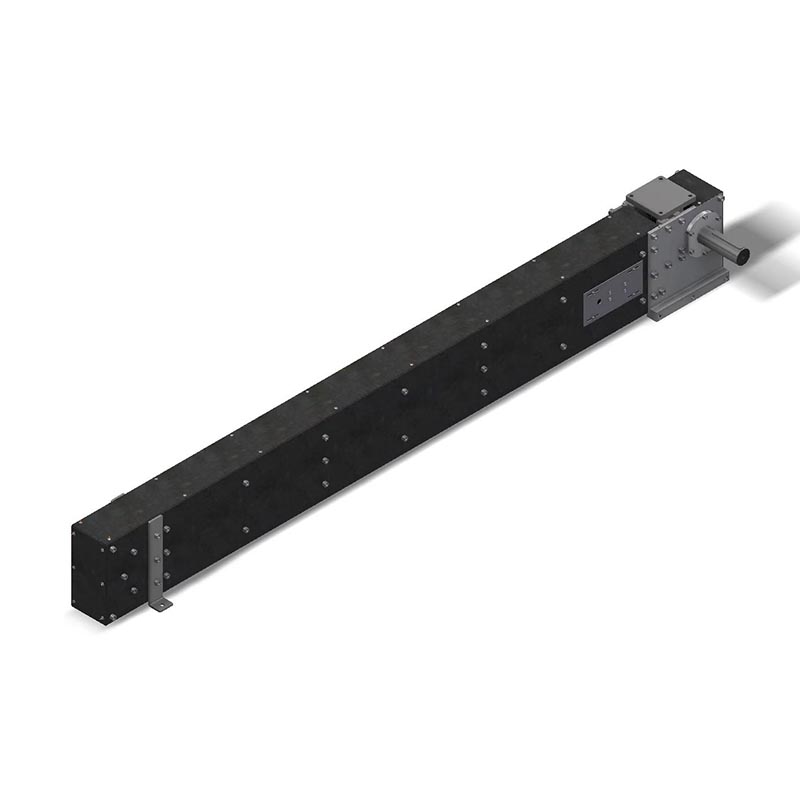
Most equipment failures trace back to a handful of small parts that nobody thought to discuss during the sales call. Instead of assuming everything is covered, ask the seller to point out which components wear out fastest, how often they typically need replacement, and whether those parts are kept in stock locally. A direct question about wear items often reveals more about the machine's true operating cost than any brochure.
Lifespan claims can be slippery. Rather than accepting a vague "built to last," ask for specific numbers: expected hours of service for bearings, belts, seals, or cutting edges under normal use. Reputable vendors will share maintenance logs or customer references without hesitation. If the answer keeps circling back to "it depends," that's a signal to dig deeper or look elsewhere.
Don't forget to ask about what happens after the warranty ends. Some wear parts are cheap but fail often; others are expensive yet rarely need attention. Calculating the cost per operating hour for each critical component gives you a clearer picture than the purchase price alone. This upfront conversation can save you from surprise downtime and inflated maintenance budgets later.
Get Custom Stroke Lengths Nailed Down Early
Waiting until after the first prototype or design review to confirm a custom stroke length usually means reworking mounting points, clearances, and order specs.
Once the exact travel distance is treated as a fixed input, related tolerances and supplier quotes stop shifting. Teams can move from guesswork to a locked spec without carrying unresolved assumptions into production.
A reliable approach is to measure the real travel under operating conditions, add only the required buffer, and send that number to manufacturing before any tooling begins.
Look Closely at Export Documentation Requirements
A single misplaced digit in a tariff code or an incomplete certificate of origin can stall a shipment at customs for weeks. Exporters often treat documentation as an afterthought, but border agencies treat every form as a legal declaration. Cross-check the commercial invoice against the packing list line by line, and confirm that the declared value matches the actual transaction—not a rounded estimate or a pro forma figure.
Beyond the basics, specific destinations impose unusual requirements that general checklists miss. Some Middle Eastern countries demand a legalized certificate of origin from both the chamber of commerce and the embassy, while certain South American ports refuse cargo without a pre-arrival inward foreign manifest. For goods subject to export controls, a missing end-user statement or an incorrect ECCN classification can trigger fines even if the shipment clears. Maintain a working file of regulation updates for each active market rather than relying on memory or a one-time template.
Finally, treat documentation errors as supply chain risks rather than clerical mistakes. A rejected export entry often means demurrage, storage fees, or a returned container that disrupts downstream inventory plans. Before dispatch, have a second person audit the full document set against the actual physical load—checking marks, numbers, weights, and unit counts. If your freight forwarder prepares the paperwork, review it with the same scrutiny as if you were signing a bank loan. The cost of a careful check is trivial compared to a shipment sitting in limbo.
Push Their Support Team With a Concrete Problem
Vague complaints like “it’s broken” rarely get you anywhere. Support teams deal with dozens of tickets a day, and the ones that stand out are the ones that tell them exactly what went wrong. Instead of saying the app won’t load, mention the error code, the exact steps you took before it crashed, and what device or browser you were using. That single shift from general frustration to precise detail gives them something tangible to dig into immediately.
I once spent three days going back and forth with a support rep because I kept writing things like “the checkout page is acting weird.” They asked for more info, I replied late, and nothing moved. Finally, I sent a short message that said: “Clicked ‘Place Order’ at 2:14 PM, got a 502 error, cart still shows three items, using Chrome on Windows 11.” The next reply was a solution, not another question. That’s the difference a concrete problem makes—it removes all the guesswork.
When you push a support team with a specific, reproducible issue, you’re not just helping them help you—you’re also showing that you’ve done your part. They can skip the generic troubleshooting scripts and jump straight to the real fix. So before you hit send on that frustrated message, ask yourself: would a stranger be able to recreate this problem from what I wrote? If not, add the missing pieces. Your ticket will move faster than you think.
Uncover Hidden Freight and Handling Costs
Many businesses treat freight as a secondary line item, but hidden charges often lurk in the details. Accessorial fees like liftgate service, residential delivery, or inside pickup can quietly inflate a seemingly fair quote. Review every invoice line by line against the original rate confirmation—discrepancies are common, especially for shipments that require special handling or remote-area delivery.
Don’t overlook dimensional weight pricing, which calculates costs based on package volume rather than actual weight. A bulky but lightweight shipment can end up far more expensive than expected. Request both actual and dimensional weight breakdowns from carriers, and consider consolidating orders or redesigning packaging to reduce empty space. Even renegotiating pallet configuration can drop a shipment into a lower freight class.
Handling costs at receiving docks or third-party warehouses frequently go unexamined. Storage fees, re-palletizing charges, or driver detention penalties accumulate when processes aren’t synchronized. Build clear unloading time windows into contracts, and audit handling invoices monthly. Comparing carrier performance data—not just base rates—often reveals that a slightly higher upfront rate comes with far fewer surprise surcharges.
FAQ
Ask for a video walkthrough of their production floor, not just brochures. Request the specific CNC machining centers and welding stations used for chain links and guide rails. A credible exporter will also share sample load test reports from within the last 12 months, not outdated certificates.
Look for compliance with EN 1570-1 for lifting tables or similar machinery directives. The test report should show a static load of at least 1.5 times the rated capacity and a dynamic test under full load over multiple cycles. If their only proof is an ISO 9001 certificate, that covers management processes, not lift safety.
Yes, many buyers overlook the cost of custom crating for sea freight, pre-shipment inspection fees, and the bank charges for letters of credit. Ask for an itemized Incoterms breakdown—FOB vs CIF changes who pays for what. Also confirm if the quoted price includes the control panel with CE or UL marking.
Request a short video of the exact model performing a full extension and retraction cycle with a stopwatch visible. The stroke should be measured from the fully closed position to the top plate, not just the chain travel. If the supplier hesitates to show a video with a measuring tape, that's a red flag.
At minimum, get two sets of chain links, one complete drive motor, and all limit switches and sensors. Rigid chain systems wear unevenly depending on duty cycle, so having extra links prevents downtime. Also ask for a wiring diagram and a list of standard industrial connectors used.
For export, a separate control cabinet is usually safer because it can be customized for local voltage and safety PLC requirements. Integrated controls often lead to expensive retrofits if the destination country has different emergency stop or interlock rules.
Ask for a written response time guarantee for technical queries—48 hours is reasonable. Request the name and direct contact of a service engineer, not just a sales email. Better exporters offer remote commissioning via video call and have a local distributor or partner in your region for urgent parts.
Conclusion
When sourcing rigid chain lift systems from overseas, the first thing that separates a smooth purchase from an expensive mistake is how well you interrogate the supplier's technical claims. Many exporters advertise a maximum load figure that only holds under ideal lab conditions. Ask for test reports or video evidence showing the unit actually moving that load through its full stroke. If they hesitate, walk away. Equally important is the wear story: chain links, guide rails, and seals all have finite lives, and some manufacturers quietly use softer alloys that stretch or gall after a few hundred cycles. Get a written lifespan estimate for every replaceable component, plus lead times and prices for those parts before you commit. Custom stroke lengths are another trap: a standard unit might be two hundred millimetres shorter than your building layout requires, and retrofitting an extension later is rarely straightforward. Lock down the exact closed height, extended height, and mounting interface in the quotation, not after the deposit clears.
On the logistics and support side, global buyers frequently overlook export paperwork until the shipment is already at the port. A rigid chain lift may be classified differently depending on whether it is sold as a machine component or a complete actuator, and that classification affects duties, safety certificates, and even whether customs will release it without extra inspections. Request a full document checklist—commercial invoice, packing list, certificate of origin, test certificate, and any relevant CE or equivalent mark—before signing. Then test the exporter's after-sales response. Send them a concrete failure scenario, such as a chain jamming at eighty percent extension under a three hundred kilogram side load, and ask for the first three diagnostic steps. A competent team will reply with specific measurements and part numbers, not a generic promise. Finally, dig into freight and handling. Port fees, terminal handling charges, customs brokerage, and even wooden crate disposal can add ten to twenty percent to the landed cost. Ask for Incoterms broken down line by line, and compare door-to-door quotes from at least two forwarders before you finalize the order.
Contact Us
Contact Person: Ryan
Email: [email protected]
Tel/WhatsApp: +85259582726
Website: https://www.robomast.com/