

TECO Frequency Converter Distributor Guide for Reliable Drive Performance
2026-11-22
When a production line stalls because a frequency converter cannot keep up with torque demands, the cost is never just the drive itself. It is the unplanned downtime, the missed output targets, and the slow erosion of confidence in the entire power train. This guide cuts through generic catalog language and focuses on what actually determines reliable drive performance: thermal headroom, harmonic tolerance, configuration support, and a distribution partner who knows the difference. For operations teams sourcing TECO frequency converters, working with a focused distributor like Soochee often changes the conversation from waiting on a part to planning around real load profiles. In the sections ahead, we map out the practical selection criteria that keep drives stable under pressure, along with the supply chain habits that separate dependable uptime from recurring service calls.
Sizing a TECO Drive for the Way Your Load Actually Behaves
A nameplate horsepower figure rarely tells the whole story when you are matching a TECO drive to a machine. The drive responds to current, not just kilowatts, so it is worth looking at how the load pulls amps through acceleration, steady running, and idle periods. A mixer that starts under full product load has a very different demand curve from a lightly loaded fan that ramps up over several minutes, even if both carry the same motor rating on paper.
The actual duty cycle often matters more than the peak number. High-inertia loads can force sustained current during ramp-up, while cyclic machines with frequent stops may push more heat into the drive than a steady conveyor drawing the same average current. Observing the load at the shaft, including starting torque, coast-down behavior, and any overhauling sections, gives you a cleaner basis for selecting the right frame size and braking method instead of defaulting to a larger drive as insurance.
Site conditions also shift the practical limit of a given TECO drive. Ambient temperature, altitude, switching frequency, and available line voltage can reduce continuous output capability, while a low harmonic environment may let you run closer to the drive’s nominal rating without adding input filters. Matching the drive to the way the load actually behaves, rather than to a single worst-case label, often prevents both nuisance trips from undersizing and wasted cost from an unnecessarily large unit.
Where Distributor Expertise Shows Up Before the Sale
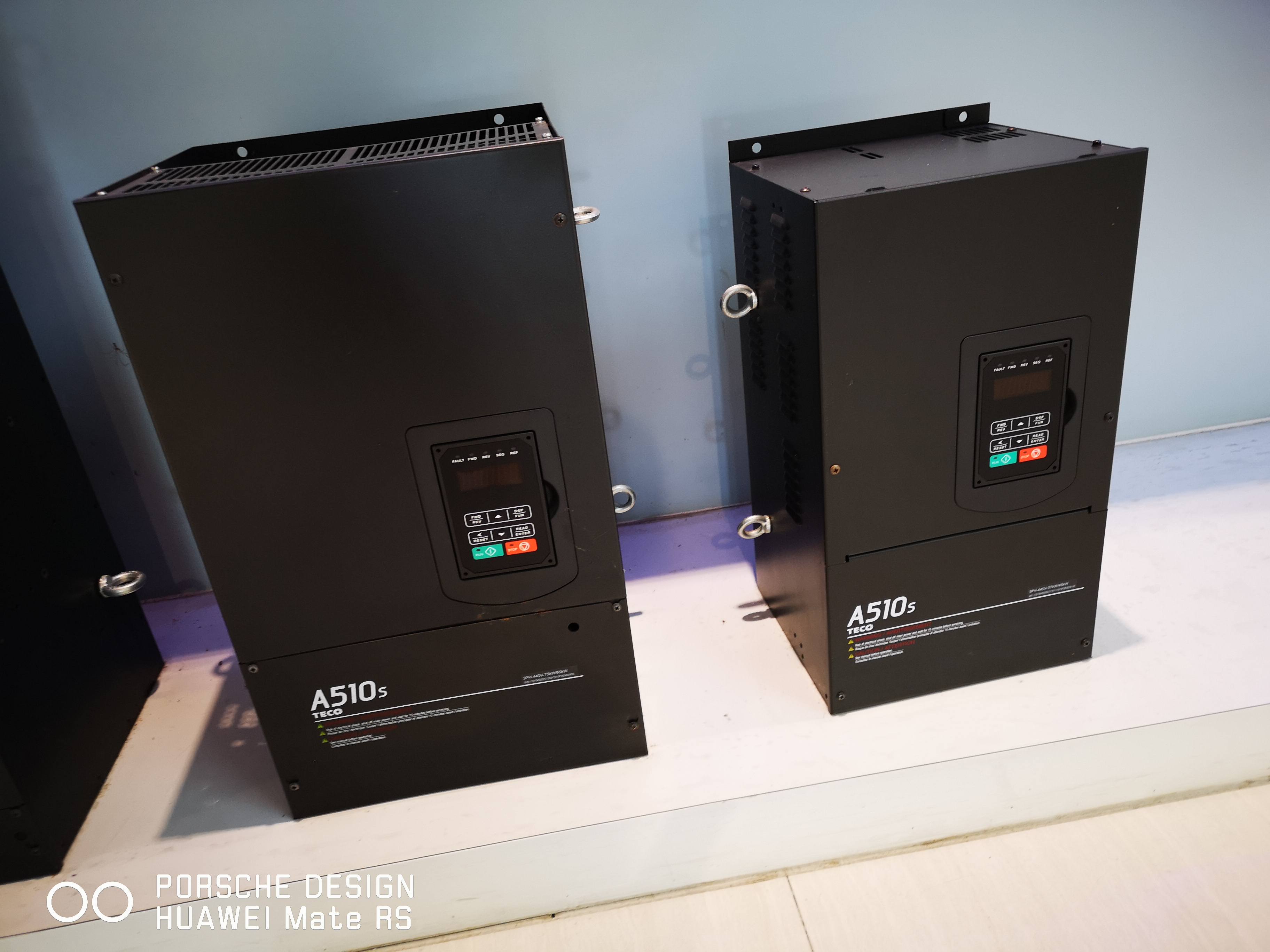
Most buyers only see the quote, but the real work usually starts weeks earlier when a distributor pushes back on a spec that looks workable on paper but will create delays later. That pre-sale phase is where someone who actually understands lead times, material substitutions, and compatibility issues can save a project from stalling before it ever gets approved.
It might show up as a simple phone call reviewing a drawing, a sample shipped overnight for a quick fit check, or a detailed note explaining why a standard part makes more sense than a custom one. In those conversations, the distributor is not just passing along a price. They are matching the customer's idea to what will actually survive installation, inspection, and day-to-day use.
That early advice often goes unnoticed because it prevents problems rather than fixing them. A customer may only remember that the order arrived on time and worked, without realizing the distributor had already steered them away from a supplier with inconsistent tolerances, a seal material that would swell, or a long-lead enclosure that could have delayed the entire line. That quiet intervention is what makes the sale look easy later.
Decoding Torque, Duty Cycles, and Thermal Headroom
Torque numbers on a spec sheet rarely reflect what the motor can do in a real machine. A joint or actuator might show a peak torque of 4 Nm and a continuous rating of 1.2 Nm, and the gap between those two tells you more than either figure alone. Peak torque is available only for a brief moment during acceleration or direction changes, while continuous torque is the real ceiling for holding positions, pushing against gravity, or running long moves. Reading the torque-speed curve carefully matters because usable torque falls off as speed climbs, and the region you actually need may sit far from the headline number.
Duty cycle shapes how much heat builds up between those short bursts. A motor that runs 30 seconds and rests 90 seconds can often exceed its continuous rating without damage because the windings have time to cool. A 25% duty cycle is not just a schedule; it is a thermal budget. That budget also shifts with ambient temperature, mounting surface, airflow, and whether the drive enclosure traps heat. Ignoring those conditions turns a conservative rating into an aggressive one without changing a single line on the datasheet.
Thermal headroom is the gap between normal running temperature and the insulation class limit, and it acts as a reserve for overloads. A motor sitting 20 degrees below its rated winding temperature can absorb a brief torque spike without pushing the insulation toward premature degradation. That reserve disappears quickly when ambient temperature rises or when duty cycle creeps upward. In practice, watching actual temperature rise during a demanding cycle gives a better read on headroom than trusting a nominal rating, because the gap is always tied to the environment the motor lives in.
Keeping Motor Control Stable in Noisy or Harsh Environments
Electrical noise, voltage spikes, and extreme temperatures can all conspire against a motor control loop, causing erratic speed fluctuations or even sudden shutdowns. The first line of defense is often isolation—both physical and electrical. Routing feedback cables away from high-current power lines, using shielded twisted pairs, and adding ferrite beads to signal wires reduce the coupling of interference before it ever reaches the controller. Enclosures with proper gasketing and cooling help keep dust, moisture, and heat from degrading the components most responsible for precise motion.
On the firmware side, a purely reactive PID loop may react to noise by amplifying it, producing audible hum or mechanical jitter. A better strategy combines a low-pass filter on the encoder or resolver feedback with a rate limiter on the commanded output. Some designs also employ an adaptive notch filter that tracks the dominant vibration frequency, cancelling resonance caused by a noisy environment. For intermittent disturbances—like a nearby relay switching—a short blanking window on the fault detection inputs prevents false trips while still catching genuine stalls.
Redundancy and graceful degradation matter when harsh conditions are the norm rather than the exception. For example, using two independently powered encoder channels lets the controller cross-check position data and reject corrupted samples instead of trusting a single noisy source. Similarly, a torque-limiting ramp that engages when the supply voltage sags below a threshold keeps the motor from overshooting when power returns. These techniques turn a fragile control loop into one that holds its trajectory through electrical storms, welding arcs, or sub-zero startup conditions.
Spare Parts Strategy Without Overstocking the Storeroom
Keeping critical spares on hand without turning the storeroom into a warehouse starts with knowing which failures actually cost you money. A pump that stops a line for six hours deserves a different stocking rule than a bracket you can fabricate locally in a day. Look at work order history, not just the manufacturer's recommended list, and grade parts by downtime impact, lead time, and how often they actually appear on repair orders.
Instead of setting min/max levels once and forgetting them, tie replenishment to actual movement and planned maintenance. If a bearing sits untouched for three years while the same motor gets serviced on a calendar schedule, question whether it should be on the shelf at all. For expensive or slow-moving items, ask suppliers about consignment or guaranteed call-off stock so the capital is not sitting in your racking.
A lean spare parts cabinet is also a discipline problem, not just a math problem. Mark bins with the equipment they serve, return unused parts immediately after a job, and review just-in-case stock every quarter with the maintenance team. When technicians trust that the right part will arrive within an agreed window, they stop hiding unofficial caches around the plant, and your storeroom numbers start to reflect reality.
Making the Case for a Complete Drive Package Instead of a Boxed Unit
Buying a bare boxed drive and then piecing together brackets, cables, mounting hardware, and software on your own has a way of turning a simple upgrade into an afternoon of trial and error. A complete drive package removes that friction. Everything arrives matched to the drive itself, tested as a set, and ready to fit your machine without a last-minute run for an adapter or a missing screw. That convenience stops feeling like a nice extra once you have dealt with a drive that refuses to sit flush in a third-party caddy or a cable that is too short for your case layout.
Beyond the immediate fit, a complete package tends to deliver more predictable performance over time. The bundled cloning utility, mounting rails, and thermal pad or heatsink are chosen because they work with that specific model under typical loads. When you assemble your own mix from different vendors, small mismatches can creep in: a rail that vibrates under sustained reads, a power adapter that introduces occasional dropouts, or cloning software that does not recognize the drive properly. The packaged approach shifts that burden back to the maker, who has a stronger incentive to keep the whole combination reliable.
There is also a quieter benefit: fewer open boxes, fewer orphaned parts, and fewer decisions to second-guess. A complete drive package gives you one clear purchase path instead of five separate carts across different shops. If something goes wrong, you deal with a single support channel rather than arguing with a cable vendor about whether the drive or the wire caused the failure. For a workstation that needs to stay up and running, that kind of simplicity is worth more than the marginal savings of sourcing every piece separately.
FAQ
Reliability usually comes down to conservative component ratings, coated circuit boards for dusty or humid environments, and well-designed thermal management. TECO drives tend to run cooler at their rated current, which reduces stress on capacitors and switching devices over time. That gives the drive a better chance of surviving voltage fluctuations and frequent start-stop cycles without nuisance trips.
Start with the motor nameplate current, not horsepower alone, because frame sizes and efficiencies vary. Then check the actual load profile. For centrifugal pumps and fans, the torque falls off sharply with speed, so a standard variable torque rating is usually sufficient. For conveyors, mixers, or hoists, use the constant torque rating and leave enough headroom for cold starts and momentary overloads. Also consider altitude and ambient temperature, since both reduce the drive's effective current capacity.
The biggest issues are usually ramp times that are too aggressive, missing motor data entries, and ignoring the acceleration current limit. Entering the correct motor voltage, frequency, poles, and no-load current from the nameplate helps the drive build a better control model. Setting a realistic acceleration and deceleration time prevents overcurrent and overvoltage faults. It also helps to configure the stop mode deliberately—coast or ramp—based on whether the load needs to stop quickly or can freewheel.
Voltage imbalance between phases, weak supply transformers, and shared bus noise can all cause erratic drive behavior. If the supply has more than about two or three percent phase imbalance, the drive may need derating or an input line reactor. Long motor leads can produce reflected wave voltages at the motor terminals, so a load reactor or dv/dt filter may be needed beyond a certain cable length. These details are easier to correct before the drive is wired and energized.
Factory settings are meant to make the drive run safely on a bench, not to match a specific machine. Loads differ in inertia, duty cycle, and how they respond to speed changes. A default V/Hz curve may overheat a motor at low speed or make it sluggish at start. Adjusting the carrier frequency, low-speed voltage boost, and acceleration limits to the actual load usually yields smoother operation, less audible noise, and fewer fault trips.
Keep the heat sink and cooling fan clear of dust, check terminal tightness during scheduled downtime, and watch for unusual capacitor bulging or discoloration. In humid or corrosive areas, inspect the internal boards and conformal coating condition. Do not wait for a fault code to appear. A short annual visual inspection and occasional fan replacement at the first sign of bearing noise prevent most avoidable failures.
Rather than treating harmonics as an afterthought, evaluate the total non-linear load on the transformer. Adding line reactors or a passive filter at the point of common coupling often reduces distortion enough for most facilities. If the installation uses many drives of different sizes, grouping the largest drives on a dedicated feeder or using active front-end technology can limit interaction. The goal is to keep voltage distortion low enough that other equipment on the same supply does not misbehave.
Conclusion
A TECO drive selection that holds up over time rarely begins with a catalog number. It starts with watching how the driven load ramps, stalls, and cycles under real conditions. Distributors who ask about starting torque, overload duration, and ambient temperature before quoting a model catch mismatches early, because a drive sized only to motor nameplate horsepower can run hot or trip when a mixer, crusher, or conveyor sees frequent start-stop duty. TECO units offer useful thermal headroom when the load profile is understood rather than assumed. In noisy or harsh environments, stable motor control depends on proper grounding, shielded control wiring, and attention to harmonics, not just parameter settings. That pre-sale evaluation is where distributor expertise becomes visible.
The case for a complete drive package also grows clearer once spare parts and field conditions are considered together. A packaged solution with line reactors, braking resistors, and adequate enclosure cooling keeps control circuits stable in dusty, high-vibration, or high-temperature settings. It also simplifies spare parts planning: instead of overstocking shelves, a distributor can match critical spares such as cooling fans, keypad assemblies, and gate driver boards to known failure points and realistic lead times. That lowers downtime without tying up inventory. It also avoids the hidden cost of a boxed unit that must be modified later with external filters, reactors, or extra cooling. In practice, reliable drive performance comes from these quieter decisions, including torque and duty cycle review, environmental protection, and honest conversation about what the load actually does.
Contact Us
Contact Person: Jenny Jaa
Email: [email protected]
Tel/WhatsApp: 0086 152 9510 6006
Website: https://www.china-motor-supplier.com