

Threaded Ball Valve Exporter: How to Choose a Reliable Partner for Your Project
2026-11-16
You've specified the perfect threaded ball valve for your system, but the real risk lies in who's exporting it. A reliable partner can mean the difference between smooth installation and a supply chain headache. That's where UPTAI stands out—offering consistent quality and clear communication. In this guide, we'll walk through the key factors to evaluate an exporter, so you can make an informed decision without second-guessing.
Map the Manufacturer's Real Factory, Not Just Their Marketing Brochure
A glossy brochure can show you spotless floors and smiling workers, but it won't tell you how orders are actually handled when a deadline slips or a material runs short. To understand a manufacturer's true capability, you need to see the factory in operation — not just the showroom line, but the lines that run on a Tuesday afternoon with real orders, real pressure, and real people making decisions. Ask to walk the floor without a script. Watch how raw materials move from receiving to staging, how quality checks are logged, and how problems are flagged before they become your problem. A real factory reveals its character in the details: the condition of the tooling, the organization of the warehouse, the way workers communicate with supervisors, and whether the production schedule is a living document or a wall decoration.
Many buyers rely on a factory tour arranged by a sales representative, but that tour is often a performance. Instead, request access to areas that brochures never feature: the rework station, the quarantine area for rejected parts, the maintenance logs, and the packing line at 4:30 p.m. on a Friday. These spaces and moments tell you whether the manufacturer manages chaos or merely hides it. Pay attention to how many machines are actually running, whether safety equipment is in use, and if there is a visible system for tracking batch numbers and material certifications. A factory that can show you its warts and explain how it fixes them is worth more than one that only shows you a polished vision.
Finally, compare what you see with what the brochure claims. If the brochure boasts of “advanced automation” but the floor is full of manual operations, ask why. If the marketing material highlights a dedicated quality team, find them and ask how they handle a non-conformance report. A manufacturer's real factory is a complex, imperfect system, and its strength lies not in the absence of problems but in the speed and honesty with which it addresses them. Map the real factory — the one that ships your parts — and your supply chain will be built on evidence, not aspiration.
Decode Material Certificates and Thread Standards for Your Operating Conditions
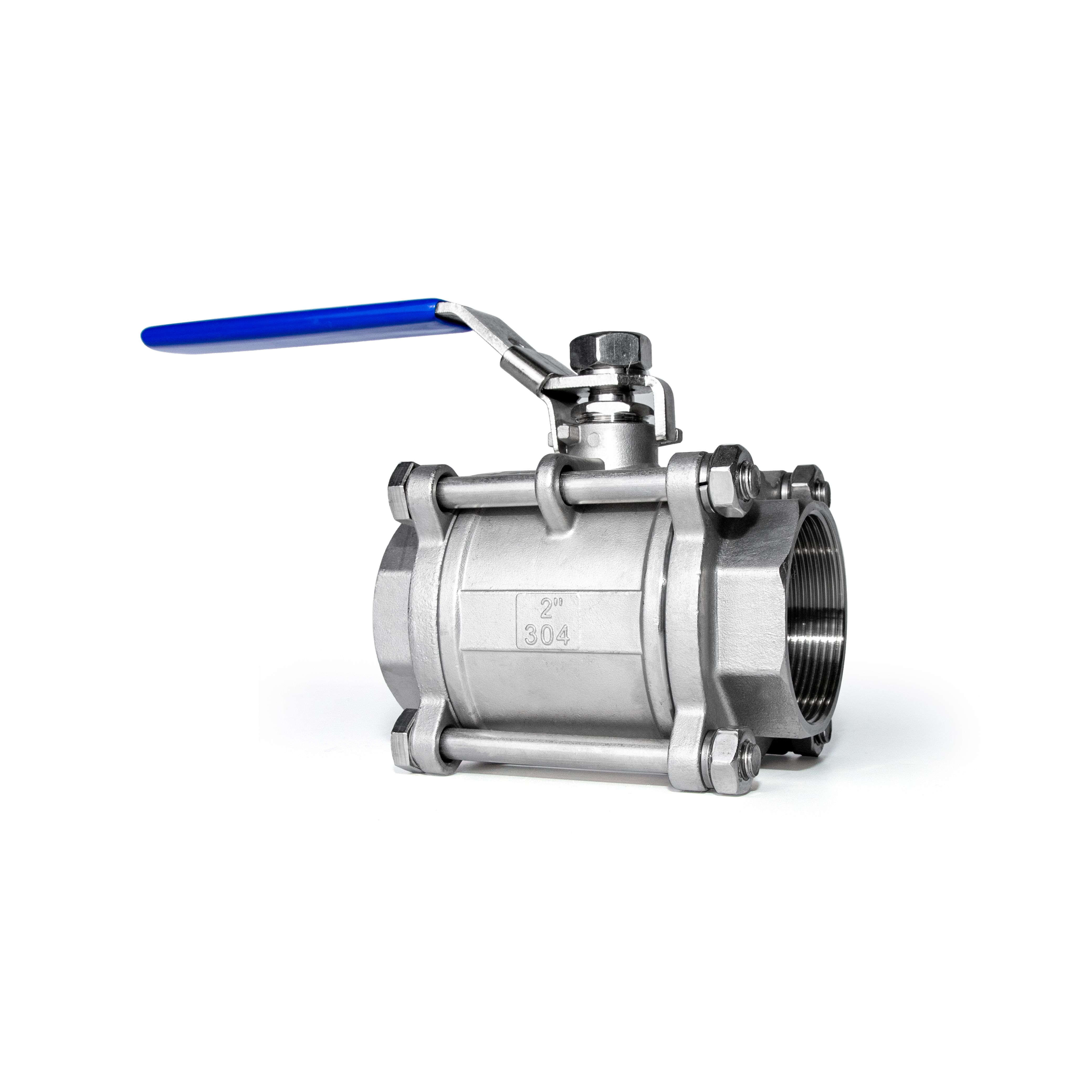
Material certificates like EN 10204 3.1 or 3.2 aren't just paperwork—they're evidence of traceability and mechanical properties. But the certificate alone doesn't tell you if the material will hold up under your specific temperature, pressure, or corrosion conditions. You need to cross-check the declared heat treatment, impact test temperatures, and chemical composition against your actual process envelope.
Thread standards can be misleading if you only look at the nominal size. NPT, BSPT, and metric threads have different taper angles, sealing methods, and pressure ratings. A fitting that seals fine at room temperature may leak at elevated temperatures because the thread compound degrades or the metal-to-metal engagement shifts. Match the standard to the fluid, not just the pipe schedule.
One practical approach is to keep a simplified reference sheet that maps your operating conditions—maximum working pressure, min/max temperature, exposure to chlorides or hydrogen sulfide—to the required certificate type and thread specification. This avoids the trap of accepting a generic 3.1 certificate for a sour service line or using an NPT thread where an ISO 7-1 parallel thread with bonded seal is actually needed.
Pressure-Test Their Claims with a Small Pilot Order First
Placing a large order based on a supplier's promises is a gamble you do not have to take. Start with a modest pilot order that lets you check the actual product quality, packaging, delivery timing, and how the supplier handles hiccups. If they claim a seven-day turnaround, see if the pilot shipment arrives when they say it will.
A small order also reveals how they communicate when something goes wrong. Do they update you without being chased? Do they fix a scratched part or a wrong label quickly? These small signals tell you more than any brochure or sales call.
Once the pilot order meets your bar, you can scale up with far less heartburn. If it falls short, you have spent a fraction of the money and time you would have risked on a full container.
Ask How They Handle Last-Minute Design Changes Without Stalling Your Timeline
When a logo tweak or color swap lands in your inbox at 9 p.m., the last thing you want is a three-day silence followed by a vague “we’ll look into it.” The real question isn’t whether changes will happen — they always do — but how your partner absorbs them without derailing every downstream task. Push for specifics: do they have a dedicated change-intake channel, or does feedback bounce between Slack threads and forgotten email chains? Ask if they batch non-critical edits into a weekly review or tackle them immediately, and how that choice affects the broader production schedule.
A solid answer should name actual tools or rituals — a shared board with a “change requested” column, a 24-hour triage window, a named point person who decides what counts as a blocker. If they hand-wave with “we’re flexible,” that’s a red flag. Flexibility without a system usually means your timeline absorbs the shock, not theirs. Listen for phrases like “we freeze the layout after sign-off” or “late edits get a quick impact check before we touch the master file.” That shows they respect both your deadline and their own workflow.
Also worth probing: how do they communicate the cost of a change? Not just money, but time — a small header tweak might ripple into six other pages. Good partners will tell you, “that’s a two-hour fix but it pushes the QA window to Thursday,” before you even ask. If they simply say “sure, no problem” to every request, you’ll likely find the problem later, buried in a missed launch date. The goal isn’t to avoid changes; it’s to make them boring, routine, and small enough that your timeline barely notices.
Compare Export Documentation Quality: One Missing Paper Can Delay Your Whole Project
When you compare export documentation quality, you’re really comparing how likely your shipment is to move without a hold. A single missing page—say, an unsigned certificate of origin or a packing list that skips a line item—can stop the entire container at the border. Delays don’t reduce themselves; they stack. Your site team waits, your client’s deadline slips, and the costs start ticking daily.
What makes one set of export papers better than another isn’t just having all the usual documents. It’s whether every number, date, and description matches across the invoice, bill of lading, and packing list. Mismatches are as damaging as missing pages because customs officers treat them the same way: as a reason to pause clearance. A 30-minute paperwork review before dispatch can prevent a two-week hold at the destination port.
Consider two projects shipping identical equipment. One team sends a complete, cross-checked documentation package with every page accounted for. The other forgets a single inspection certificate. The first cargo clears in a day; the second sits in storage, accumulating demurrage and wasting the installation crew’s time. That one missing paper didn’t just delay the shipment—it delayed the entire project.
Pin Down Who Actually Answers When a Valve Fails Six Months Later
Six months after installation, a valve starts leaking or seizing up, and the first phone call usually goes to whoever sold it. That person often remembers the order clearly but has no authority to approve a warranty claim or schedule a field tech. The real answer comes from someone further down the chain — maybe a regional service manager, maybe a distributor's in-house engineer, or maybe the original manufacturer's rep who never met you. If you wait until failure to figure out the escalation path, you lose days while the problem gets bounced around.
Ask before you buy: if this valve fails at month seven, who exactly gets my call and what is their direct line? Get a name, not a department. Then ask what that person can actually do without waiting for a supervisor — can they issue an RMA, ship a loaner, or dispatch someone on-site within 48 hours? Many distributors will say “we handle everything,” but when you push for specifics, the promise falls apart. The ones worth keeping will give you a cell number and a clear process, not a generic support email.
Also check whether the same contact is responsible for both warranty decisions and logistical fixes. In a lot of companies, the sales rep apologizes, the technical support team diagnoses, and a third group approves replacement — none of them talk to each other. A valve that could be swapped in a week ends up taking a month because nobody owns the full path from complaint to resolution. Pin that person down in writing before the purchase order goes out, and you will know exactly who to call at 3 a.m. when the line goes down.
FAQ
You want to see ISO 9001 at a minimum, but that alone doesn't prove valve expertise. For Europe, CE marking under the Pressure Equipment Directive is a baseline, and API 608 tells you the valve design meets recognized standards. If the media is flammable, fire-safe certification to API 607 or ISO 10497 is non-negotiable. Always check the certificate scope covers threaded ball valves specifically, because some suppliers show certificates for other product lines and hope you won't notice.
Ask for mill test certificates that tie back to the original heat number, not a generic material statement. For 316 stainless steel, confirm the chemistry aligns with ASTM A351 CF8M for cast bodies or A182 F316 for forged parts. If the order is large enough, mandate third-party inspection from SGS, TUV, or Bureau Veritas to witness the pressure tests and confirm the material identity before anything leaves the factory.
A price 40% below the competition almost always means hidden shortcuts in wall thickness, ball plating, or stem material. Avoid exporters who dodge live video tours or refuse to share a recent factory audit. Vague delivery schedules, no written warranty terms, and silence when you ask for references from similar projects are all reasons to look elsewhere. If they can't answer a technical question about seat material or pressure rating within a day, that's a warning sign too.
Direct factory relationships give you tighter control over quality and faster fixes when something goes wrong, but a good trading company can simplify mixed orders and handle logistics well. The real question is transparency. A reliable partner, factory or trader, will disclose the actual manufacturer, allow inspections, and take responsibility for defects instead of pointing fingers at the plant. Choose the one that gives you a clear line of sight to the production floor.
For most water, oil, and gas work, 1000 WOG or 2000 WOG stainless valves cover a lot of ground. Temperature limits are usually set by the seat: PTFE is fine up to roughly 180°C, but above that you need reinforced PTFE, PEEK, or metal seats. The key is to map the pressure-temperature curve to your worst-case operating condition, not just the nominal pipe size or a generic max rating you found on a data sheet.
Standard 1/4 inch to 2 inch stainless valves from stock might ship within 15 to 30 days, but add a custom handle, locking device, or special seat and you're looking at 45 to 60 days. MOQs can range from 50 pieces to 500 per size depending on whether the exporter keeps inventory or produces to order. Always confirm if the lead time starts when the deposit clears or after drawing approval, because this detail catches a lot of buyers off guard.
Expect a written warranty of at least 12 to 18 months and a clear defect response process. Replacement or refund for manufacturing faults should include freight cost, not just the part. More valuable is a direct technical contact who can answer installation questions, provide torque values for threaded ends, and respond within 48 hours when your site team is stuck. If the only contact is a sales email that takes a week to reply, that's not after-sales support.
Yes, most exporters will add your logo to the handle or body and use your branded boxes for a modest setup fee. The catch is usually the quantity, because custom branding often requires 1,000 pieces or more per size. For smaller orders, ask about laser engraving on the handle instead, which costs less and still gives you a professional look. Also confirm the packaging includes vapor corrosion inhibitors or sealed bags to survive ocean freight without rust.
Conclusion
Choosing a threaded ball valve exporter goes beyond glossy catalogs and quick quotes. You want someone whose factory you can actually verify—ask for live video tours, third-party audit reports, or on-site references from past buyers. Then dig into the paperwork that matters for your process: do their material certificates match the actual alloy? Are the thread standards (NPT, BSPT, BSPP) cut to spec and backed by gauge reports? A pilot order of a few hundred pieces can reveal more than any sales pitch, from machining consistency to packaging durability.
But real reliability shows under pressure. Ask what happens when your engineer changes a dimension mid-run—does the exporter have a documented change-order process, or will your timeline stall? Compare export documents line by line: commercial invoice, packing list, bill of lading, certificate of origin, test reports. One missing paper at customs can idle a whole site. Finally, pin down the person who handles warranty claims six months after delivery. If the sales rep disappears and no engineer picks up, you don't have a partner—you have a one-time vendor.
Contact Us
Contact Person: Adonis
Email: [email protected]
Tel/WhatsApp: 8615858822657
Website: https://www.uptaivalve.com