

Tire Building Machine Export Guide to Reaching International Buyers
2026-11-26
Ask any tire plant manager what keeps them from switching to a new foreign supplier, and the answer is rarely the tire building machine itself. It is the risk hidden around it: unclear documentation, slow spare parts, and service that fades across time zones. That is why a strong export strategy is really a risk-removal strategy. This guide walks through what overseas buyers actually evaluate before signing — and how AUGU AUTOMATION approaches that trust gap in real markets.
Where Demand for Tire Building Machines Is Quietly Growing
A meaningful portion of current interest isn't coming from the usual mega-factory announcements. It's showing up in places like central Vietnam, Bangladesh, and a handful of Thai and Indonesian industrial parks, where tire producers are adding second or third production lines rather than breaking ground on huge new sites. Much of that equipment is tied to radial truck and bus tire capacity, often replacing older bias-ply lines or relieving machinery that has been running well beyond its planned duty cycle.
Parts of Latin America and North Africa are moving along a similar path, though for different reasons. Mining-focused markets need more off-the-road tire output, while several aging plants in Turkey and Egypt are swapping out worn drum and servicer units instead of waiting for full turnkey projects. The buying pattern is steady, smaller in scale, and easy to overlook, but it keeps lead times firm even when the big headline projects slow down.
What Overseas Buyers Check Before They Respond to an Exporter
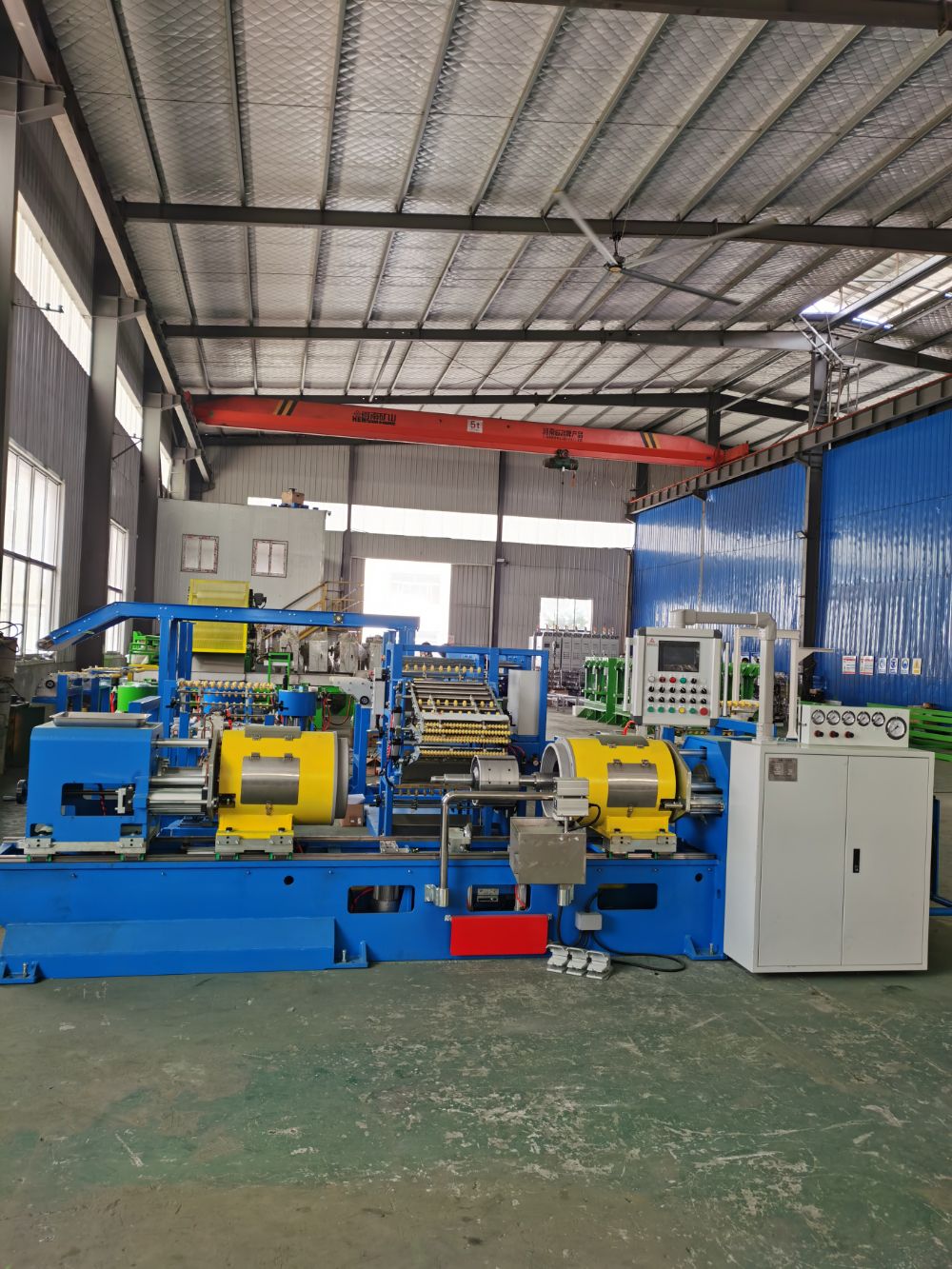
A serious buyer rarely starts by asking for a price list. They look first at whether the exporter has a clear, verifiable business identity: a proper website with company registration details, real contact names, a physical address that can be checked on a map, and a track record that doesn't vanish after a quick search. If an exporter hides behind a free email address, stock photos, or vague descriptions like "leading manufacturer" without naming the factory, most buyers quietly move on. The absence of basic transparency reads as risk, and risk is the first reason an inquiry dies before it begins.
Beyond identity, buyers scan for proof that the exporter understands their market. This means product specifications written in plain, accurate English, not a wall of copied factory jargon; certificates that match the claimed product category; and sample policies that don't demand full payment before any quality check. Buyers also pay attention to response speed and tone. A reply that arrives three days later with a single line and no answers to specific questions signals low commitment. In contrast, an exporter who asks one or two sharp questions about the buyer's target market or volume shows they are already thinking like a partner, not a catalog dispenser.
Finally, buyers check for consistency between what the exporter says and what they can independently verify. If the quoted lead time is too good to be true, the unit price swings by 30% in follow-up emails, or the contact person changes twice in one week, the buyer will usually stop replying without explanation. Overseas buyers are not looking for perfection; they are looking for predictability. An exporter who admits a limitation early, offers a realistic delivery window, and provides references without being asked often stands out simply because so few others do.
Shipping a Machine That Weighs More Than a House
Moving a press that tips the scales at 400 tons rarely begins with a truck. It starts with a route survey that reads more like a civil engineering audit: bridge load ratings, soil compaction under narrow shoulders, overhead clearance at rail crossings, and the turning radius of a trailer longer than most city blocks. One overlooked culvert can turn a three-day haul into a six-month repair project, so the first few weeks are spent walking, measuring, and sometimes coring pavement just to prove the ground will hold.
The trailer itself is a rolling platform with dozens of independently steered axles, more like a slow-motion centipede than any standard semi. Hydraulic systems shift the load by fractions of an inch to keep weight spread evenly, while a separate crew walks alongside watching tire deflection and road temperature. Hills are taken at a pace that makes walking seem fast, not because the machine lacks power, but because braking that much mass generates enough heat to soften steel if pushed too hard.
Then there is the human layer. Escort drivers block intersections hours before the load arrives, utility crews lift traffic signals that were never designed to clear a machine taller than a barn, and local police manage the curious crowds that gather at midnight to watch something so large move through a town at walking speed. The machine itself may be the headline, but the real work is the quiet coordination that lets a piece of industrial equipment cross three state lines without snapping a single overhead wire.
Navigating Certification and Voltage Differences by Market
Voltage differences are rarely just a matter of swapping the plug. A device built for North America expects 120 V at 60 Hz, while much of Europe runs on 230 V at 50 Hz, and Japan splits the difference with 100 V and a frequency that changes depending on the region. The real work happens at the power supply level: universal input designs handle most of this quietly, but motors, heaters, and timing circuits can behave differently when the frequency shifts. Skipping that check often shows up later as overheating, slower charging, or a product that works on a test bench but not in a customer’s home.
Certification adds another layer that varies more by local expectations than by any universal rulebook. CE marking opens doors across the EU, but UL or ETL is still what many North American buyers and inspectors look for. China leans on CCC, South Korea has KC, and the UK now insists on UKCA even though many devices still carry CE. Tying each target market to a specific certification early prevents redesigns later, because shielding, labeling, and component choices are often tied to the standard itself.
Treat the approval path as a design input rather than a final hurdle. A manufacturer planning to ship to Germany and the United States should choose power components that satisfy both voltage bands and plan for the longer lead times some labs require. Small decisions like connector style, cord length, and the exact wording on the rating plate can become costly if left until the last minute.
Service Agreements That Make Foreign Buyers Say Yes
Foreign buyers rarely walk away because the product is weak. They walk away when the agreement leaves too much room for assumptions. A service agreement that earns a yes replaces vague phrases like "timely delivery" or "best efforts" with measurable commitments: what exactly will be delivered, how revisions will be handled, what happens if a milestone slips, and who owns the work at the end. Buyers feel the difference immediately when they can see the project schedule, payment schedule, and acceptance criteria sitting in the same document.
Payment structure is often the real dealbreaker. Instead of asking for a large upfront sum, break the project into stages that give the buyer proof of progress before the next transfer. Mention third-party escrow or milestone-based invoices, and specify refund terms in plain language. Also address currency and wire transfer fees so the buyer doesn't absorb hidden costs. A clause that explains what happens in a dispute—ideally naming a neutral arbitration location—tells the buyer you're not afraid of accountability.
Small details about support and communication can tip the decision. Include response times, maintenance windows, and whether post-launch fixes are covered for 30, 60, or 90 days. If the buyer's first language isn't English, offer a bilingual summary of the core terms or schedule a walkthrough call before signing. Keep the legal language simple enough that a non-lawyer can read it without a headache. When the agreement reads like a clear plan rather than a trap, the buyer stops looking for reasons to say no.
Live Demos and Remote Proof for Buyers Who Cannot Visit
We know the biggest hesitation for many buyers is distance. Instead of asking you to trust a brochure or a polished photo set, we set up a live video walkthrough where you can see the current production line, the exact batch being made, and close-up details of stitching, welds, edges, or surface finish. You watch in real time and guide the camera toward the areas you care about most, asking questions on the spot while the operator moves through the sample and the line.
If a live call is hard to fit into your time zone, we record the same kind of footage with on-screen measurements, packing details, and a visible date stamp. One buyer recently approved a full container after reviewing a twelve-minute video that showed the final quality checks, the actual cartons being sealed, and the shipping marks written by hand. No glossy edits, no background music, just the factory floor as it looks on that day.
For stronger verification, we can send a pre-production sample to your address and then hold a short video call while opening an identical unit on our side. We compare both pieces section by section, so you have physical evidence in your hands and a live view of what the bulk order will include. This works especially well for buyers who need to show quality proof to a partner, client, or internal team before signing off.
FAQ
Voltage mismatches and local certification rules. A machine set up for one region's power grid can cause delays before installation even starts. Buyers rarely mention this early, so confirming electrical standards and safety marks before quoting saves a lot of back-and-forth.
They look at how the supplier handles changeover time, spare part lead times, and whether the control system is one their technicians already know. Price matters less than downtime risk once a plant depends on the equipment.
Incomplete packing lists and vague harmonized codes. Customs officers need exact weights, dimensions, and component descriptions. If the invoice groups too many items under one line, the shipment can sit longer than expected.
Through independent tire plant consultants, refurbishment contractors, and regional maintenance managers who already advise factories. These contacts rarely advertise as buyers but often influence the final shortlist.
Rigging at origin, insurance, port handling, and a realistic installation window. Buyers compare total landed cost, so a quote that leaves out destination charges feels incomplete and often gets pushed aside.
Countries with growing replacement tire production and older equipment fleets. Plants that are expanding capacity often need machines faster than greenfield projects, and their managers already know what modifications they want.
Offer a detailed pre-installation checklist, video walkthroughs of similar machines in operation, and the name of a technician who can support commissioning remotely. Specific preparation signals more than glossy catalogs.
Conclusion
Exporting tire building machines rarely succeeds on price alone. Demand keeps rising in places that do not make headlines—certain provinces in Vietnam, inland Mexico, and parts of Eastern Europe are replacing aging equipment or adding radial capacity. Buyers there are selective: before responding to an exporter, many verify whether the supplier can name actual installations, stock critical spares, and confirm that the control cabinets will match the local voltage and certification requirements. They want evidence, not assurances. A missing mark or a 60 Hz motor sent into a 50 Hz grid can stop a project before the machine even reaches the plant.
Transport is another quiet test. A tire building machine can weigh more than a house, so exporters need to discuss crating, breakbulk routes, and port crane limits long before quoting a delivery date. Once the machine is installed, the deciding factor is usually the service agreement—response hours, remote access, and scheduled maintenance all matter to a buyer who cannot afford two weeks of downtime. For customers who cannot travel, a live video demo showing a full cycle and real-time diagnostics beats a polished brochure. Exporters that combine honest logistics, local voltage planning, and visible after-sales support are the ones foreign buyers actually answer, and they tend to get the next order as well.
Contact Us
Contact Person: Lareina
Email: [email protected]
Tel/WhatsApp: +86 17561696737
Website: https://www.auguauto.com/