

Top 10 Gimbal Motors That Deliver Smooth, Stable Footage
2026-11-23
A gimbal motor can make or break your footage, yet it’s often the most overlooked part of a stabilizer. The difference between buttery-smooth tracking shots and frustrating micro-jitters usually comes down to motor precision, response speed, and how quietly everything works under load. In this guide, we’ve tested and narrowed down ten gimbal motors that consistently deliver stable, cinematic results across mirrorless, DSLR, and compact cinema setups. Whether you’re chasing fast action or slow, deliberate moves, the right motor changes how your gear feels in hand. And if you’re looking for reliable tuning guidance, Retek has become a go-to resource for creators who want their rigs dialed in without guesswork.
The Real Reason Some Motors Feel Like Butter and Others Fight You
The smoothness often comes down to how the motor’s internal forces are balanced. When windings are laid with consistent tension and the rotor is perfectly centered, each magnetic pulse arrives like a steady, predictable wave. There’s no sudden grab or release, just a continuous transfer that makes the motion feel almost weightless in your hand.
Bearings make a bigger difference than most people realize. A well-chosen bearing with the right preload absorbs tiny vibrations before they reach the shaft, while a cheaper one lets those micro-oscillations turn into a faint grinding or resistance. The result isn’t just noise—it’s a physical feedback loop that tells your fingers the motor is working against you.
Control electronics can also break the illusion of effortless rotation. Abrupt current steps or poorly shaped drive waveforms introduce torque ripple that you feel as hesitation or notchiness. Motors that seem to glide instead of fight are usually paired with drivers tuned to smooth out each transition, making the rotation feel like a single unbroken motion rather than a series of clicks.
How Much Torque Do You Actually Need for a Heavy Rig?
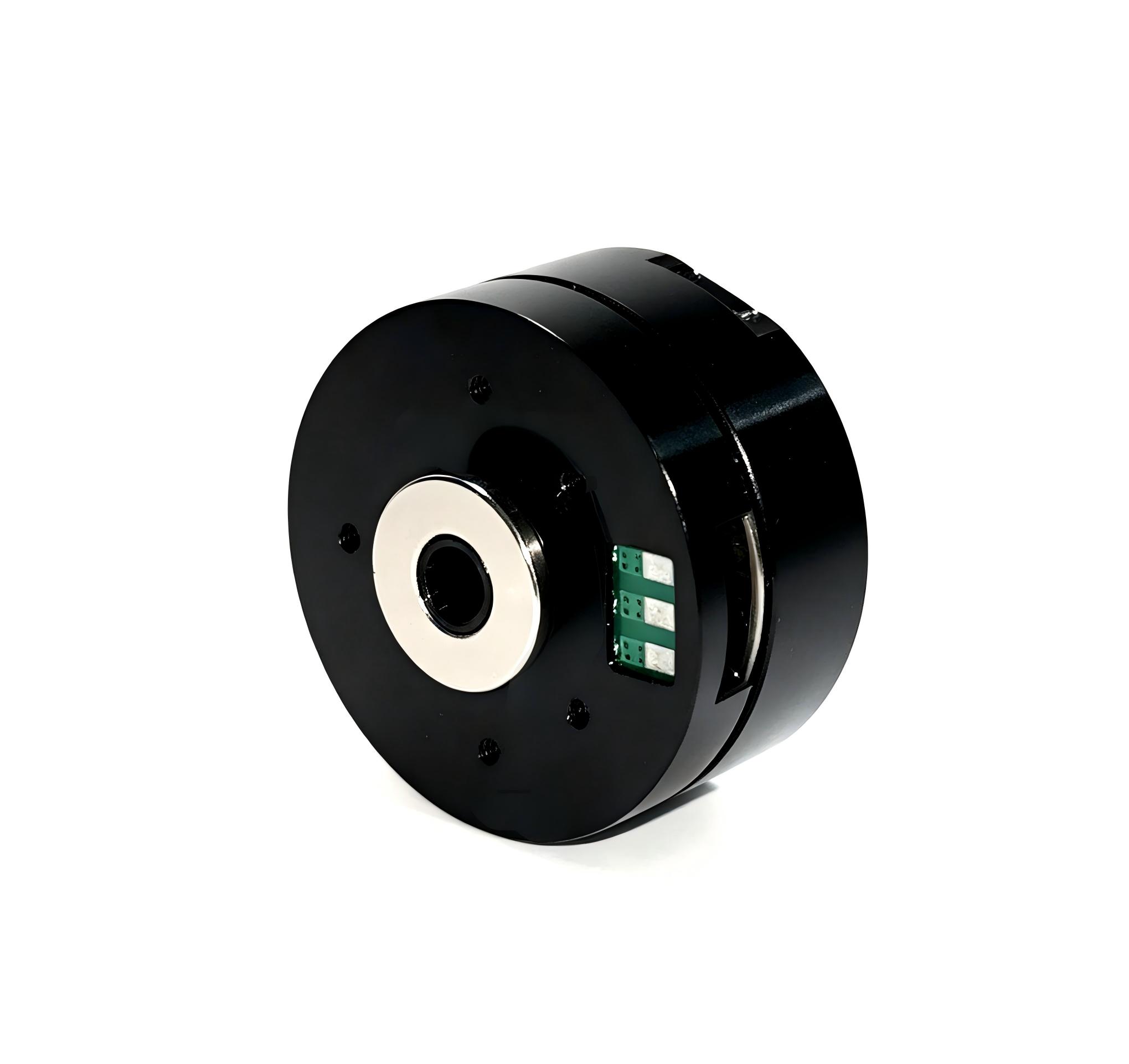
Torque numbers on paper rarely tell the whole story, but they give you a solid starting point. A heavy rig hauling 80,000 pounds or more needs enough low-end twist to get moving without slipping the clutch or overworking the driveline. Most modern heavy-duty trucks produce somewhere between 1,450 and 2,050 lb-ft of torque, depending on engine displacement and tune. If your routes involve steep grades or frequent stop-and-go traffic, aim for the upper end of that range. Otherwise, you might find yourself rowing through gears far more than you should.
The real question is not just peak torque, but where it arrives. An engine that makes 1,750 lb-ft at 900 rpm will feel vastly different from one that needs 1,400 rpm to hit the same figure. Low-rpm torque keeps the truck planted and predictable, especially when starting on a hill with a full load. Look for a torque curve that stays relatively flat between 1,000 and 1,500 rpm. That band is where you spend most of your time in a heavy rig, not at the redline.
Gearing matters just as much as the engine itself. A truck with 1,650 lb-ft and a well-matched 13-speed or 18-speed transmission can outperform a higher-torque rig with poorly chosen axle ratios. Torque at the wheels is what moves the load, so multiply the engine's output through the driveline before making a judgment. If you are not sure, talk to drivers who run similar routes. Their real-world fuel economy and shift patterns will tell you more about the torque you actually need than any brochure number ever will.
Why Your Last Gimbal Footage Looked Like Jell-O
That wobbly, rubbery look usually has less to do with the gimbal’s motors and more to do with what the camera itself is doing during the scan. Most mirrorless and DSLR sensors read the frame line by line, so any fast vibration that sneaks past the gimbal can bend straight edges and make buildings ripple like they are underwater.
What often gets missed is a tiny balance error or a loose quick-release plate. The gimbal can feel smooth in your hands while its motors are still making rapid corrections you never notice until playback. Cable slack, an over-tightened focus ring, or even a stiff wrist can send small shudders straight into the body at exactly the wrong frequency.
Before blaming the gear, power everything down and rebalance with the lens cap and battery in place. Lock every plate, tuck or secure loose cables, and try a neutral density filter if you were shooting at a very high shutter speed. Sometimes just loosening your grip and walking heel-to-toe removes more jello than any stabilization setting.
Motor Noise Isn't Just Annoying—It Ruins Audio
Motor noise usually sits in the same midrange bands as the human voice, so it never stays hidden. A focus motor or gimbal hum might be quiet in a room, but a mic mounted near the camera body picks up every whine, click, and harmonic. On the recording, the motor competes directly with dialogue instead of falling into the background.
The irregularity makes it worse. Autofocus motors pulse, stabilizers shift pitch as they correct movement, and cooling fans spin up under load. That changing character defeats most basic noise reduction, which expects a stable hiss or hum. You end up with warbled artifacts or hollow-sounding speech, and a motor that changes tone mid-sentence is especially hard to treat without wrecking the audio you wanted to keep.
A better fix is usually physical rather than digital. Pull the microphone away from the motor, use a shock mount, or record a few seconds of room tone before the take. If the noise still bleeds in, repositioning and rolling again is faster than trying to repair the file in post.
Small Cameras, Big Payloads, and the Middle Ground Nobody Talks About
The phrase itself feels like a contradiction until you start looking at what actually ships in a body the size of a deck of cards. A few years ago, putting a full-frame sensor behind a pancake lens meant compromising on battery, heat, and ergonomics to the point where the camera became a novelty. Now the compromises have shifted. You can get raw video, reliable autofocus, and even internal stabilization in a package that disappears into a jacket pocket, but the conversation rarely moves past the spec sheet. The payload isn't just megapixels or bitrate; it's the expectation that a tiny tool should perform like a workhorse without any of the physical clues that remind you it's working hard.
The middle ground people ignore is the space between “good enough for travel” and “pro replacement.” Manufacturers love to market the extremes: the pocketable vlog camera that can shoot 4K forever, or the cinema rig that needs a backpack and a gimbal operator. What gets lost is the daily reality of someone who needs a small camera to do two things well—capture a clean interview in a cramped office and survive a rainy street shoot without falling apart. That middle zone doesn't have a catchy name. It doesn't trend. But it's where a lot of working shooters quietly live, swapping batteries more often than they'd admit and learning to trust a tool that barely weighs more than a phone.
Maybe the reason nobody talks about this middle ground is that it forces honest trade-offs into the open. A small camera with a big payload will always run hot, drain fast, and demand a certain kind of patience. Lenses get slower, buttons get smaller, and the tripod mount feels like an afterthought. Yet once you accept that the tool is not trying to be a full-size rig, you stop measuring it against one. You start noticing how often it actually gets taken out of the bag, which is the whole point. The payload that matters isn't the one printed on the box—it's the hours of usable footage that would never exist if the camera stayed home.
Voltage Sag, Heat, and Other Things Spec Sheets Hide
Datasheets rarely mention how a power supply behaves during the brief but brutal events that happen in real installations. A sag of just a few milliseconds can reset a microcontroller, corrupt a memory write, or make an LED driver flicker without ever tripping a protection circuit. Engineers learn to read between the lines: the hold-up time figure assumes a specific load and a specific input voltage, while the actual ride-through depends on capacitor aging, temperature, and whether the load shares current evenly across multiple rails. Claimed immunity to a 20% dip says nothing about a 40% dip that lasts twice as long, or about what happens when the sag repeats every half second for an hour.
Heat tells a different kind of hidden story. A spec sheet will give a maximum ambient temperature and maybe a derating curve, but it rarely reveals hot spots on the board, the way a nearby electrolytic capacitor dries out faster than the silicon, or how a 10°C rise in a cramped enclosure quietly halves the expected life of the fan. Some supplies throttle output current before they flag an over-temperature warning, leaving a system that works until the worst possible moment in the field. Others run cool on a bench but cook when mounted upside down or with the vents blocked by a cable harness, because convection paths never appear in a CAD render.
Other omissions hide in plain sight. Inrush current ratings are often given as a single peak number, ignoring that a cold start after a brownout can be far more violent than a warm restart. Efficiency curves are plotted at 230V AC and 25°C, not at the ragged end of an extension cord during a summer heatwave. And the quiet little notes about minimum load, leakage current, or hold-up at end-of-life are exactly where a good design gets ambushed. Learning what a spec sheet does not say is often more valuable than memorizing what it does.
FAQ
It usually comes down to torque headroom and response speed. A stronger motor holds a locked-off frame without micro-drifts, recovers quicker after a bump, and doesn't overheat when you push beyond the nominal payload. Cheaper units can feel fine with a light lens but start vibrating or struggling once you add a cage, mic, or monitor.
The DJI RS 4 Pro tends to be the safest pick for that setup. Its motors have enough reserve power to keep a front-heavy zoom steady, and the axis locks make balancing less frustrating. If you want an alternative, the Zhiyun Crane 4 handles similar payloads with very smooth pan and tilt response.
Yes, but you have to be honest about weight. The FeiyuTech SCORP-C and Zhiyun Weebill 3 can produce stable footage with compact primes and standard zooms. They lack some of the premium fine-tuning, but for quick pans, walking shots, and small bodies they hold their own surprisingly well.
Modern brushless motors are generally quiet enough that on-camera mics rarely pick them up during normal movement. The bigger issue is usually an attached follow focus motor or a lens with loud autofocus. If you are recording critical sound, keep the mic off the camera or use a shock mount and check the motor noise before a long take.
A few can. The DJI RS 4 Pro and Zhiyun Crane 4 are rated high enough for smaller cinema bodies with a prime or short zoom. You need to watch the total package weight, because cages, rods, and external monitors add up faster than the camera body alone suggests.
Once you understand the sequence, most modern gimbals can be balanced in two or three minutes. Models with axis locks and tool-free plates are noticeably faster. The first time will take longer, especially with a larger lens, but it stops being a headache after a few attempts.
The DJI RS 3 Mini is a good balance of size and stability. It folds down small enough for a daypack and manages compact full-frame or APS-C kits well. Just avoid hanging heavy accessories off the camera, because its lighter motors have less spare capacity for extra weight.
Conclusion
A reliable gimbal motor isn't just about a spec sheet number. The difference between a setup that glides and one that constantly fights your hand comes down to how the windings, bearings, and control loop respond under load. On heavier rigs, torque becomes the first thing you notice: a motor without enough headroom will hold position but feel brittle, overshooting after a pan or drifting during a slow orbit. That lack of authority is often what turns otherwise sharp footage into a wobbly, jelly-like mess. The top ten motors in this roundup tend to pair conservative torque claims with a well-tuned encoder and driver, so the motor stays composed even when a lens or battery pushes the gimbal past its comfort zone.
Noise and thermal behavior are just as telling. A motor that hisses or whines under load isn't only distracting on set; that sound bleeds into onboard microphones and forces extra cleanup later. Smaller mirrorless builds benefit from compact motors that still leave room for balancing weights, while larger payloads need a wider stator and better heat dissipation to avoid voltage sag during long takes. Cheap options often hide those weaknesses behind peak numbers. The better choices in this list reveal themselves through steady voltage draw, cooler housings after repeated moves, and a quiet, damped response that keeps both your arms and your audio from paying the price.
Contact Us
Contact Person: Sean
Email: [email protected]
Tel/WhatsApp: +86-13338694967
Website: https://www.retekmotion.com