

Top RFID Warehouse Management Solutions for Real-Time Inventory Tracking
2026-10-12
RFID has transformed warehouse inventory tracking from a guessing game into a precise science. But with dozens of platforms claiming to offer real-time visibility, how do you separate the truly great from the merely adequate? This post dives into the top solutions that deliver on their promises—including OSRFID, a brand known for durable tags and reliable readers that keep your counts accurate around the clock. Get ready to find the system that finally ends your inventory blind spots.
Why Fixed RFID Readers Beat Handhelds for Round-the-Clock Stock Visibility
Fixed RFID readers maintain a persistent connection to inventory without relying on staff to physically move through aisles. Handheld units only capture data when someone sweeps a specific zone, leaving gaps overnight or during busy shifts. Wall- or ceiling-mounted readers, by contrast, interrogate tags on a scheduled or continuous basis, logging each movement as it happens without human intervention.
This always-on approach eliminates the blind spots that plague portable scanners. A pallet moved to the wrong bay at 3 a.m. triggers an alert from a fixed reader instantly, while a handheld would only discover the error hours later during a manual count. The result is a live inventory map that never goes stale, supporting accurate replenishment and preventing costly stockouts.
Fixed infrastructure also removes the variability of operator usage. Handheld RFID guns may be left in a drawer, run out of battery, or be used inconsistently by different team members. Readers mounted at dock doors, conveyor lines, and storage racks deliver uniform coverage around the clock, freeing staff to focus on higher-value tasks instead of routine scanning walks.
Tag Materials That Survive Metal Racks, Foil Packaging, and Deep Freezers
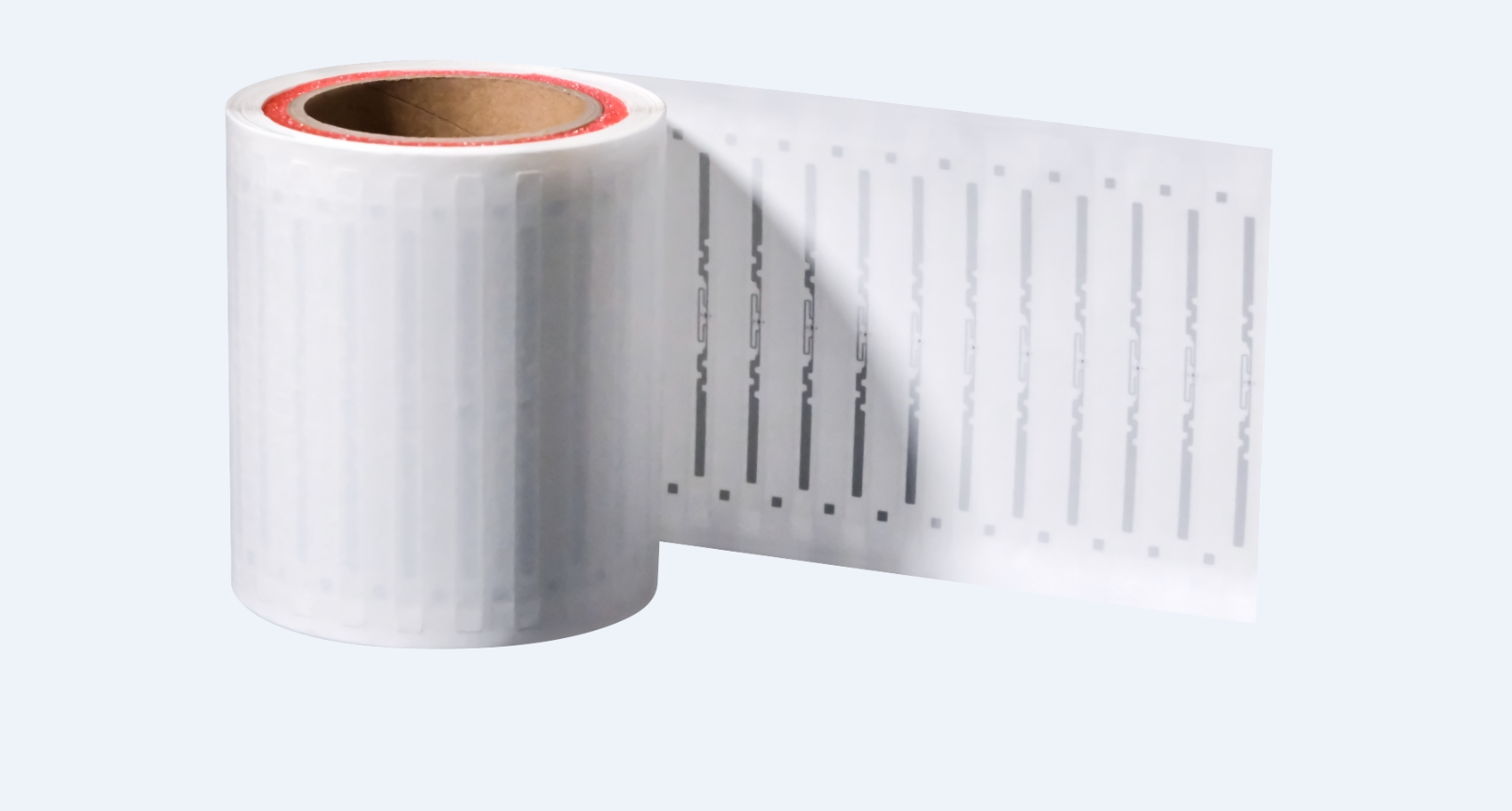
Labels slapped on products that get shoved onto metal racks, wrapped in foil, or tossed into deep freezers face a brutal trifecta of abrasion, moisture, and extreme cold. The wrong tag stock turns into a curled, unreadable mess within days. To avoid that, you need materials engineered specifically for these environments—think polyester or polypropylene face stocks paired with aggressive adhesives that grip even when frost forms.
For metal rack storage, the biggest enemy is edge lift. Thin paper labels peel at the corners from constant friction against rack rails. A 2-mil polyester with a permanent acrylic adhesive handles that easily, staying flat and legible despite repeated sliding. Foil packaging adds another layer of trouble: the foil's smooth, often oily surface rejects standard glues. Here, a rubber-based adhesive or a specialty freezer-grade adhesive works better, bonding tightly to foil without bubbling or sliding off during seal tests.
Deep freezer conditions are the ultimate test. Labels on frozen food boxes or lab samples must withstand temperatures down to -40°F without becoming brittle or losing adhesion. A polypropylene label with a freezer-specific adhesive—formulated to remain tacky at subzero temps—is your best bet. Pair that with a thermal transfer ribbon rated for cold storage, and the print won't smear when condensation hits. Skip the cheap paper tags; they'll turn into soggy confetti after one frost cycle.
Stopping False Reads at Dock Doors and Conveyor Merge Points
False reads at dock doors tend to cluster around a few overlooked spots. A pallet tag gets shielded by shrink wrap just enough to drop in and out of range, or a lift truck lingers at the threshold while the reader keeps firing. The result looks like multiple items crossing when only one did. It helps to treat the doorway as a short corridor rather than a single trigger line. Reads only count when they form a coherent sequence from approach to clear, with a minimum dwell time that matches the speed of the equipment passing through.
At conveyor merge points, the problem is usually overlap and reflection. Two cartons arrive close together, a tag slides across the edge of the read field, and the system logs a ghost read for a box that never actually took the merge. Short confirmation gates tied to a physical sensor solve most of this. The tag has to be present while the sensor confirms the item is in the merge zone, and duplicate hits within a short rolling window get collapsed into one event. This removes the noise without slowing down the line.
A better rule of thumb is to define what a valid read path must look like before tuning hardware. Enter the zone, persist through the choke point, exit the zone. Anything outside that pattern gets quarantined or matched against a nearby door camera image instead of being pushed to inventory. This catches the odd reflections from dock levelers and metal guarding that tend to appear only when a trailer is backed in at a slight angle.
Feeding Live RFID Feeds Into Your WMS Without Breaking Existing Workflows
Most warehouse management systems weren't built with real-time RFID in mind. They expect batch scans, manual check-ins, or scheduled syncs. So when you start piping live tag reads directly into your WMS, the first thing that breaks is the rhythm your floor team has relied on for years. The trick isn't to force every read into the system as it happens, but to filter and shape that stream so it looks like the events your WMS already understands. For example, instead of sending a hundred individual tag sightings for a pallet moving through a dock door, you can group those into a single “arrived at door 3” transaction using a short time window or location boundary. That way the WMS sees normal business events, not a noisy sensor feed.
Another practical approach is to introduce a lightweight middleware layer that speaks both languages: RFID on one side, WMS API or file import on the other. This layer can buffer reads, drop duplicates, apply business rules like “only report a move if the tag has been out of sight for more than five seconds,” and translate tag IDs into the SKU or license plate numbers your WMS already tracks. By doing this, you avoid touching the core WMS code or asking operators to change their daily routines. They can keep using the same handheld scanners for exceptions, while the RFID feed quietly handles the bulk of routine location updates.
Don't underestimate the importance of starting with a single, low-risk workflow. Pick a process where manual scanning is already a bottleneck—like receiving or cycle counting—and run both systems in parallel for a couple of weeks. Compare what the RFID feed reports against what your team sees on the floor. Once the feed matches your operational truth consistently, you can gradually expand to other zones or processes. This staged roll-out keeps your existing workflows intact while the new data stream proves its reliability, and it gives your team time to trust the automated updates without feeling like their jobs are being replaced overnight.
Cycle Counts That Run Themselves and Flag Replenishment Needs
Instead of shutting down operations for a full physical inventory, modern systems can run cycle counts continuously in the background. Staff no longer need to spend hours cross-checking shelves against spreadsheets. The counting happens through a mix of barcode scans, RFID reads, or weight-based sensors that quietly update stock levels as items move.
Once the system detects a mismatch between the recorded count and the physical reality, it doesn't stop there. It compares that updated quantity against your reorder points and lead times. If a particular SKU drops below the threshold needed to cover upcoming demand, the software flags it automatically. The replenishment request can go straight to a purchasing queue or even trigger an order draft, depending on your workflow.
The payoff shows up quickly in daily operations. You stop walking the floor to find empty bins that should have been refilled days ago. Backorders drop because the system catches low stock before it becomes a crisis. Overstocking also gets reined in, since cycle counts reveal slow movers instead of letting them hide until year-end. What used to require a clipboard and a free afternoon now runs on its own, leaving your team to focus on exceptions rather than routine checks.
The Real Reason RFID Rollouts Stall: Skipping a Small-Scale Pilot
Many RFID initiatives never make it past the first few weeks because the team treats a pilot as an unnecessary delay rather than a diagnostic tool. They buy ten thousand tags, wire every dock door, and flip the switch, only to discover that reader interference from metal shelving or mismatched tag orientation turns their inventory counts into gibberish. A small-scale pilot would have exposed those physical-layer quirks for a fraction of the cost and time.
The deeper issue is that a pilot isn't about proving RFID "works" in some lab sense; it's about mapping how tags, readers, and existing workflows actually behave in one cramped aisle or one receiving lane. Skipping that step means the first real signal you get about antenna placement or tag encoding is a warehouse-scale failure. That's why rollouts stall: not because the technology is immature, but because nobody gave it room to fail quietly before it had to succeed loudly.
A constrained pilot also forces the project team to define what success looks like before the stakes are high. Without that, every unexpected read or missed tag becomes a crisis meeting instead of a data point. The stall usually isn't a lack of executive buy-in or budget—it's the predictable result of treating a complex physical system as if it were a software update that can be rolled back with a single command.
FAQ
A solid RFID system doesn't just read tags—it captures data without line-of-sight, updates locations automatically as items pass through dock doors or zones, and tolerates rough warehouse conditions. The real differentiator is how well the software turns raw tag reads into useful actions, like flagging misplaced pallets or predicting stockouts before they hurt operations.
For mid-sized operations, I'd focus on platforms that combine fixed readers at chokepoints with handheld devices for spot checks. Look at vendors that offer prebuilt integrations with common ERP systems, not just hardware kits. A few names that consistently show up in real deployments include Zebra's MotionWorks, Impinj's partner ecosystem, and smaller specialists like RFgen or StayLinked—each has different strengths in mobile workflows.
It genuinely reduces discrepancies, but the extent depends on tag placement, reader density, and how often you reconcile exceptions. Warehouses that tag at the pallet or case level and use overhead readers at receiving and shipping doors often see cycle count accuracy jump from around 90% to 98% or higher within months. The key is treating RFID as a continuous audit trail, not a one-time fix.
Beyond tags and readers, people often overlook the cost of tagging existing inventory retroactively, configuring read zones to avoid stray reads, and training staff to trust the system instead of doing manual rechecks. Software licensing models that charge per reader or per tag event can also creep up. A realistic pilot phase with one dock door and a few thousand tags saves money later.
Fixed readers mounted at dock doors, conveyor belts, or automated sorters give you hands-free, continuous capture as goods move—ideal for high-volume receiving and shipping. Handheld readers are better for targeted searches, cycle counts in dense storage aisles, or verifying a specific pallet when the system flags an exception. Most effective rollouts use a mix: fixed for baseline visibility, handheld for exception handling.
Timestamps matter a lot—knowing exactly when an item entered or left a zone reveals dwell time, bottlenecks, and aging stock that location alone can't. Tag associations with orders or shipments let you spot cross-docking opportunities or double-handling. Some systems also write condition data (like temperature exposure) to specialized tags, which helps when managing perishable or sensitive goods.
Yes, computer vision systems using cameras and machine learning can track objects by appearance and location without physical tags, though they struggle with identical boxes. Bluetooth Low Energy beacons are cheaper than active RFID for zone-level tracking but don't offer the same read range or durability. Ultra-wideband works well for asset tracking indoors with high precision, but the tags cost more than passive RFID. Each has trade-offs depending on SKU variety and throughput.
Start by mapping where reads fail—usually near metal shelving, liquid containers, or dense tag populations. Adjust reader power and antenna angles, and consider spacing tags with non-metallic spacers. If the problem persists, check for tag-to-reader protocol mismatches or firmware gaps. Often a simple site survey with a spectrum analyzer reveals interference from other wireless equipment that's cutting into read reliability.
Conclusion
Warehouse operators chasing real-time inventory tracking quickly learn that fixed RFID readers outperform handhelds for continuous stock visibility. Mounted at dock doors, conveyor merge points, and storage aisles, these readers capture tag reads around the clock without staff walking routes. The right tag materials matter just as much: on-metal RFID tags survive racking and foil-lined packaging, while specialized inlays endure deep-freezer conditions without cracking or losing read range. False reads at high-traffic choke points are a common pain, but tuning reader power, adjusting antenna angles, and using read-zone filtering algorithms cut phantom inventory movements dramatically.
Feeding live RFID data into a WMS does not require ripping out existing workflows. Middleware can translate raw tag streams into location, status, and movement events that slot into current receiving, putaway, and picking screens. Self-running cycle counts then flag replenishment needs automatically, turning inventory checks from a labor-heavy chore into a background process. Yet most RFID rollouts stall not from hardware limits but from skipping a small-scale pilot. A two-week pilot on one dock door or a single rack aisle reveals integration quirks, tag placement issues, and reader tuning needs before scaling across the whole facility.
Contact Us
Contact Person: Esme Mo
Email: [email protected]
Tel/WhatsApp: 0086 191 2931 7837
Website: https://www.osrfidglobal.com/