

Ultrasonic Spray Coater Brands Worth Considering for Uniform Thin-Film Deposition
2026-08-30
Achieving uniform thin-film deposition is a persistent challenge in labs and production lines alike, yet the right ultrasonic spray coater can turn it into a routine step. While many options exist, only a few brands deliver the precision and repeatability that demanding applications require. Among them, Siansonic stands out for its meticulous engineering and proven performance across diverse substrates. If you're evaluating systems for R&D or scale-up, this guide cuts through the noise and highlights the brands truly worth your attention.
Which nozzle designs actually deliver repeatable thin films?
Slot-die heads with <1 µm lip flatness and heated shims tend to hold thickness variation under 2% across 300 mm substrates. The internal manifold shape matters more than external looks: a coat-hanger or fishtail cavity balances pressure drop so the wet film exits at uniform velocity, while adjustable lip gaps let you trim edge beads without scrapping the whole setup.
Ultrasonic nozzles are another workable route for low-viscosity chemistries, but only if you fix the piezo frequency drift and keep the feed pressure steady. A narrow spray cone plus a slow, overlapping raster pattern typically gives ±5% film thickness on small parts. Avoid standard air-atomizing tips unless they include a focused gas shroud; their droplet size spreads too wide for tight repeatability.
Why coating uniformity often starts with fluid path design
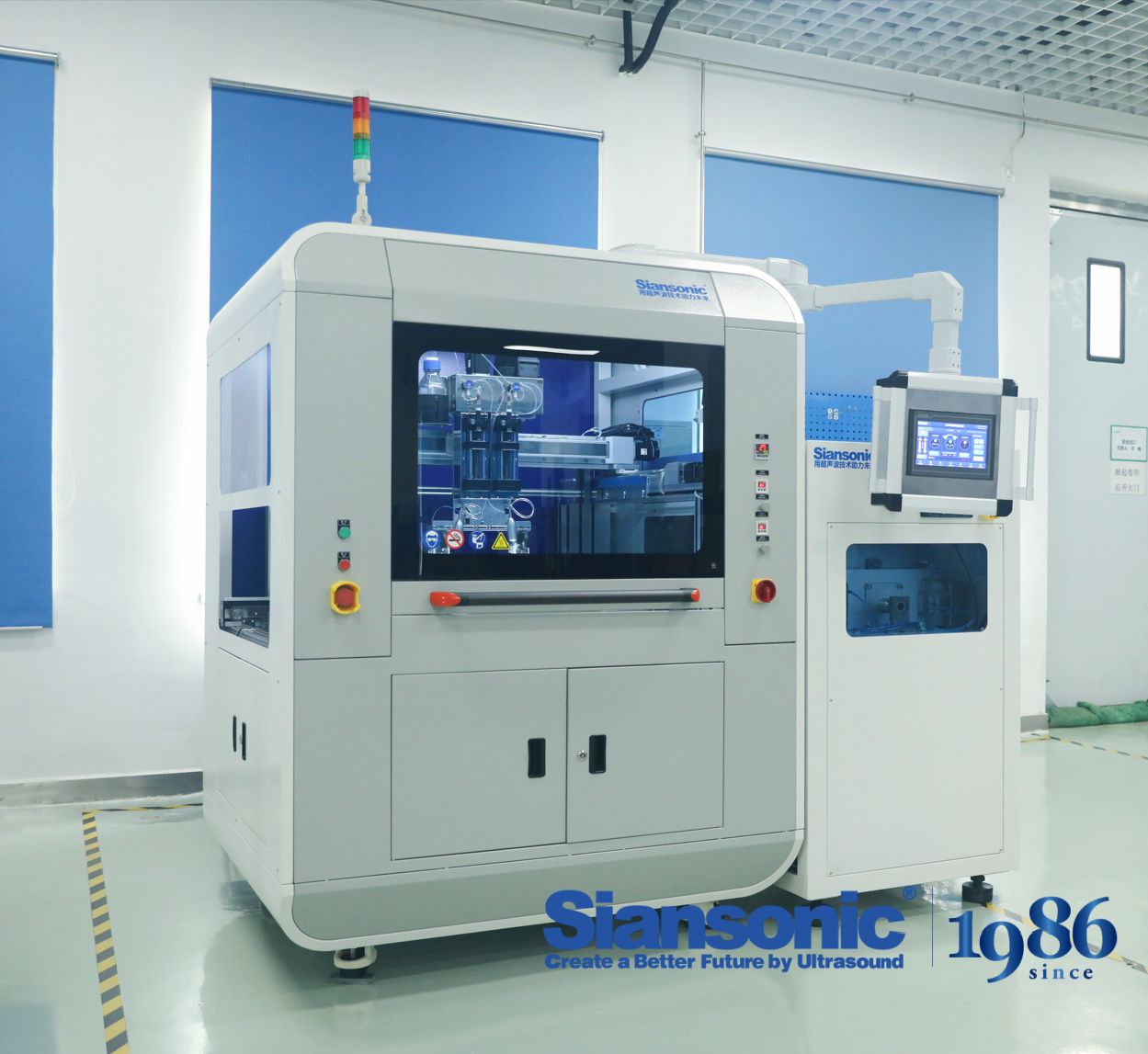
A coating line can have the finest slot die and the most precise pump, yet still produce streaks and thickness variations if the fluid has to squeeze through sharp bends, sudden expansions, or dead-end cavities. Every time the liquid changes direction or speed, the velocity profile reshapes itself, and any asymmetry in that reshaping becomes a permanent fingerprint on the wet film. Engineers who chase uniformity only by adjusting die lip gaps or line speed often overlook the real culprit: the plumbing upstream has already sorted the fluid into fast and slow lanes.
The fluid path behaves like a miniature distribution network. A poorly balanced manifold feeds some regions of the die with higher pressure than others, so the coating exits faster at those points. Even small temperature differences caused by residence time in a long, narrow passage can shift viscosity and ruin batch-to-batch consistency. By starting the design process with smooth, symmetric channels, gradual transitions, and minimal internal volume, you give the fluid far fewer opportunities to develop its own memory of irregular flow.
What makes this approach stand out is how it treats the fluid path as an integral part of the metering system, not just a conduit. A well-designed path damps out pulsations from the pump, equalizes shear history across the width, and prevents air entrapment at high points. That upstream quietness directly translates into a coating layer that holds tolerance across the entire web width, shift after shift, with far less dependence on operator tweaking.
Where benchtop coaters fall short for production-scale films
Most benchtop coaters are tuned for small coupons or single wafers. That works until you need to coat a 150 mm × 150 mm substrate or a continuous web. Uniformity drifts quickly at the edges because the source-to-substrate distance and deposition plume are optimized for a tiny footprint. On a production line, a ±3% thickness variation that is acceptable on a 20 mm sample becomes a scrapped batch when mapped across a Gen-2 glass panel.
Throughput is another quiet killer. Loading a sample, pumping down, coating, venting, and unloading might take 40 minutes on a lab tool. Do that for a few dozen substrates per shift and the numbers stop adding up. There is no cassette handling, no load lock, and no automated recipe queue. Operators end up babysitting the machine instead of running a process.
Reproducibility between runs also suffers because benchtop systems lack in-situ rate monitoring or closed-loop thickness control. Small shifts in source power or residual gas pressure go unnoticed until after the film is measured. Production-scale coaters integrate quartz crystal monitors, optical thickness sensors, and data logging, but retrofitting those onto a benchtop unit rarely makes economic sense.
How cleaning routines quietly impact deposition quality
It starts with the small habits nobody thinks to question. The way a technician wipes a substrate between layers, the pressure of the cloth, even the solvent left to evaporate at room temperature — each step leaves a fingerprint on the final film. Deposition quality doesn't suddenly fail; it degrades in whispers. A slightly oily residue here, a faint streak there, and suddenly the adhesion tests show numbers that make no sense on paper. The cleanroom log says everything was done by the book, but the book never mentioned how a microfiber cloth can hold onto moisture for hours after being "dried."
Most defects traced back to cleaning aren't dramatic. They're cumulative. Static charge builds up from overzealous wiping, pulling airborne particles onto a surface that was just cleaned. Or a cleaning agent that works perfectly at 21°C behaves differently at 23°C because someone left the bottle near a heat source. These aren't calibration issues — they're rhythm issues. The routine becomes so automatic that no one notices the subtle drift until a batch of wafers comes out with patchy nucleation. By then, the problem has been rehearsed dozens of times, baked into the muscle memory of the line.
The quiet part is that cleaning isn't just about removing contamination; it's about creating a predictable surface. Water contact angle shifts by a few degrees when a rinse is cut short by ten seconds. A plasma treatment done after a hurried wipe behaves differently than one done after a patient, unforced dry. Operators who understand this don't follow the SOP faster — they follow it more attentively. They pause at the same spots, check the same edge, and maybe tilt the part under the light just to see if the sheen is uniform. That's not inefficiency. That's the difference between a deposition that looks fine under a microscope and one that holds up in the field six months later.
What automation features matter most for tight film tolerances
The heartbeat of tight film tolerance control lies in closed-loop tension regulation. Unlike open-loop systems that simply output a set value and hope for the best, a truly capable automation package reads tension at multiple points along the web path—typically via load cells or dancer rollers—and continuously trims the drive speeds or brake pressure to hold that tension within a fraction of a percent. This matters because film stretches, relaxes, and reacts to temperature changes in ways that static settings can't anticipate. Without tight tension windows, you get gauge variation, wrinkles, and registration drift that no downstream correction can fully hide.
Next in line is automatic gauge profiling tied directly to the extrusion or coating die. The best systems don't just measure thickness downstream and log the data; they feed that measurement back into die bolt heaters or lip adjustment motors in real time. A narrow tolerance film demands that the die gap be actively shaped to counteract thermal bow, die buildup, or subtle melt viscosity shifts. If the automation only samples every few minutes or waits for an operator to make a manual tweak, you're already shipping out-of-spec product. The key is predictive adjustment—the system should anticipate drift from a known pattern, not just react after the fact.
Finally, edge guiding and web steering automation deserve far more attention than they usually get. A film that wanders even a millimeter off centerline will see uneven tension distribution, edge beads, and potential gauge bands. High-performance edge sensors paired with fast-acting steering frames can hold lateral position to within a fraction of the sensor's resolution, but only if the control loop is tuned aggressively enough to reject low-frequency drift without overcorrecting and causing oscillation. For converters running at high line speeds, this single feature often separates a process that holds ±2% thickness from one that reliably hits ±0.5%.
Lessons from daily users of ultrasonic spray equipment
One thing that catches many first-time operators off guard is how sensitive these systems are to fluid viscosity. Daily users learn quickly that a formulation that worked last week can clog a nozzle today if the ambient temperature shifts by a few degrees. They keep a log of pressure settings and solvent ratios, not because a manual tells them to, but because an afternoon of troubleshooting is far worse than two minutes of note-taking.
Another recurring lesson involves the nozzle itself. Cleaning it after every shift feels like overkill until you see the spray pattern degrade mid-run. Experienced users dip the tip in a compatible solvent and run a short burst of air through it before storage. That habit extends nozzle life longer than most datasheets suggest.
Perhaps the least discussed point is how much operator technique matters. People who use these machines every day develop a feel for the right distance and angle for different substrate shapes. Newcomers often assume the equipment does all the work, but the veterans know that a steady hand and consistent speed produce a more uniform film than any preset parameter can guarantee.
FAQ
Brands like Sono-Tek, Cheersonic, Siansonic, and Hielscher often come up in discussions. Sono-Tek has a long track record in precision coating, Cheersonic focuses on scalable systems for electronics, Siansonic offers compact lab-scale options, and Hielscher is known for robust ultrasonic processing equipment that can be adapted for spraying. The best fit depends on your substrate size and viscosity range.
Ultrasonic nozzles create very fine, slow-moving droplets through high-frequency vibration rather than air pressure. This gives better control over droplet size, reduces overspray, and helps produce a more uniform layer, especially for small areas or sensitive materials. It also avoids clogging and uses less liquid.
Yes, entry-level systems from Siansonic or some Cheersonic desktop units can handle basic research tasks without a huge investment. You might trade away automation or high-temperature substrate holders, but for early-stage experiments they often produce adequate layer consistency if you keep the solution viscosity low and the stage speed steady.
Nozzle frequency directly affects droplet size: typically, higher frequencies like 120 kHz create smaller droplets than 48 kHz or 60 kHz nozzles. Smaller droplets dry more evenly and spread better on the substrate, so for very smooth films, a higher-frequency nozzle is worth prioritizing even though it may reduce maximum flow rate.
Thin-film solar cells, perovskite photovoltaics, fuel cell catalyst layers, protective nanocoatings, and medical device coatings all benefit. The gentle spray action is also useful for applying conductive polymers or nanoparticle suspensions without damaging the material structure.
Check the available nozzle frequencies, whether the system supports heated substrates, the precision of the syringe pump or liquid delivery module, and the software for programming spray patterns. A good brand is less important than matching these features to your specific film thickness and uniformity targets.
Most ultrasonic nozzles struggle with high-viscosity fluids because atomization relies on capillary waves. Thin or dilute solutions work best. If you need a thicker film, multiple passes or a higher solids content with low viscosity solvents is a better strategy than expecting the coater to spray a heavy gel.
Conclusion
Selecting an ultrasonic spray coater for uniform thin-film deposition often comes down to nozzle geometry and how the fluid path is configured. Nozzles with focused, low-frequency oscillation tend to produce repeatable droplet size distributions, but the real differentiator is the absence of dead zones in the liquid delivery line. Many benchtop systems work adequately for small coupons, yet they struggle once you scale to larger substrates because edge effects and drift become harder to control. Daily users consistently point out that cleaning routines are not just maintenance tasks; residual polymer or nanoparticle buildup in the ultrasonic horn or nozzle tip quietly shifts atomization performance over time. Brands that design for quick, tool-free disassembly and provide clear flushing protocols tend to hold film thickness tolerances much longer between recalibrations.
Automation features separate the dependable options from the merely adequate. Closed-loop flow control, programmable raster patterns, and real-time monitoring of ultrasonic power are the ones that keep dry film thickness within a few nanometers across a wafer or panel. Several manufacturers now integrate exhaust velocity sensors and substrate temperature feedback, which matter more than marketing sheets suggest because they prevent local drying artifacts. User feedback from production environments highlights that the best systems are not necessarily the most expensive; they are the ones with predictable behavior after hundreds of cycles. If you are comparing brands, ask for long-run uniformity data rather than a single demo coat. That type of evidence, combined with a thoughtful fluid path and straightforward cleaning access, usually reveals which ultrasonic spray coater will actually hold tight tolerances in your lab or pilot line.
Contact Us
Contact Person: Ivy Zhang
Email: [email protected]
Tel/WhatsApp: +86 1081502288
Website: https://www.siansonic.com/