

Ultrasonic Spray Pyrolysis System Vendor Selection Tips for Research and Production
2026-10-26
Most vendor selection guides start with price and delivery time, but ultrasonic spray pyrolysis systems hide their real differences in less obvious places: nozzle resonance, droplet size distribution, and how well the system handles viscous or particle-laden precursors. If you're building a research roadmap or scaling to production, these details decide whether you get repeatable films or months of troubleshooting. Below, we break down the selection criteria we've seen make the biggest impact, and why Siansonic keeps showing up in those conversations.
Know Your Precursor Chemistry Before You Start Comparing Systems
Precursor chemistry often dictates the trajectory of a synthesis long before any system-level comparison becomes meaningful. A metal-organic framework grown from a nitrate salt carries different counterion effects, nucleation kinetics, and defect profiles than one derived from an acetate or chloride. Skip straight to benchmarking porosity or catalytic turnover, and you risk attributing performance gaps to the framework topology when the real culprit sits in how the metal was delivered.
The same logic applies to nanoparticle and thin-film work. Solvent coordination, ligand lability, and thermal decomposition windows shift with the precursor oxidation state and counterion. Two labs can report apparently identical ZnO films, yet one used zinc acetate dihydrate and the other zinc nitrate, leading to different grain boundary chemistry and residual carbon. Without mapping these precursor-specific fingerprints, your comparison is not between systems but between messy, unacknowledged synthetic histories.
Before lining up performance metrics, spend time on the precursor reactivity itself. Check its coordination sphere, decomposition pathway, and solubility limits. These details rarely make it into the abstract, but they determine whether your baseline is clean or contaminated from the start. A well-characterized precursor does not guarantee a fair comparison, but ignoring it almost certainly guarantees a misleading one.
The Nozzle Spec Sheet Won't Tell You About Clogging Behavior
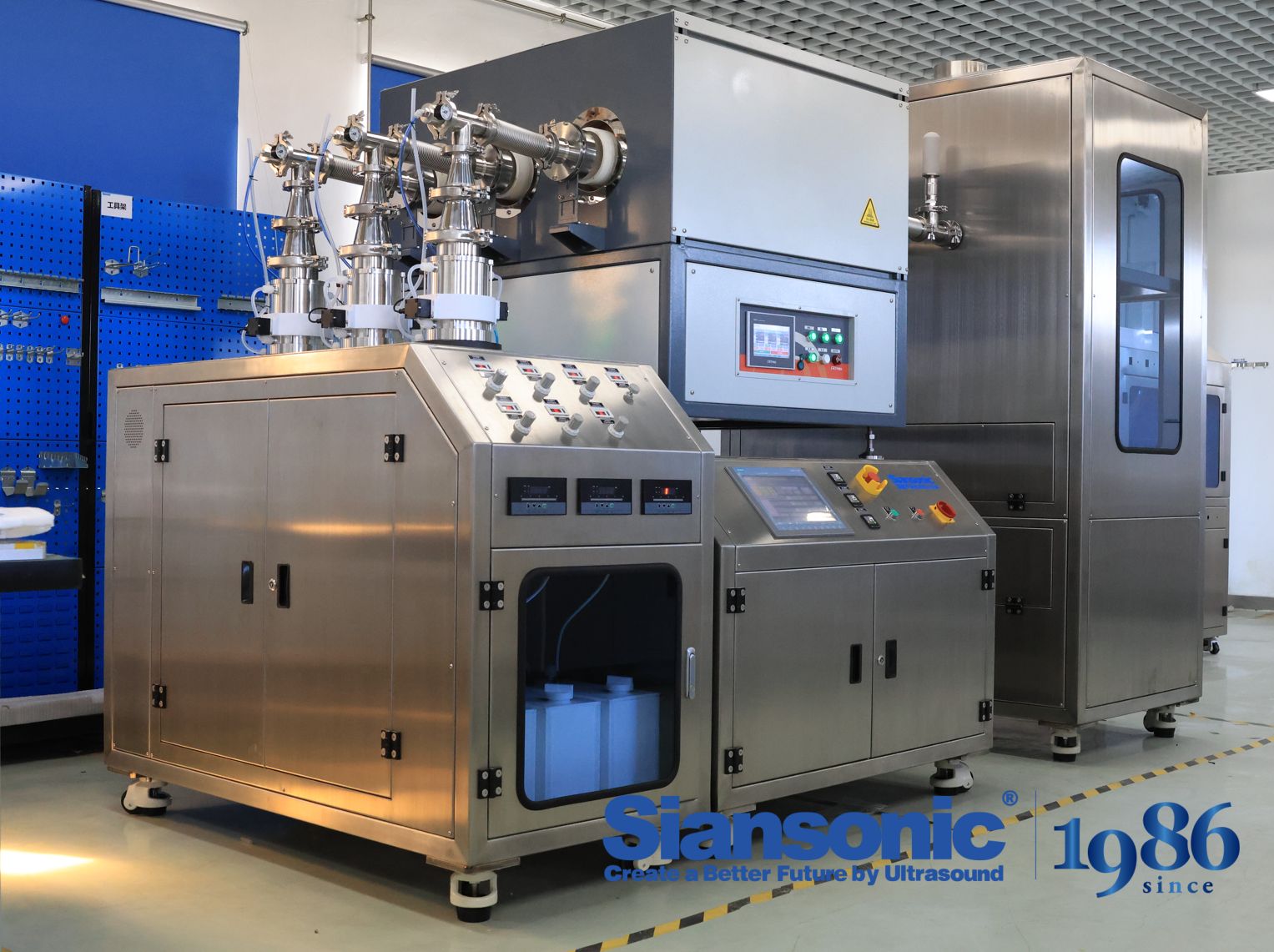
A nozzle's spec sheet will happily list bore diameter, plating thickness, and max temperature, yet none of that predicts how easily it jams. The real clogging behavior lives in details that rarely make it to a datasheet—internal surface finish, the exact geometry of the transition zone, or how the nozzle's thermal mass responds to rapid extrusion changes. Two nozzles with identical specs can behave night and day once you push abrasive filaments or crank the speed, because one might have a micro-ledge that snags carbon-filled material while the other stays smooth.
Material compatibility charts are equally misleading. They tell you a brass nozzle handles PLA and PETG, but they don't mention that a single spool of supposedly pure PLA with a slightly off-spec additive package can leave residue that gradually narrows the melt path. The spec sheet won't warn you about moisture-absorbed nylon turning into a steam-driven plug, or about a cheap white pigment that accumulates on the nozzle wall until every print develops random underextrusion. Those failures only show up after hours of troubleshooting that no data table can shortcut.
Then there are the variables outside the nozzle itself that drive clogging: retraction distance that pulls molten plastic into a cooler zone, a heat break fan that cycles just enough to cause freeze-off at the wrong moment, or ambient temperature swings that shift the effective viscosity of your filament. None of these appear on a nozzle spec sheet, yet they often matter more than the listed diameter tolerance. You end up learning your nozzle's clogging personality only by printing through it—keeping notes on what works, what doesn't, and which batches of filament deserve a preemptive cold pull.
Why a Vendor's Demo Video Is Not Your Deposition Result
A vendor demo video is built to show the product at its best, with curated data, controlled scenarios, and a presenter who knows exactly which buttons to press. It’s a marketing performance, not a test of how the tool handles your messy, real-world case files. In a deposition review, you’re dealing with incomplete transcripts, inconsistent timestamps, duplicate exhibits, and last-minute corrections. The video never shows what happens when those edge cases stack up.
When you run the software on your own matter, the gap becomes obvious. The demo’s fast search results may rely on pre-indexed sample documents, not the gigabytes of native files your team actually collects. The smooth timeline view doesn’t reveal the hours spent cleaning metadata or re-training the AI on your jurisdiction’s terminology. What you need isn’t a shorter clip—it’s a sandbox evaluation with your data, your review workflow, and your deadlines. Only then can you tell if the result is trustworthy enough for a deposition.
Scale-Up Traps When Moving from Beaker to Production Line
What works in a 500-milliliter flask can fall apart embarrassingly fast at 5,000 liters. Heat transfer, mixing efficiency, and reaction kinetics all shift as vessel geometry changes, and the assumptions you leaned on in the lab stop applying. A reaction that stayed at 25°C with gentle stirring might spike to 40°C in a jacketed reactor simply because the surface-area-to-volume ratio collapses. If you haven't mapped out those thermal boundaries before scaling, you'll spend days chasing yield loss that has nothing to do with chemistry.
Another trap hides in raw material variability. The reagent grade you used for bench trials may have been 99% pure from a single lot, but production-grade material often carries different impurity profiles, particle sizes, or residual solvents. Those differences can poison a catalyst, change nucleation behavior, or alter filtration times in ways that never showed up in small batches. A robust scale-up plan includes deliberate stress tests with lower-purity inputs, not just repeat runs with the same pristine stock.
Finally, consider the operations side: manual additions that take ten seconds at lab scale can take twenty minutes through a production manifold, during which time a sensitive intermediate might degrade or precipitate unevenly. Agitation that looks vigorous in a glass beaker can become a stagnant zone in a large reactor, leaving unmixed pockets that produce side products. Treat scale-up as a separate process design exercise, not a multiplication of your recipe.
What Successful R&D Teams Ask About Vendor Support After Delivery
The handoff is where most vendor relationships quietly fall apart, so sharp R&D teams stop asking “is support included?” and start probing the mechanics. They want the name of an actual engineer who will own their account, not a ticket queue. They ask how a patch moves from their bug report into the next release, whether regression tests cover their custom integrations, and what happens when a fix can’t wait for the standard maintenance window.
Good teams also test the vendor’s memory. After delivery, does support reference the original design decisions or treat every call as a fresh incident? They ask for updated architecture docs after each major change, a live changelog that explains breaking API shifts before they hit staging, and quarterly walkthroughs of the roadmap so their internal priorities don’t drift out of sync.
Finally, they negotiate for post-launch access to source code or escrow, not because they distrust the vendor, but because their own timelines can’t afford a support bottleneck. Questions about staff turnover on the vendor side, on-call rotations, and the exit process for data extraction reveal whether the support promise has real operational backing or is just a slide in the sales deck.
Why Power Consumables and Downtime Belong in Your Cost Comparison
Purchase price alone gives a dangerously incomplete picture. Power consumables—things like electricity, filters, lubricants, and routine replacement parts—keep adding cost long after the initial invoice is paid. If you ignore these recurring expenses, you might pick a machine that looks cheap on day one but quietly drains your budget month after month.
Downtime is just as critical and often overlooked. When equipment stops, production halts, service calls pile up, and labor hours get wasted waiting for repairs. A lower-priced unit that fails more frequently or takes longer to restart can quickly erase any upfront savings, whereas a slightly more expensive but dependable option keeps your operation running smoothly.
Building power consumption, consumable usage, and realistic downtime rates into your comparison changes the whole decision. It forces you to look beyond the sticker price and evaluate what the equipment actually costs to run and maintain over its usable life. That shift in focus leads to smarter purchases and fewer expensive surprises down the road.
FAQ
Push for a demo with your actual precursor chemistry, not just deionized water. A nozzle that cannot hold a stable cone with your solvent blend will never deliver the coating uniformity you need in production.
Demand a multi-zone furnace with independent control and a stated temperature uniformity of ±5°C across the full substrate width. Vague 'high precision' language is a warning sign.
Absolutely. If the exhaust is treated as an afterthought or shipped as a simple open duct, you will spend more time cleaning downwind surfaces than running samples. Look for a closed-loop or filtered collection design that returns clean air safely.
University labs usually benefit from remote diagnostics and modular replacement parts that a student can swap without a field engineer. Production lines need a guaranteed 48-hour onsite response and a local spare parts inventory.
Very. A clean recipe editor with automatic ramp, dwell, and alarm logging prevents operator error during 12-hour film runs. If the interface looks like a spreadsheet from the 1990s, your technicians will work around it rather than with it.
Only if they have proven experience with substrates similar to yours. A small vendor that builds one-off quartz chambers can be great for R&D, but you will want their design file and a backup supplier before committing to production volumes.
Ask for the cost per usable hour rather than per part. Include nozzle replacement frequency, gasket life, and cleaning chemicals. A cheaper system can cost twice as much over two years if its consumables wear quickly.
Not usually. Published data often comes from optimized model solutions. Request a sample run on your substrate with your precursor at your target temperature. Paying for that test upfront is cheaper than discovering a mismatch after installation.
Conclusion
Choosing an ultrasonic spray pyrolysis system for research or production rarely starts with the nozzle spec sheet. Precursor chemistry dictates almost everything: solvent volatility, salt solubility, and thermal decomposition behavior change how droplets form, dry, and react. A system that sprays a simple nitrate solution beautifully may clog or sputter with a sulfate or chloride mix. Nozzle vendors seldom publish clogging rates, so request a trial with your actual solution, not a model fluid. Likewise, treat demo videos as marketing illustrations, not deposition data. Those clips usually show short runs on flat, clean substrates under ideal lab conditions. Your own film thickness uniformity, edge coverage, and run-to-run repeatability on rough or curved parts will differ.
Scale-up adds another layer of trouble. Moving from a beaker to a production line changes droplet residence time, overspray capture, exhaust flow, and thermal gradients across the substrate. A perfectly uniform lab coating often turns patchy at higher throughput unless you map those variables early. That is why cost comparisons must include power consumables, nozzle tips, O-rings, mist filters, and downtime for cleaning—not just the purchase price. Finally, ask successful R&D teams what they check after delivery: application support, spare parts lead times, and how quickly the vendor answers process questions. That post-sale layer often decides whether the system stays a research curiosity or becomes a reliable production tool.
Contact Us
Contact Person: Ivy Zhang
Email: [email protected]
Tel/WhatsApp: +86 1081502288
Website: https://www.siansonic.com/